
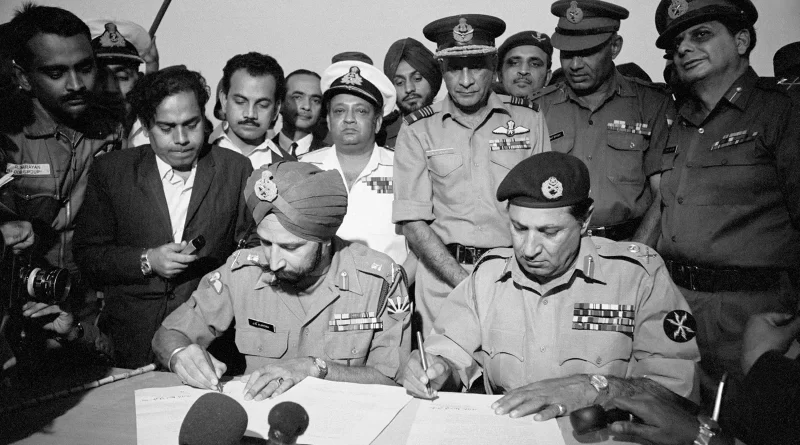
1971 and 2025: Two Milestones in India’s Defensive Doctrine

-JAY SINGH RAWAT
In history, some dates are not merely part of the past; they warn the present and shape the direction of the future. The 1971 war and Operation Sindoor in 2025, though products of different eras, are connected by a common thread: India’s strategic consciousness that believes in preempting threats before they reach its borders. One conflict gave birth to a new nation, while the other defined India’s evolved language of warfare against terrorism in the nuclear age. In a way, it was a defeat of nuclear threats themselves. The difference between a 13-day full-scale war and a four-day limited military operation reflects not just the passage of time, but profound changes in politics, technology, diplomacy, and the global balance of power.
Viewed broadly, in the history of India-Pakistan relations, 1971 and 2025 stand as two milestones representing conflicts fought in different times, with different technologies and under varying global circumstances. On one hand was the 13-day full-scale war of 1971 that reshaped Asia’s political map; on the other, the four-day limited operation of 2025 that forged a new definition of war in the nuclear era. Examining these two conflicts together not only reveals the evolution of military strategy but also clarifies how India has refined and adapted its “preventive action” over time.
The 1971 war was not the result of a limited military incident. It was the culmination of ‘Operation Searchlight’ in East Pakistan, during which horrific massacres killed millions and forced over one crore refugees to flee into India. For India, this was not just a strategic issue but also a question of humanitarian intervention. In contrast, the 2025 conflict arose from a terrorist attack in Pahalgam, where 25 Indian citizens were killed—an attack claimed by Jaish-e-Mohammed. The difference is clear: the 1971 conflict stemmed from a human rights crisis, while 2025 exemplified action against proxy war and terrorism.
In terms of duration and scale, the two conflicts were entirely different. In 1971, after 13 days of war, 93,000 Pakistani soldiers surrendered, leading to the birth of Bangladesh. This was not only India’s most decisive military victory to date but also a shining chapter in the history of global warfare. In comparison, the 2025 operation was limited to four days, involving around 14 targeted strikes that destroyed nine terrorist camps but caused no territorial changes—which was never India’s intention. It was an example of “limited war” fought under the shadow of nuclear weapons, where the goal was not victory but disrupting the adversary’s capabilities. Operation Sindoor also deflated Pakistan’s repeated nuclear threats.
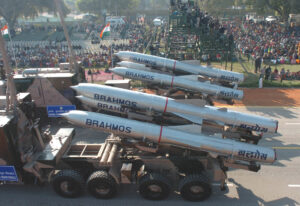
The international role also appears transformed in both periods. In 1971, India had clear support from the Soviet Union, while the United States and China stood with Pakistan. In 2025, the picture is more complex: both the US and China appear in mediating roles, even as China openly provided drones and technical assistance to Pakistan. The difference lies in India’s position: in 1971, it was a developing economy; by 2025, with a stronger economy, India’s global bargaining power is far more robust. The deepest changes are at the levels of strategy and technology. The 1971 war relied on tanks, artillery, and conventional air force operations, culminating in the creation of a new nation. In 2025, drones, precision missiles, satellite intelligence, and cyber capabilities proved decisive. Systems like BrahMos and real-time intelligence demonstrated that war preparations now take hours, not months.
Comparing the outcomes of these wars, the 1971 victory led to the Shimla Agreement, but many experts believe that not fully utilising prisoners of war as strategic leverage was a missed opportunity. In 2025, India seized no territory but delivered a strategic message by damaging terrorist infrastructure. Pakistan once again claimed a “moral victory,” much like its false propaganda in 1971 about shooting down 120 Indian aircraft. The difference today is that lies do not last long in the information war. In the 2025 conflict, Pakistan has become China’s “front face” in the same way it was America’s in 1971. Military analysts note that the emerging Pakistan-China-Turkey axis will further complicate future strategies. Moreover, social media has created a new platform for interpreting war and history, where claims of victory and defeat are immediately challenged. It is clear that courage, leadership, and clear objectives were common elements in both eras, even if the means have changed.
The lessons from these conflicts for the future are clear. 1971 taught that national unity and swift decisions can yield historic results. 2025 warns that in the era of proxy wars, surgical strikes alone are insufficient—long-term strategy, diplomacy, and intelligence networks are equally essential. History shows that peace comes not just from strength but from vigilance and wisdom. In the memory of Victory Day, the sacrifices of 1971 and the actions of 2025 remind us that the lessons of the past are the strongest shield for the future.
ABOUT AUTHOR : Jay Singh Rawat is a distinguished senior journalist based in Dehradun, Uttarakhand, with an illustrious career spanning 47 years in active, full-time, and freelance journalism. He has progressed from a reporter to editor, contributing to newspapers, magazines, and TV channels. His work reflects deep insights into politics, environment, history, and social issues, particularly those concerning Uttarakhand and broader India.–ADMIN