
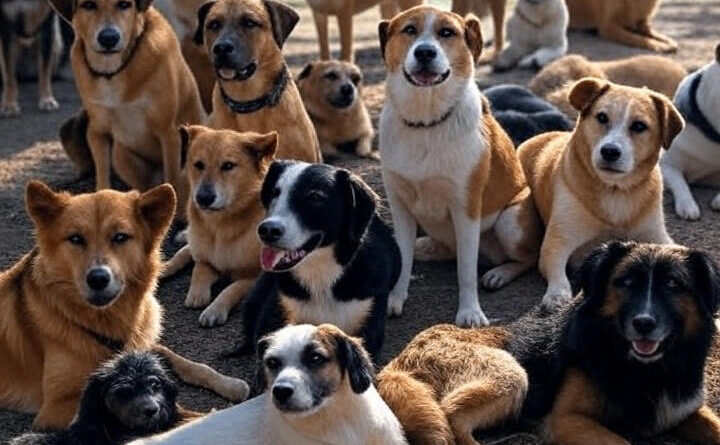
India Intensifies Efforts to Tackle Stray Dog Menace with New Rules and Robust Funding

New Delhi, 19 August. In a bold move to address the growing concern of stray dogs across India, the central government has rolled out a comprehensive strategy under the Animal Birth Control (ABC) Rules, 2023, aligning with global standards to humanely manage stray animal populations. Union Minister of State for Fisheries, Animal Husbandry, and Dairying, Prof. SP Singh Baghel, shared these updates in a written reply in the Lok Sabha today, emphasizing a collaborative approach to curb stray dog numbers and reduce dog bite incidents.
The issue of stray dogs falls under the purview of state governments, with local bodies tasked with on-ground management. To support them, the central government has introduced the ABC Rules, 2023, based on the Prevention of Cruelty to Animals Act, 1960. These rules follow the globally recognized Capture-Neuter-Vaccinate-Release (CNVR) approach endorsed by the World Organisation for Animal Health (WOAH). Local bodies, in partnership with animal welfare organizations, are now responsible for implementing sterilization and vaccination programs to control stray dog populations humanely.
A Multi-Pronged Approach
The central government has issued multiple advisories to ensure effective implementation. On November 11, 2024, the Secretary of Animal Husbandry and Dairying urged state chief secretaries to prioritize sterilization programs. A joint advisory on July 16, 2025, from the Ministries of Animal Husbandry, Housing and Urban Affairs, and Panchayati Raj reiterated the importance of sterilizing at least 70% of stray dogs in targeted areas. It also called for establishing Animal Birth Control Units to streamline these efforts.
To bolster infrastructure, the government has revised its funding scheme under the Animal Welfare Board of India (AWBI), effective this financial year. Key highlights include:
-
Financial Aid: Up to ₹800 per dog and ₹600 per cat for sterilization and vaccination, supporting local bodies and Societies for Prevention of Cruelty to Animals (SPCA).
-
Infrastructure Grants: A one-time grant of ₹2 crore for state-run veterinary hospitals to develop surgical theaters, kennels, and recovery units.
-
Shelter Support: Up to ₹15 lakh for small animal shelters and ₹27 lakh for large animal shelters, aiding urban local bodies and recognized animal welfare organizations.
Detailed guidelines are available on AWBI’s website at https://awbi.gov.in/Document/guidelines.
Tackling Rabies and Public Safety
The Livestock Health and Disease Control Programme (LHDC) supports states in procuring anti-rabies vaccines through its Assistance to States for Control of Animal Diseases (ASCAD) component. Meanwhile, the Ministry of Health and Family Welfare is driving the National Action Plan for Dog-Mediated Rabies Elimination (NAPRE), launched on September 28, 2021, under the National Rabies Control Programme (NRCP). This initiative aims to eliminate rabies through coordinated vaccination and public awareness efforts.
Strengthening Local Action
The AWBI has issued a series of advisories to ensure compliance, including:
-
April 5, 2022: Revised minimum rates for ABC programs.
-
May 17, 2022: Standard protocols for community animal adoption.
-
July 17, 2025: Guidelines for Resident Welfare Associations (RWAs), Apartment Owners’ Associations (AOAs), and local bodies to support ABC implementation.
-
August 11, 2025: Launch of a revised ABC module to manage stray dog populations, eliminate rabies, and reduce human-dog conflicts.
These efforts reflect a concerted push to balance animal welfare with public safety. With robust funding, clear guidelines, and a focus on sterilization and vaccination, India is taking significant steps to address the stray dog challenge while promoting humane and sustainable solutions.