
HOW TO WATCH THE BLOOD MOON AND TOTAL LUNAR ECLIPSE
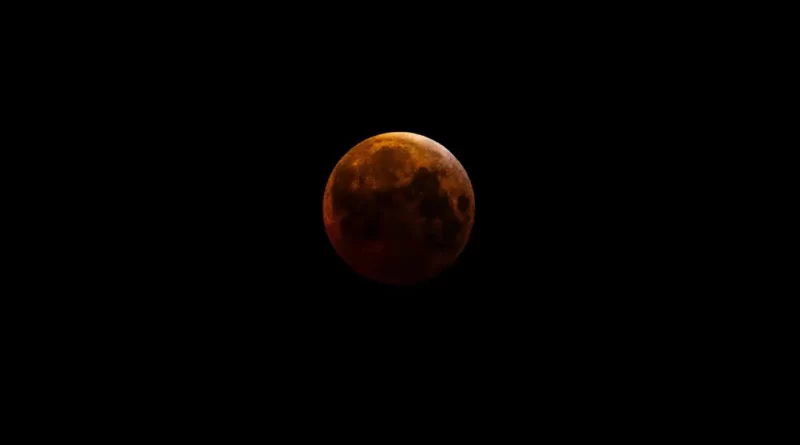
People in the Eastern Hemisphere may see Earth’s shadow pass over the lunar surface, covering our world’s natural satellite in a flush of red.

Katrina Miller has previously reported on three solar eclipses and as many lunar eclipses.
Sept. 5, 2025
Stargazers in the Eastern Hemisphere will get the chance to watch the moon flush red during a total lunar eclipse Sunday night or Monday morning.
Lunar eclipses arise when Earth’s shadow swallows all or part of the moon, obscuring its surface. A total lunar eclipse is the most dramatic version of the event and is often referred to as a blood moon.
Where and when will the eclipse happen?
The eclipse will be visible across Asia, Australia, New Zealand and much of Europe and Africa on Sunday night into Monday morning, local times.
Viewers in most of the Western Hemisphere, including North and South America, will miss the event. That’s because it is occurring during their daytime, between 11:26 a.m. and 4:56 p.m. Eastern time on Sunday, according to the U.S. Naval Observatory, and the moon is below the horizon.
Lunar eclipses happen in phases. The moon will begin to creep into the outer part of Earth’s shadow, called the penumbra, causing its face to slightly dim. This first phase occurs at 6:26 p.m. in Cairo, Jerusalem and Moscow; at 8:56 p.m. in New Delhi; at 12:26 a.m. in Tokyo and Seoul; and at 1:26 a.m. in Sydney.
An hour later, the moon will enter Earth’s umbra, the darkest part of its shadow, during which a growing portion of its surface will be hidden from view.
During totality, when Earth’s shadow completely envelops the moon, the lunar surface will turn red. Totality begins at 8:30 p.m. in Cairo, Jerusalem and Moscow; at 11 p.m. in New Delhi; at 2:30 a.m. in Tokyo and Seoul; and at 3:30 a.m. in Sydney. It will last for 83 minutes.
And then the process will reverse. The moon will slowly slip out of Earth’s umbra, then its penumbra, growing ever brighter, for the next two hours.
For accurate timings in your location, you can check TimeandDate.
What is a total lunar eclipse?
A lunar eclipse occurs when the sun, Earth and moon align, in that order. The type of lunar eclipse depends on how much of the moon passes through Earth’s shadow.
When the moon is fully engulfed by Earth’s umbra, a total lunar eclipse, also known as a blood moon, ensues. Sunlight that spills over the edges of Earth travels through the atmosphere, which more readily scatters blue wavelengths of light. Redder wavelengths pass through and illuminate the lunar surface, casting it in a crimson hue. That is what will occur on Sunday and Monday.
How red the moon appears depends on the atmosphere. Clouds, dust storms and other natural disasters that leave particles in the air can scatter more blue light and deepen the shade of the blood moon.
When only a portion of the moon slides through Earth’s umbra, it creates a partial eclipse, which appears as if a bite has been taken out of the lunar surface. A penumbral eclipse, during which the moon grazes only the outer part of Earth’s shadow, does not obscure any part of the lunar surface, but causes the moon to slightly darken.
How can I see the eclipse?
Weather permitting, everyone on the night side of Earth will have the opportunity to watch the lunar eclipse. Those at the edges of the region of visibility may see an eclipsed moon rising or setting in the sky.
Lunar eclipses can be seen with the naked eye, but binoculars or a telescope will enhance the view. Planetariums and local stargazing groups often host watch parties. This lunar eclipse will also be streamed online.
Will the clouds cooperate?
People in Europe and Africa can hope to catch a glimpse of the beginning of the eclipse at moonrise. But obstruction is likely in eastern parts of Europe, with cities like Athens expecting dense, lower-level clouds that could completely obscure views of the moon. Moscow’s forecast has minimal cloud coverage for Sunday evening.
Forecasts show a large-scale cloud system over Central Africa, which could affect views as far as Nairobi, Kenya. Further south in Johannesburg, the conditions are expected to be clearer.
As the eclipse reaches totality, Kolkata, India will likely be blocked by widespread cloud cover. However, forecast models show eastern areas around Mumbai having more favorable viewing conditions, with a fairly clear pocket between two larger cloud systems that may block other cities including Bangkok.
Beijing is likely to experience little to no cloud coverage, ideal conditions for catching a glimpse of maximum eclipse. North and South Korea and southeastern Japan remain within the full viewing zone, with on-again-off-again visibility expected throughout the evening and early morning in areas like Seoul. The rest of Japan will likely have minimal cloud coverage, with Tokyo’s forecast looking favorable. In Australia, the eclipse will likely be visible in the western half of the country, with Perth forecast to have clear skies.
How often do eclipses occur?
Lunar eclipses can occur many times a year, though not all of them reach totality. According to NASA, the next lunar eclipse will be in March, visible across parts of Asia, Australia, the Pacific islands and the Americas.
Solar eclipses often follow lunar eclipses. On Sept. 21, a partial solar eclipse will occur, but will only be seen over Australia and Antarctica.
————————————————————————————
Emma Schartz contributed reporting.
Katrina Miller is a science reporter for The Times based in Chicago. She earned a Ph.D. in physics from the University of Chicago.