
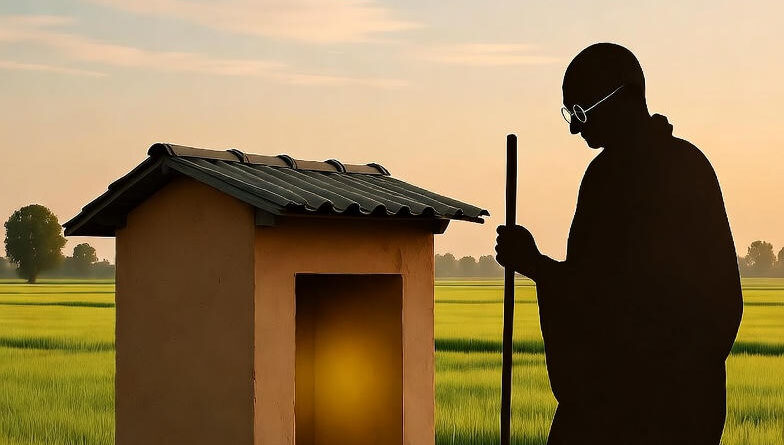
Gandhi’s Vision: Transforming Human Waste into ‘Gold’ for a Sustainable Future
By -Jay Singh Rawat
Human waste, often considered a symbol of filth, is vital for maintaining natural balance, as understood through the perspectives of Mahatma Gandhi and scientists. Human waste management is a subject deeply connected to health, environment, and agriculture. Mahatma Gandhi equated cleanliness with devotion to God and regarded it as the foundation of national progress. He called open defecation a social curse but also advocated for using human waste as natural fertilizer in rural contexts. The ongoing Open Defecation Free (ODF) campaign in India draws inspiration from Gandhi’s ideas. Scientifically, nutrients like nitrogen, phosphorus, and potassium present in human waste can be recycled to enhance soil fertility, but modern sanitation systems often disrupt this natural cycle. Recycling is a natural process that involves returning essential elements derived from the earth back to it.
Gandhi considered cleanliness a fundamental principle of personal and social life. In 1925, he wrote, “Cleanliness is akin to devotion to God.” He believed that India’s poverty and diseases were primarily caused by uncleanliness, particularly the practice of open defecation. He famously stated, “Cleanliness is more important than political freedom.” In his ashrams, such as Sabarmati Ashram, cleaning toilets was mandatory. Gandhi himself cleaned toilets to raise awareness about cleanliness and eradicate caste-based discrimination.
While Gandhi acknowledged open defecation as harmful to health, he proposed a practical approach suited to rural India. In journals like Young India and Harijan, he suggested that if toilets were unavailable, human waste could be buried at an appropriate depth in fields to create natural fertilizer. He believed that human waste, animal dung, and other organic waste could be scientifically transformed into ‘gold-like’ fertilizer. This would not only improve soil fertility but also maintain environmental balance. Instead of imitating Western-style toilets, he advocated for simple, eco-friendly solutions like dry toilets, where waste could be composted into fertilizer. His philosophy, rooted in self-reliance and harmony with nature, aligns with modern ecological sanitation principles, promoting the recycling of nutrients back to the soil from which they were derived.
Inspired by Gandhi’s cleanliness philosophy, the Swachh Bharat Mission (SBM), launched on October 2, 2014, aimed to make India open defecation-free. Under its rural mission, over 100 million toilets were constructed between 2014 and 2019, increasing toilet coverage from 39% to over 95%. According to UNICEF, SBM transformed the lives of nearly 500 million people and halved the global population practicing open defecation. Its impact on health has been significant, reducing diseases like diarrhea caused by water and soil contamination from open defecation. Studies also indicate a decline in infant mortality rates. However, challenges remain, including limited toilet usage in some areas and environmental issues due to inadequate waste management.
From a scientific perspective, about 80% of nitrogen and phosphorus in human waste is lost in centralized sewage systems. In natural cycles, plants absorb nutrients from the soil, animals consume plants, and their waste returns nutrients to the soil. However, in modern flush toilets, waste mixes with water to form sewage, which is sent to wastewater treatment plants. After microbial decomposition, the resulting biosolids contain about 70% nitrogen and 50% phosphorus. If these biosolids are not used in agriculture, they flow into rivers, causing eutrophication, where excessive algae growth depletes oxygen, harming aquatic life. Globally, about 80% of sewage is released untreated, leading to nutrient depletion in soil. Ecological sanitation (ecosan) involves separately collecting urine and feces for reuse. Urine, containing about 80% nitrogen, can be diluted to make organic fertilizer, while feces can be composted into manure. Studies show that manure from human waste not only boosts crop yields but also improves soil health.
Ecosan systems offer multiple benefits, such as water conservation (requiring 90% less water than flush systems), nutrient recycling, food security, and reduced carbon emissions. However, challenges include the risk of contamination from heavy metals or medicinal residues and lack of cultural acceptance. Advanced techniques like struvite crystallization extract phosphorus, which plants can absorb up to 76%. Biogas production generates energy, and the remaining residue serves as fertilizer. Indian soils are deficient in nitrogen (89%), phosphorus (80%), and potassium (50%), linked to land degradation.
Adopting a circular economy approach is essential, where biosolids from waste are used in local agriculture to return nutrients to the soil. Microbes play a crucial role in decomposing organic matter and making nutrients available to the soil. Integrating ecosan into the ODF campaign can strengthen the natural balance. However, if waste is merely collected without recycling, soil nutrient depletion will worsen. Gandhi’s ideas remain as relevant today as they were in his time. Cleanliness and waste recycling can pave the way for nation-building.