
Uttarakhand: A New State Without Water
– Jay Singh Rawat –
After decades of long struggle, more than three dozen sacrifices, and tremendous public pressure, the people of Uttarakhand finally received their separate state on November 9, 2000. However, this new state was deprived of its most vital natural resource , water. Of the state’s three major resources — water, forests, and land — forests are now largely under the control of the Central Government, as they have been placed on the Concurrent List. The state government controls only about 13 percent of the total land. The rest is under the jurisdiction of the Forest Department, the Himalayan mountains, rivers and streams, and defense establishments.
Crisis of Control Over Water Resources
If one examines Sections 79 and 80 of the Uttar Pradesh State Reorganisation Act, passed by Parliament during the creation of the state, it becomes clear that this Himalayan region — called the “Water Tower of Asia” — does not legally control its vast water resources.Despite being the origin of the Ganga and Yamuna rivers, the state’s authority over these waters was transferred to the proposed Ganga Management Board.
In the nearly twenty-five years since its formation, Uttarakhand has made remarkable progress despite political instability and frequent natural disasters. Yet, if Sections 79 and 80 of the Reorganization Act are fully implemented, the dreams of this state may quite literally be washed away.
Incomplete Division of Assets and Ongoing Disputes
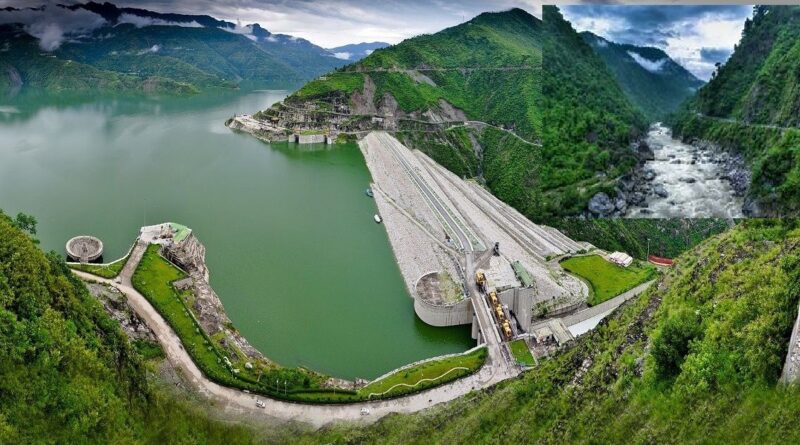
The division of assets between Uttarakhand and Uttar Pradesh has still not been completed. Experts believe that Sections 79 and 80 are the main reasons for this delay. If implemented, not only will Uttarakhand’s dream of becoming a power-producing state collapse, but it will also lose the right to navigation and water discharge in its own rivers. Even today, several lakes and reservoirs in Uttarakhand remain under Uttar Pradesh’s control. The Ganga in Haridwar too is controlled by Uttar Pradesh. Unfortunately, the political leadership of the state has concealed this fact for years. The true ownership of the Tehri Dam and THDC (Tehri Hydro Development Corporation) remains a mystery.
Political Silence and Alteration of the Original Draft
The greatest irony is that since the creation of the state, no political party has given this serious issue the importance it deserves. Both the BJP and the Congress governments have suppressed the matter, while the media too has largely remained silent. The original draft prepared by then Home Minister Indrajit Gupta clearly stated that the water resources would belong to the new state. However, this provision was later modified in the version drafted under L. K. Advani, thereby excluding Uttarakhand from full control.
Conditions in Sections 79–80 That Obstruct Development
According to official records, the division of assets between Uttar Pradesh and Uttarakhand remains incomplete, leaving the new state deprived of its own resources. The Central Committee Report of 2016 also admitted that the main reason for this deadlock is Sections 79 and 80. In 2024, the Uttarakhand government wrote to the Centre, requesting greater representation in the Ganga Management Board and an amendment to Section 80, but received no response. Experts estimate that if these sections are implemented in full, the state’s revenue could fall by up to 40 percent, as a major share of income from hydropower projects would go to the Centre.
Ganga Management Board and Centralization of Power
Uttarakhand’s lands are already under threat from landslides, corruption, and land mafias. By placing forests under the Concurrent List, the Centre has already taken control of them. Now, by bringing rivers like the Ganga and Yamuna under the jurisdiction of the proposed Board through Sections 79 and 80, the state has been left with only the right to watch.
Regrettably, neither political circles nor the media have taken this matter seriously. Under Section 80, the Ganga Management Board has been formed to regulate irrigation, rural and urban water supply, hydropower generation, navigation, industrial use, and other specified purposes related to water use and distribution between Uttarakhand and Uttar Pradesh.
The Central Government holds the main control over this Board — its Chairperson and two representatives are appointed by the Centre, while Uttarakhand and Uttar Pradesh can nominate only one member each. The Board is responsible for the administration, regulation, and development of all projects related to the Ganga and its tributaries. It also has the authority to manage water supply, electricity distribution, and approve new projects. Even the Board employees are appointed under the Centre, while the states have only advisory powers. Thus, Uttarakhand, which was once the rightful owner of its natural wealth, has now been reduced to a mere stakeholder. All hydropower projects too are controlled by the Board.
Uttarakhand becoming a POWER STATE is distant deam
It is evident that Uttarakhand, blessed by nature with the invaluable wealth of water, forests, and land, is today being dispossessed of its own resources. This sacred land in the lap of the Himalayas is the origin of ten major rivers — Ganga, Yamuna, Alaknanda, Bhagirathi, Tons, Ramganga, Kosi, Gaula, Dhauliganga, and Pindar — and is estimated to possess a hydropower potential of 40,000 megawatts. However, Sections 79 and 80 of the Uttar Pradesh Reorganisation Act, 2000, have placed this immense water wealth under the control of the Ganga Management Board. Even 25 years after its creation, Uttarakhand still does not have full rights over its own rivers.
Demand to Repeal Sections 79 and 80
Although the Ganga Management Board was to be established under Section 80(A), the Central Government has already maintained control over hydropower projects totaling 14,000 megawatts through THDC, NHPC, and NTPC. Despite the principle of “as is, where is” stated in the Reorganisation Act, Uttarakhand has no share in the Tehri Dam, and receives only 12 percent royalty. In Haridwar district, the 42-kilometer stretch of the Ganga is still under the control of the Uttar Pradesh Jal Nigam. Out of Uttarakhand’s 13 districts, 468 natural lakes located in 11 districts — including Nainital, Bhimtal, Sattal, and Naukuchiatal — are still recorded under the Uttar Pradesh Irrigation Department. In 2023, the Uttarakhand High Court ordered that these lakes be returned to the state, but the Central Government obtained a stay order from the Supreme Court. In the same year, the Centre withheld ₹7,200 crore in royalties due to Uttarakhand from hydropower projects, citing that old agreements under Section 79(2) were still in force. As a result, the state’s budget deficit rose to ₹22,000 crore. On January 15, 2025, the Uttarakhand government filed a petition in the Supreme Court, declaring Sections 79 and 80 unconstitutional, seeking the dissolution of the Ganga Management Board and transfer of all hydropower projects to the state. The case is scheduled for hearing on February 28, 2026.
The Way Forward
Experts believe that the only solution to this long-standing issue is a tripartite agreement between the Centre, Uttarakhand, and Uttar Pradesh to abolish these two sections. They suggest forming a “Himalayan River Board”, modeled on the Bhakra–Beas system, granting Uttarakhand 51 percent voting power. Until such a reform is implemented, Uttarakhand’s statehood will remain only on paper. Nature gifted it an invaluable treasure of water, but the law has taken it away.