
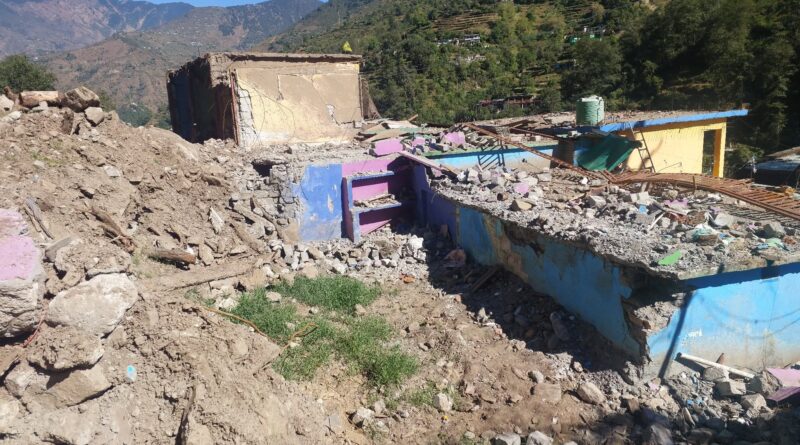
Devastation in Nandakini Valley: Unplanned Development Fuels Disaster
-BY USHA RAWAT-
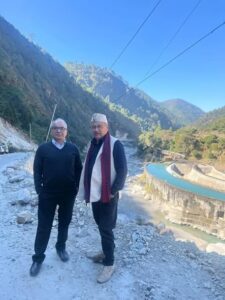
Dehradun 13 November. The picturesque Nandakini Valley in Uttarakhand was ravaged by a devastating disaster this October. Several villages in the Nanda Nagar development block were reduced to rubble. Dr. Dinesh Kumar Aswal, member of the National Disaster Management Authority (NDMA), and renowned geoscientist Dr. Mahendra Pratap Bisht surveyed the affected areas, revealing a heartbreaking scene.
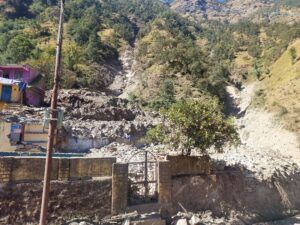
The Nandakini Valley is a treasure of Uttarakhand’s natural and cultural heritage. This 105-km river originates from the Trishul Peak and Nanda Ghughuti. Fed by the Hom Kund and Shila Samudra glaciers, it merges with the Alaknanda at Nandprayag. Every 12 years, the sacred Maa Nanda Raj Jaat pilgrimage unites Garhwal and Kumaon; the next is scheduled for August 2026. Dense forests, medicinal herbs, alpine meadows, and hundreds of streams adorn this valley.
When Dr. Bisht first visited in 1987, villages clung to high slopes with minimal roads. Over the past 48 years, “development” has transformed the landscape. Roads now crisscross the region, small run-of-the-river hydropower projects dot the valley, and hundreds of houses have sprung up along the riverbed. The old block office and PWD bungalow are now nearly impossible to locate.
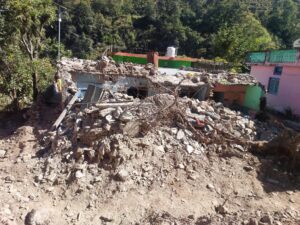
This year’s disaster exposed the perils of unplanned settlement. Near Jakhni village, a rock glacier—barely 10-15 years old—looms above new houses built at its base. Constructing homes on the alluvial fan of a high-velocity stream is an invitation to tragedy, akin to the Dharali disaster in Uttarkashi.
Ancestral wisdom has been forgotten. Areas like “Sera”—traditionally waterlogged and used only for paddy—were never meant for habitation. Yet roads now hug stream banks, and open spaces are filled with concrete homes.
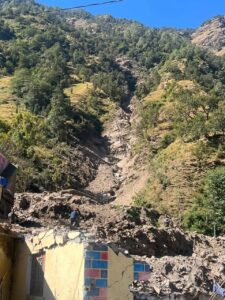
The worst-hit was Chuflang Gad, just one kilometre from Nandanangar. This spot suffered a similar tragedy in 2018. In Banj Bagad Tok, a young man woke sleeping villagers to safety but lost his life under the debris.
The term “cloudburst” is often used as an excuse. Dr. Aswal clarifies it is not a scientific term. Responsibility lies with everyone: administration turns a blind eye to settlements, geologists remain unaware, and villagers have forgotten their ancestors’ language and traditions.
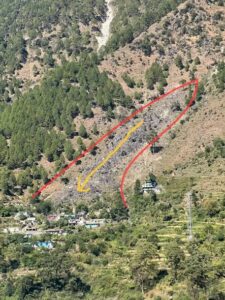
Dr. Bisht has repeatedly warned the government through reports and media. This time, he is hopeful that NDMA members Dr. Aswal and Shri Rajendra Singh Chauhan will act. His recommendations include:
- Detailed geo-scientific surveys to identify safe settlement zones.
- Marking the highest flood levels of rivers and keeping lower areas free.
- Slope stability mapping before any construction.
- Enforcing hill-specific building codes.
- Implementing scientific advice with full transparency and honesty.
-
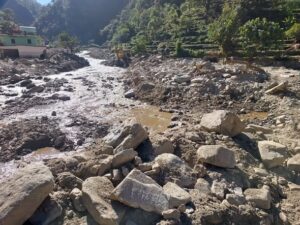
Sera: If the name was Sera then why would they build a house where they grow paddy..??
Experts believe that with integrity and accountability, such disasters can be significantly mitigated. The valley’s images stand as stark evidence that nature’s fury is a consequence of human negligence.
————————————————————————————–
About MPS BISHT: Dr. Mahendra Pratap Bisht is a renowned geoscientist and currently the Dean of the Geology Department at Hemvati Nandan Bahuguna Garhwal University. With deep expertise in Himalayan geology, his scientific research papers are invaluable assets for future studies of the Earth’s processes deep within the Himalayas.