
A Crisis of Confidence for ICE and Border Patrol as Clashes Escalate in Minneapolis
Current and former officials describe growing frustration and disillusionment with the Trump administration’s approach, even as they support the goal of immigration enforcement.


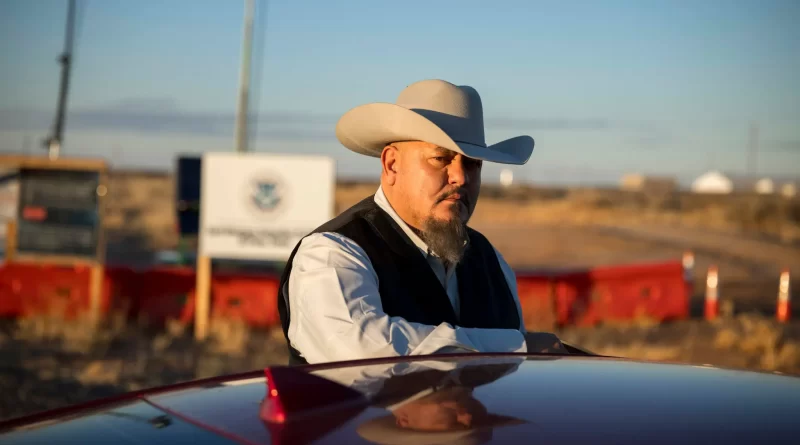
Oscar Hagelsieb spent nearly 25 years as an immigration officer and special agent, proud of his work enforcing federal laws. But watching the chaos unfolding in Minneapolis, and the fatal shooting of a U.S. citizen there on Saturday, Mr. Hagelsieb said he felt anger and despair at how the Trump administration was deploying his former agency.
“You’re not addressing the problem by throwing a 500-pound gorilla into these inner cities,” said Mr. Hagelsieb, 52, who said he voted three times for President Trump and retired from the Department of Homeland Security in 2023. “It’s completely unfair to the agents who have been put in this position.”
“They’re causing chaos, and unfortunately it’s costing lives,” he added. “There’s only so much they can handle before bad things start to happen.”
Mr. Hagelsieb’s comments reflect a growing sense of fear, frustration and disillusionment among some current and former immigration officials at the department, which is leading Mr. Trump’s push to arrest and deport millions of people. In interviews with The New York Times, more than 20 of them expressed anxieties that the administration was sending federal agents into situations in Minneapolis and other major cities that were increasingly dangerous both for them and civilians they encountered. They said that long hours, arrest quotas and public vitriol were taking a significant toll on morale.

Many also worried that the fallout would irreparably damage how the public perceived the two main homeland security agencies involved in Mr. Trump’s crackdown, Immigration and Customs Enforcement and the U.S. Border Patrol, hurting long-term recruitment and retention. Several said they worried that Democrats would draw on voter outrage to shut down ICE, which has been the most publicly visible arm of the immigration operation, if they returned to power.
Some also criticized the more aggressive tactics being used by the Border Patrol, as well as the combative approach of one of its leaders, Gregory Bovino. Mr. Bovino has often used the phrase “turn and burn” to describe Border Patrol operations, a reference to actions like smashing windshields, using explosives to blow down the doors of homes and engaging in car chases.
Gil Kerlikowske, who during the Obama administration led Customs and Border Protection, which includes the Border Patrol, said most Border Patrol agents did not have experience “policing an urban environment.”
Mr. Kerlikowske also said many of the tactics he had seen being used in Minneapolis and other cities, like shooting people with pepper ball rounds and spraying chemical agents at nonviolent protesters, were “far outside standard practices in law enforcement.” And he said his conversations with current Border Patrol employees reflected a grim situation.

“Morale is in the dumpster,” he said. “Many of the agents will be very happy to go back to the job they were trained for on the border.”
It is hard to know how widespread any sense of discontent is among ICE and Border Patrol agents on the ground in Minneapolis or other cities. Many have been seen arguing with protesters and appear to be supporting one another during confrontations. Paul Perez, the chief of the Border Patrol union, told The Times that morale remained “high” and that there were plenty of volunteers for Mr. Trump’s immigration operations.
“Agents are concerned about being doxxed, having their families and themselves put at risk,” Mr. Perez said. “But I don’t think anybody’s afraid to do the mission.”
Karoline Leavitt, the White House press secretary, blamed Democrats for the violence and chaos in Minnesota.
“Nobody, including President Trump, wants to see people get shot or hurt,” Ms. Leavitt said in a statement. “That’s exactly why Governor Walz and Mayor Frey need to allow local police to work with federal law enforcement to remove illegal alien criminals, murderers and pedophiles from Minnesota,” she added, referring to Tim Walz of Minnesota and Jacob Frey of Minneapolis.
Mr. Trump on Sunday posted on social media asking Democratic leaders to “formally cooperate with the Trump Administration” rather than “resist and stoke the flames of Division, Chaos, and Violence.”
The Homeland Security Department did not respond to a request for comment.
Over the past year, the Trump administration has rapidly grown both ICE and the Border Patrol, thanks to an infusion of billions of dollars from Congress that has financed an intense recruitment drive. Many homeland security hiring ads feature military-style imagery, like officers wearing tactical gear and driving combat vehicles. They refer to immigration as an “invasion” and immigrants as “enemies.”

The Times spoke with current and former officials in the hours after federal agents in Minneapolis on Saturday shot and killed Alex Pretti, an intensive care nurse who was filming them, the second fatal shooting of a civilian there this month. Many described the deaths of Mr. Pretti and the other American citizen, Renee Good, as points of no return in the relationship between homeland security and members of the public. Most of those who spoke to The Times did so on the condition of anonymity, fearing retribution from the Trump administration if they spoke openly.
All of the current and former ICE officials who spoke with The Times said they supported enforcing the nation’s immigration laws. Many said they believed that President Joseph R. Biden Jr.’s border policies had contributed to the current crisis. They also criticized many blue cities and states for not cooperating more with federal immigration authorities, for instance by restricting their ability to make arrests of undocumented immigrants at jails and prisons, moves that they said were safer than picking people up on the street.
But most said they were unhappy with the sharp language from top White House and Homeland Security officials, especially their quick rush to conclude that agents were blameless and Mr. Pretti was at fault, before a full investigation had taken place. One current Homeland Security agent said he had “always given the benefit of the doubt to the government in these situations” but he no longer believed “any of the statements they put out anymore.”
Many also said that Mr. Trump’s mass-arrest campaign was proving counterproductive. In part, they said, that was because many federal agents were not thoroughly trained in dealing with hostile crowds, a growing concern as organized groups of protesters have sought to monitor homeland security activities, filming them on the street, following their agents’ cars and blowing whistles to disrupt their operations.
“We lost all trust,” one current ICE official said. “I’m not sure I can see how we exist three years from now.”
Most ICE agents do not receive specialized training in crowd control, according to a 2021 report by the Government Accountability Office. Neither do agents at the F.B.I.; the Bureau of Alcohol, Tobacco, Firearms and Explosives; and the U.S. Marshals Service, the report found. Thousands of law enforcement officers from those agencies have also been assigned to the immigration crackdown. Border Patrol agents do receive more extensive training in crowd control.
Federal tactics for making immigration arrests have also changed substantially, current and former officials said. In previous administrations, ICE tried to take a more targeted approach. That could involve carrying out several days of surveillance before approaching a suspect, trying to identify the safest place to make an arrest.
But the administration’s demand for as many as 3,000 arrests per day has significantly reduced the time available for that kind of careful preparation.
In a social media post on Sunday, Tim Quinn, a former senior official at C.B.P. who left the agency last year, criticized the White House’s “reckless push for deportation numbers,” saying that it was “putting the public and law enforcement at great risk.”
Meanwhile, agents have been told to cast a far wider net, questioning people they encounter about their immigration status, which has made many of their operations resemble indiscriminate street sweeps. That has led to concerns about racial profiling, inciting anger in many communities.
“I’m Hispanic, I look Hispanic,” Mr. Hagelsieb said. “I would be highly upset if someone came and asked me if I was illegal because I’m Hispanic.”
Deborah Fleischaker, who was the assistant director for policy for ICE during the Biden administration, said the agency had previously conducted immigration enforcement in a “careful, thoughtful, targeted way.”
For example, she said, agents would plan extensively to minimize the risk to themselves, their targets and the community.
“None of that appears to be happening anymore,” Ms. Fleischaker said. Referring to the current operation in Minneapolis and other cities, she added, “This isn’t what they were trained to do.”
John Mitnick, who served as the top attorney at the Department of Homeland Security in the first Trump administration, wrote on social media that he was “enraged and embarrassed by DHS’s lawlessness, fascism, and cruelty.”
Under Mr. Trump, the Border Patrol has also played a sweeping role in enforcing immigration laws within the nation’s interior. There are fewer constitutional protections at the border than there are inside the country.

The agency has sent hundreds of agents to Minneapolis; Los Angeles; Washington, D.C.; Portland, Ore.; and Memphis, the main targets of Mr. Trump’s immigration crackdown. Several current and former homeland security officials said they believed that the Border Patrol was not prepared to operate this extensively within cities.
Border Patrol’s more aggressive tactics have led to behind-the-scenes conflicts with ICE, according to current and former federal officials. Two former ICE officials said the public was blaming ICE for Border Patrol’s behavior.
As Mr. Trump has sent thousands of federal agents into Minneapolis, making it the nation’s largest-ever immigration enforcement operation, public opinion has shifted decisively against ICE. Just 36 percent of voters said they approved of the way ICE was handling its job, while 63 percent disapproved, according to a Times/Siena University poll. Fueled by the outrage, Senate Democrats have signaled that they may be willing to partly shut down the government over the Homeland Security Department’s funding.
One former ICE official questioned whether many Americans would want to work in federal law enforcement after seeing the clashes in Minneapolis.
For Mr. Hagelsieb, one particular worry is the number of ICE special agents taken off of complex criminal investigations to instead track down undocumented immigrants, many of whom have not been convicted of crimes.
A Times investigation last year found that agents at Homeland Security Investigations, which is part of ICE and is where Mr. Hagelsieb worked, had been reassigned from cases involving sex crimes against children, drug smuggling and terrorism.
“It’s like a local police department pulling a homicide investigator to conduct an operation against jaywalkers,” Mr. Hagelsieb said.
——————————————–
Christopher Flavelle and Michael H. Keller contributed reporting.