
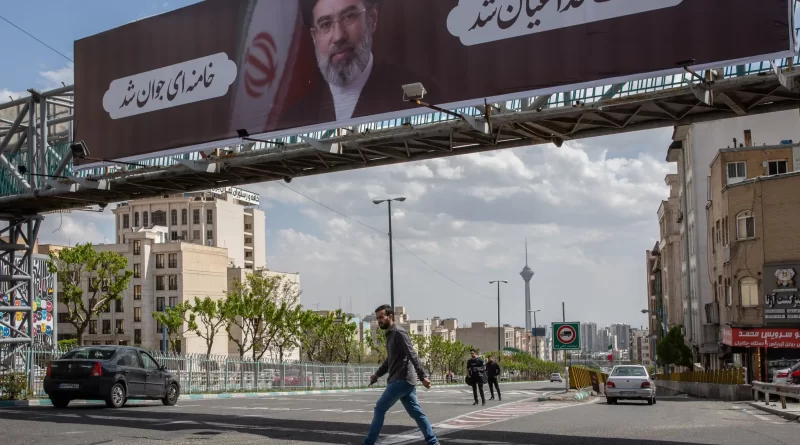
Iran War Live Updates: Iranian Forces Claim Seizure of 2 Ships After Trump Extends Truce

Iran’s Revolutionary Guards said they had attacked and seized two cargo ships near the Strait of Hormuz, state media reported. Both sides were seeking to exert control in the waterway even as President Trump renewed a cease-fire.

Iran’s Islamic Revolutionary Guards Corps said it had seized two container ships on Wednesday in the area of the contested Strait of Hormuz, Iranian news media reported, hours after President Trump announced that he was extending a cease-fire.
Earlier Wednesday, U.K. Maritime Trade Operations, a shipping monitor run by the British Navy, reported that two ships had been attacked near the strait, one by a gunboat belonging to the Revolutionary Guards. Iranian news media reported that the Guards had targeted two cargo vessels, the MSC Francesca and Epaminondas, and the force’s Navy later claimed to have seized the ships after they attempted to navigate “without the necessary permits.”
The Geneva-based Mediterranean Shipping Company (MSC) did not immediately respond to a request for comment.
The attacks showed how both Iran and the United States were seeking to exert control over shipping in the area. Even as Mr. Trump announced the cease-fire extension late on Tuesday, before it was set to expire, he said the United States would continue to block ships heading to and from Iranian ports — a move that Iran’s foreign minister called “an act of war.”
Vice President JD Vance’s planned trip to Pakistan for a second round of peace talks was put on hold Tuesday because Tehran had not responded to American demands in the negotiations, a U.S. official said. Iran’s foreign ministry spokesman, Esmaeil Baghaei, said Wednesday that Iran remained open to the idea of further talks but stood ready to defend itself militarily.
In a social media post, Mr. Trump said he had renewed the truce on a request from Pakistan, which is trying to mediate an end to the war. He said the cease-fire would remain in place until Iran’s “leaders and representatives can come up with a unified proposal.”
Here’s what else we are covering:
-
Strait of Hormuz: In London, Britain and France were set to host military planners from more than 30 countries to “advance military plans to reopen the strait, as soon as conditions permit, following a sustainable cease-fire agreement,” according to a statement from Britain’s defense minister.
-
Fuel prices: Germany’s Lufthansa Group said Tuesday that it would cut 20,000 short-haul flights through October, citing the doubling of jet fuel prices since the start of the Iran war.
-
Lebanon: An exchange of attacks along the Israeli-Lebanese border on Wednesday put pressure on the countries’ already tenuous truce.
-
The Headlines: A special episode of the podcast answers listeners’ questions about the war.
Attacks along the Israel-Lebanon border put a cease-fire under strain.
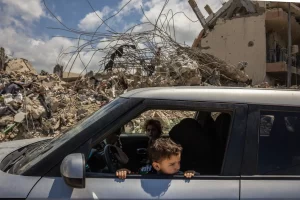
An exchange of attacks along the Israeli-Lebanese border on Wednesday put pressure on the two countries’ already tenuous truce, as President Trump’s parallel cease-fire with Iran was also coming under strain.
The 10-day truce agreement between Lebanon and Israel, reached last week, halted weeks of all-out war between Israel and Hezbollah, the Lebanese militant group backed by Iran. The conflict, which erupted soon after the Iran war began in late February, has killed roughly 2,300 people in Lebanon, including 13 Israeli soldiers, and two civilians in Israel, according to the authorities in each country.
The U.S.-mediated cease-fire has largely held. But with Hezbollah and Israel trading accusations of violating the agreement, it is fraught with uncertainty.
Israeli forces are still deployed in a broad section of southern Lebanon, a six-mile-wide strip of land that stretches along the entire border. Israel has signaled that it plans to occupy that area indefinitely; its defense minister, Israel Katz, said last week that operations to “clear out” the area would continue despite the cease-fire.
Hezbollah said on Wednesday that it had launched a drone at Israeli troops in southern Lebanon, which the Israeli military said it had intercepted. A day earlier, the group fired rockets and drones into northern Israel, its first attack since the truce took effect, raising fears of further escalation. Hezbollah said both attacks, which caused no casualties, were in response to Israeli violations of the truce agreement.
Earlier on Wednesday, the Israeli military targeted a number of Israeli border towns with airstrikes and artillery fire, according to Lebanon’s state-run news agency. It also demolished civilian homes and infrastructure, the agency said.
Israel says its continuing military operations in Lebanon do not violate the agreement, citing a clause that allows it “to take all necessary measures in self-defense, at any time, against planned, imminent or ongoing attacks.” Analysts have characterized Israel’s interpretation of that clause as overly broad.
Hezbollah has criticized the cease-fire agreement, which was signed by only the Lebanese and Israeli governments, and leaders of the group have pledged to respond to Israel’s continued attacks. Lebanese and Israeli officials are set to meet in Washington on Thursday for another round of rare direct talks aimed at brokering a longer-term arrangement.