Uncategorized

Uncategorized

भारत का इस्पात उद्योग: विकास और वैश्विक नेतृत्व की कहानी


-A PIB Feature-

भारत के इस्पात उद्योग में हुई प्रगति की कहानी इस क्षेत्र में हुए उल्लेखनीय परिवर्तन का प्रमाण है, जो देश की व्यापक आर्थिक विकास की यात्रा को दर्शाता है। वैश्विक उत्पादन में कभी एक मामूली भूमिका निभाने वाला यह क्षेत्र आज विकसित होकर दुनिया का दूसरा सबसे बड़ा इस्पात उत्पादक बन गया है, जिसने वर्ष 2018 में जापान को पीछे छोड़कर यह दर्जा हासिल किया है। इस्पात उद्योग में यह बदलाव आधुनिकीकरण, आत्मनिर्भरता और सतत औद्योगीकरण की दिशा में भारत की व्यापक यात्रा का प्रतीक है और प्रधानमंत्री नरेन्द्र मोदी के शब्दों में, इस्पात उद्योग देश के बुनियादी ढांचे को मजबूत करने में एक “महत्वपूर्ण भूमिका” निभाएगा क्योंकि भारत एक विकसित देश बनने के अपने दृष्टिकोण का अनुसरण करता है के अनुरूप है।

भारत के इस्पात उद्योग की वृद्धि, विशेष रूप से 2019 और 2023 के बीच, उल्लेखनीय रही है। इस अवधि के दौरान, भारत का इस्पात उत्पादन 6 प्रतिशत की प्रभावशाली चक्रवृद्धि वार्षिक वृद्धि दर (साएजीआर) से बढ़ा, जो चीन के 1 प्रतिशत से काफी आगे निकल गया और वैश्विक इस्पात उत्पादन से आगे निकल गया, जिसमें 1 प्रतिशत  की गिरावट देखी गई। पिछले पाँच वर्षों में वैश्विक इस्पात क्षमता में लगभग 62 मिलियन टन की वृद्धि देखी गई है, जिसमें भारत का योगदान इस वृद्धि का 6 प्रतिशत  है। विशेष रूप से, एशिया की इस्पात निर्माण क्षमता में वृद्धि का लगभग 89 प्रतिशत हिस्सा आसियान और भारत का है।

भारत के इस्पात उद्योग का यह प्रदर्शन वैश्विक बाजार में देश की रणनीतिक स्थिति को उजागर करता है, जो ‘आत्मनिर्भर भारत’ जैसे घरेलू विनिर्माण प्रयासों से प्रेरित है। भारत सिर्फ स्टील का उत्पादन ही नहीं कर रहा है; यह आयात निर्भरता को कम करने और निर्यात प्रतिस्पर्धात्मकता बढ़ाने के लिए एक रोडमैप तैयार कर रहा है।

भारत के इस्पात उद्योग की इस सफलता में राष्ट्रीय इस्पात नीति (एनएसपी) 2017 की महत्वपूर्ण भूमिका  रही है, जिसमें 2030-31 तक 300 मिलियन टन कच्चे इस्पात की क्षमता हासिल करने के महत्वाकांक्षी लक्ष्य निर्धारित किए गए हैं और 255 मिलियन टन कच्चे इस्पात और 230 मिलियन टन तैयार इस्पात का उत्पादन अपेक्षित है। इस नीति का उद्देश्य भारत को इस्पात उत्पादन में आत्मनिर्भर बनाना, घरेलू और अंतर्राष्ट्रीय दोनों बाजारों की इस्पात संबंधी जरूरतों को पूरा करना तथा उद्योग की क्षमता और  गुणवत्ता बढ़ाने के लिए टिकाऊ और ऊर्जा-कुशल विधियों को अपनाने पर जोर देना है।

कच्चे इस्पात का उत्पादन वर्ष 2019-20 में 109.137 मिलियन टन से बढ़कर वर्ष 2023-24 में 144.299 मिलियन टन  हो गया, जो पिछले वर्ष (2022-23 में 127.197 मिलियन टन ) की तुलना में 13.4 प्रतिशत की वृद्धि है। घरेलू इस्पात उद्योग की क्षमता वर्ष 2019-20 में 142.299 मिलियन टन  प्रति वर्ष से बढ़कर वर्ष 2023-24 में 179.515 मिलियन टन  हो गई, जिससे उत्पादन में भी वृद्धि हुई है। इसी अवधि के दौरान उत्पादन क्षमता का उपयोग बढ़कर 81 प्रतिशत हो गया।


https://one.oecd.org/document/DSTI/SC(2024)3/FINAL/en/pdf

2 https://one.oecd.org/document/DSTI/SC(2024)3/FINAL/en/pdf

https://steel.gov.in/sites/default/files/lu%202320.pdf


लेकिन भारतीय इस्पात उद्योग की कहानी सिर्फ़ क्षमता में विस्तार तक सीमित नहीं है – यह घरेलू खपत में वृद्धि भी दर्शाती है। कुल तैयार स्टील की खपत वर्ष 2019-20 में 100.171 मीट्रिक टन थी, जो वर्ष 2023-24 में बढ़कर 136.291 मीट्रिक टन हो गई। यह पिछले वर्ष की तुलना में 13.7 प्रतिशत की वृद्धि दर के साथ मजबूत घरेलू मांग को दर्शाता है। वित्त वर्ष 2027 तक स्टील की मांग में 6 प्रतिशत की चक्रवृद्धि वार्षिक वृद्धि दर (सीएजीआर) के अनुमान के अनुसार भारत का इस्पात उद्योग स्टील क्षेत्र से जुड़ी मांग को पूरा करने के अलावा बेहतर प्रदर्शन करने के लिए भी तैयार है।

इस्पात उद्योग में हुई इस वृद्धि का श्रेय रणनीतिक नीतियों और उद्योग का नेतृत्व करने वाली पहल  को जाता है, जो क्षमता विस्तार और उच्च गुणवत्ता वाले इस्पात उत्पादों के विकास पर केंद्रित हैं।

इस्पात उद्योग एक अविनियमित क्षेत्र है तथा सरकार इस क्षेत्र के विकास के लिए अनुकूल नीतिगत वातावरण बनाकर एक सुविधा प्रदाता के रूप में कार्य करती है। सरकार ने इस्पात क्षेत्र को पूर्ण रूप से पुनर्जीवित करने के लिए कई कदम उठाए हैं।

इस्पात उत्पादन को बढ़ावा देने के लिए, एक प्रमुख पहल उत्पादन से जुड़ी प्रोत्साहन (पीएलआई) योजना है, जिसका उद्देश्य पूंजी निवेश को आकर्षित करना और आयात को कम करना है, जिसमें अनुमानित ₹29,500 करोड़ का निवेश और विशेष इस्पात के लिए 25 मिलियन टन की अतिरिक्त क्षमता का निर्माण शामिल है। इस्पात उद्योग को वैश्विक रूप से प्रतिस्पर्धी बनाने के लिए, बजट 2024 में, सरकार ने कच्चे माल, फेरो निकल पर मूल सीमा शुल्क कम कर दिया और मार्च 2026 तक फेरस स्क्रैप पर शुल्क छूट बढ़ा दी। एक अन्य प्रमुख पहल घरेलू रूप से निर्मित लौह और इस्पात उत्पाद (डीएमआई और एसपी) नीति है, जो सरकारी खरीद के लिए ‘मेड इन इंडिया’ स्टील को बढ़ावा देती है।

वित्तीय प्रोत्साहनों के अलावा, सरकार ने उद्योग की पर्यावरणीय स्थिरता को बढ़ाने के लिए निर्णायक कदम उठाए हैं। नवीन और नवीकरणीय ऊर्जा मंत्रालय द्वारा संचालित राष्ट्रीय हरित हाइड्रोजन मिशन, स्टील क्षेत्र को हरित हाइड्रोजन के उत्पादन और उपयोग के व्यापक लक्ष्य में एकीकृत करता है, जो स्टील उत्पादन के डीकार्बोनाइजेशन में योगदान देता है। स्टील स्क्रैप रीसाइक्लिंग नीति घरेलू स्तर पर उत्पादित स्क्रैप की उपलब्धता बढ़ाकर इन प्रयासों को और आगे बढ़ाती है, जिससे संसाधन दक्षता को बढ़ावा मिलता है।

आज, भारत का इस्पात उद्योग एक महत्वपूर्ण मोड़ पर खड़ा है, जो स्थिरता को अपनाते हुए महत्वपूर्ण वृद्धि के लिए तैयार है। बड़े पैमाने पर बुनियादी ढांचा परियोजनाएं और ‘मेक इन इंडिया’ और पीएम गति-शक्ति राष्ट्रीय मास्टर प्लान जैसी पहल मांग को बढ़ा रही हैं, जिससे निरंतर वृद्धि सुनिश्चित हो रही है। सरकार और निजी क्षेत्र दोनों रणनीतिक निवेश उत्पादकता और प्रतिस्पर्धात्मकता को बढ़ावा देने के लिए तैयार हैं, जिससे उद्योग को राष्ट्रीय इस्पात नीति 2017 द्वारा निर्धारित लक्ष्यों को पार करने में मदद मिलेगी। जैसे-जैसे भारत 5 ट्रिलियन डॉलर की अर्थव्यवस्था बनने की दिशा में काम कर रहा है, इस्पात क्षेत्र आर्थिक विकास, रोजगार सृजन और औद्योगिक विकास में एक महत्वपूर्ण भूमिका अदा करते हुएव टिकाऊ और समावेशी प्रगति के लिए वैश्विक मानक स्थापित करेगा।

Read More
Uncategorized

RAIGAD FORT: CAPITAL OF MOST ILLUSTRIOUS MARATHA SOVEREIGN, NURTURED BY CHHATRAPATI SHIVAJI MAHARAJ

  • The fort of Raigad is part of the 12 forts nominated for UNESCO World Heritage under the title “Maratha Military Landscapes of India”
  • Among the 12 nominated forts, Raigad is the classic example of Maratha architecture and best representation of the capital fort on a hill
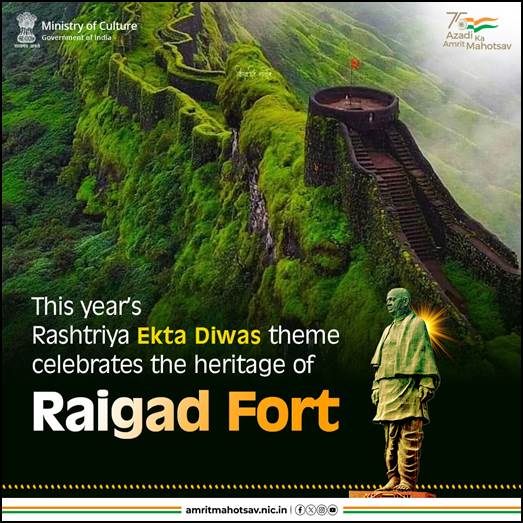
  • Theme of the backdrop of this year’s Rashtriya Ekta Divas celebrations at Kevadiya, Gujarat is the Raigad Fort
  • A replica of Raigad Fort has been made as backdrop at the venue of Rashtriya Ekta Diwas parade in Kevadiya to showcase the stories of incredible valour, heroic deeds and innovative warfare techniques of Chhatrapati Shivaji Maharaj
  • Grant Duff, a British historian drawn parallels between Raigad and the Rock of Gibraltar, labeled Raigad as the Gibraltar of the east


-Santosh Kumar

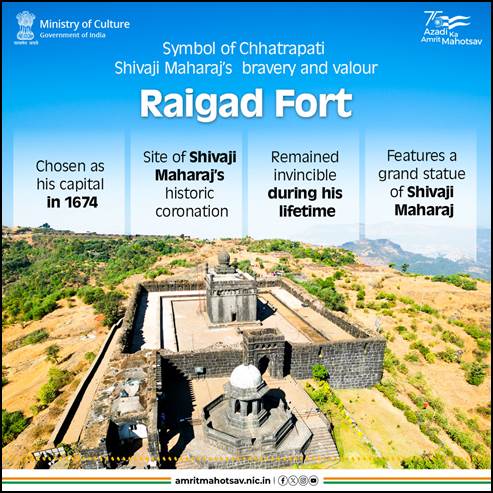
Towering above the valleys of Maharashtra, Raigad Fort carries the echoes of Chhatrapati Shivaji Maharaj’s reign. Once the capital of his flourishing Maratha Empire, this hilltop stronghold carries with it the stories of bravery, innovation, and heroism. Each stone of Raigad echoes the remarkable courage and visionary tactics of Shivaji Maharaj, whose leadership transformed this fort into a symbol of strength. Today, it continues to inspire, reminding generations of the extraordinary deeds that shaped the history of an empire.

The “Sabhasad Bakhar” (Ancient letter) reflects how Chhatrapati Shivaji Maharaj selected the Raigad fort as the capital of the Maratha Empire. It mentions, “Chhatrapati Shivaji Maharaj observed the potential of the hill or Rairi, which has steep escarpment and is the tallest of all mountains and hills in the region. The seamless and unbroken nature of the rock was a great potential. The fort of Daulatabad is also a good fort, however, it is not as good as Raigad, as this is taller and better, hence will be most suitable as a capital and a throne for the king.”

Raigad, surrounded by valleys shaped by the Kal and Gandhari rivers, stands as an isolated massif without connections to neighbouring hills. Its impregnable nature, attributed to physiographic features like steep cliffs and 1500-foot escarpments, is underscored by innovative military defence tactics.

Grant Duff, a British historian of the Maratha period has drawn parallels between Raigad and the Rock of Gibraltar. He has gone to the extent of labelling Raigad as the Gibraltar of the east.

The fort of Raigad is part of the 12 forts nominated for UNESCO World Heritage under the title “Maratha Military Landscapes of India”. Among the 12 nominated forts, Raigad is the classic example of Maratha architecture and best representation of the capital fort on a hill, well integrated with the physiography of the hill with the most developed typologies of structures within the fort.

The theme of the backdrop of this year’s Rashtriya Ekta Divas celebrations at Kevadiya, Gujarat is the Raigad Fort. A replica of Raigad Fort has been made as backdrop at the venue of Rashtriya Ekta Diwas parade in Kevadiya to showcase the stories of incredible valour, heroic deeds and innovative warfare techniques of Chhatrapati Shivaji Maharaj.

History of Raigad Fort

In 1653 CE, Raigad (then known as Rairi) was captured by the Maratha forces from the Mores’. In order to make the fort worthy of being a capital, Shivaji Maharaj assigned the work of reconstruction of the fort to Hiroji Indulkar. Subsquently, on 6th June, 1674 CE a grand coronation ceremony of Shivaji Maharaj was held on Raigad post, during which he attained the title of “Chhatrapati”. The fort served as the second capital of Chhatrapati Shivaji Maharaj and played an important role in the administration and expansion of the Maratha Kingdom.

The Raigad Fort stands as a silent reminder of Maharashtra’s glorious past and it is identified as Durgaraj (king of forts). Various landmarks have lent it the credo of ‘Shiva teerth’. The fort has attained the status of a holy shrine for the Shivbhakts as thousands of people throng the fort not only for its heritage character and it being a specimen of perfect defence architecture but also for being the seat of their role model, Chhatrapati Shivaji Maharaj, who is well known for valour, courage, administrative acumen, benevolence and patriotism. Anniversary of Shivrajyabhishek on the basis of Christian and Hindu calendars is celebrated with great enthusiasm which attract huge crowd from different parts of Maharashtra. Similarly, the death anniversary (punyatithi) of Shivaji Maharaj is also observed with great reverence.

It was here that Shivaji Maharaj had established his capital in the seventeenth century (1674 CE). Shivaji Maharaj had wrested the Fort from Chandrarao More in 1656 CE. It was considered most suitable for the capital of Hindvi Swaraj after due diligence and considering its strategic location and inaccessibility. The hilltop may only be accessed from one side of the hill. Shivaji Maharaj had ruled Hindvi Swaraj from Raigad Fort for six years till his death in 1680 CE. There is a Samadhi of Chhatrapati Shivaji Maharaj at Raigad Fort.

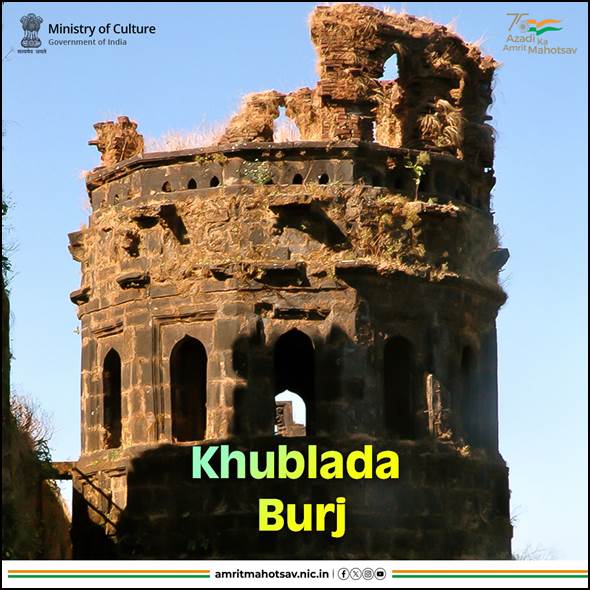
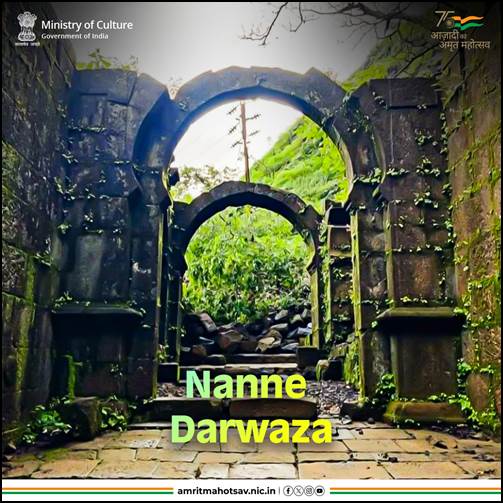
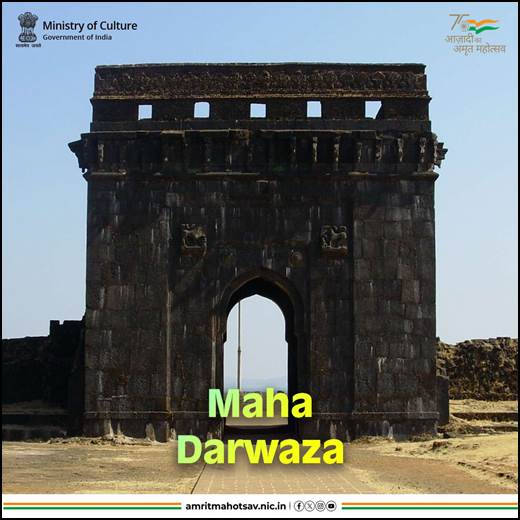
Raigad Fort is remarkable for magnificently designed gates, fortification walls and imposing monuments. It is quite unfortunate that except Shivaji Maharaj’s Samadhi, Naqqar Khana, Sirkai Devi Temple, Jagadishwar Temple – a shrine dedicated to Lord Siva – most of the structures located within the fort, including the Hall of Public Audience (Rajsadar), Royal Complex, Queens’ palace (Ranivasa), Bazarpeth, Manore (pleasure pavilions), Wadeshwar Temple, Khublada Burj, Massid Morcha, Nanne Darwaza are in a bad state of preservation.

The royal complex: The Royal Complex which includes Ranivasa, Rajsadar, Naqqarkhana, Mena Darwaza, and Palkhi Darwaja, is well-fortified and accessible only through three entrances: Naqqarkhana, Mena Darwaja, and Palkhi Darwaja. This fortified complex is commonly known as Balle Qilla (citadel). Adjacent to Balle Qilla are three elegant towers. One is located to the north, while the other two are situated to the east of the fortification wall. The three-storied towers (Manore) are highly ornate in design and appear to have originally served as pleasure pavilions. A toilet connected with proper drainage is noteworthy. An underground cellar (Khalbat Khana) is situated on the east, which was possibly used for secret meetings, personal worship, and also as a treasury.

Rajsadar (Hall of Public Audience):  This is where Shivaji Maharaj used to hold his court (darbar) to dispense justice on routine matters and to receive dignitaries and envoys. It is a rectangular structure facing east. It can be approached from the east through a magnificent gateway commonly known as Naqqarkhana. The gateway is a lofty three-storeyed structure facing the royal throne. While the topmost storey is built of bricks, the lower ones are constructed of stone blocks. It is believed that a royal band used to play at Naqqarkhana. It is an excellent example of architecture with astounding acoustic properties. The distance between Naqqarkhana and the royal throne is about 65 meters, yet even the slightest whisper can be heard clearly from both ends. Rajsadar is a mute witness to the joys, sorrows, anger, victories, administrative acumen, and overwhelming generosity of Shivaji Maharaj.

The main platform accommodates an octagonal meghdambari (ornate canopy) with a seated image of Chhatrapati Shivaji Maharaj raised over the original site of the throne. It has been recorded that the royal throne, studded with diamonds and gold, rested on eight columns of gold weighing almost 1000 kg. It also bore the royal emblem of Shivaji Maharaj. The umbrella over the throne was adorned with strings of precious stones and pearls.

Holicha Mal: It is located outside Naqqarkhana. It is a wide-open ground that was most likely used for the annual Holi festival. On the western periphery of Holicha Mal, there is a small temple dedicated to Shirkai Bhavani, the presiding deity of the fort. It is believed that the presiding deity was originally housed on a high stone plinth located in the southwest of Holicha Mal, which was later shifted to its current location. To the north of Holicha Mal, there is a spacious and well-laid-out parallel row of structural units, commonly known as Bazar Peth. Each unit in this complex features a veranda in front and two back-to-back rooms in the rear. The plinth and walls are constructed from semi-dressed basalt stone blocks and random rubble stones, with lime invariably used as mortar.

Jagadishwar Mandir: The temple, facing east, is rectangular on plan with a mandapa in front and sanctum sanctorum on the rear. The temple could be entered through a low-height entrance. The sanctum sanctorum has a Siva linga which is under worship even now. The interior walls of the temple are without any carvings. However, the projected superstructure is supported by elegantly carved brackets.

Samadhi of Chhatrapati Shivaji Maharaj: Adjacent to the Temple, the Samadhi of Chhatrapati Shivaji Maharaj is located almost opposite to the eastern entrance of Jagadishwar Mandir. Originally, the Samadhi had a low height octagonal platform only. But, sometimes in the beginning of the twentieth century not only the height of the platform was raised but a canopy too had been constructed at the same site.

At the foothills, near the Raigadwadi village, is located Chitta Darwaza. It is also known locally as Jit Darwaja. After trekking by foot for about 70-80 m, there exists Khoob Lada Burj. It is a strategically located tower from where anyone coming close to the fort could easily be spotted by the security personnel.

*****

Read More
Uncategorized

Intangible Cultural Heritage of India :Beyond Monuments and Landscapes


-A PIB Feature_

The term ‘cultural heritage’ has changed content considerably in recent decades, partially owing to the instruments developed by UNESCO. Cultural heritage does not end at monuments and collections of objects. It also includes traditions or living expressions inherited from our ancestors and passed on to our descendants, such as oral traditionsperforming artssocial practices, rituals, festive eventsknowledge and practices concerning nature and the universe or the knowledge and skills to produce traditional crafts.
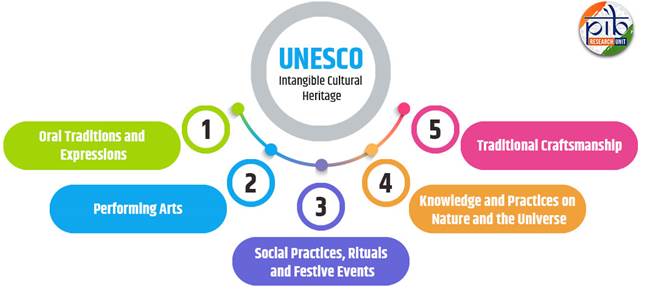
While fragile, intangible cultural heritage is an important factor in maintaining cultural diversity in the face of growing globalization. An understanding of the intangible cultural heritage of different communities helps with intercultural dialogue, and encourages mutual respect for other ways of life.

The importance of intangible cultural heritage is not the cultural manifestation itself but rather the wealth of knowledge and skills that is transmitted through it from one generation to the next. The social and economic value of this transmission of knowledge is relevant for minority groups and for mainstream social groups within a State, and is as important for developing States as for developed ones.

The Intergovernmental Committee for the Safeguarding of the Intangible Cultural Heritage provides guidance on best practices and make recommendations on measures for the safeguarding of the intangible cultural heritage. The Committee is also in charge of granting international assistance. The Committee examines requests submitted by States Parties for the inscription of intangible heritage on the Lists as well as proposals for programmes and projects. The Committee meets annually to evaluate nominations proposed by States Parties to the 2003 Convention and decide whether or not to inscribe those cultural practices and expressions of intangible heritage on the Convention’s Lists.
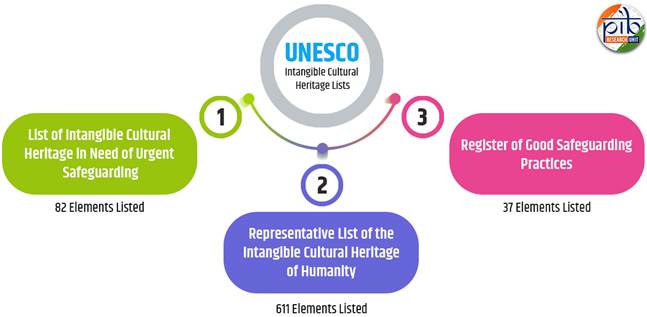
So far, 730 elements corresponding to 5 regions and 145 countries have been listed as Intangible Cultural Heritage. India has 14 elements included in this prestigious list, all of which are part of the Representative List of the Intangible Cultural Heritage of Humanity.
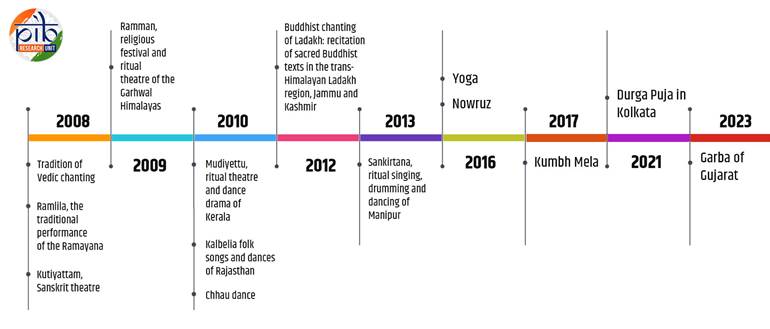
 

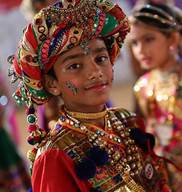
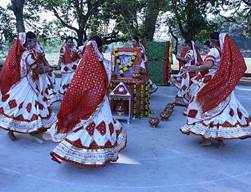
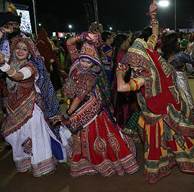
Garba of Gujarat
      

Year                            : 2023


Main Concept            : Dance, Ritual, Vocal Music

Garba is a traditional dance performed during the Hindu festival of Navaratri, worshiping feminine energy or ‘Shakti’. Dancers encircle a lit earthenware pot or an image of the goddess Amba, moving counter-clockwise with simple steps, clapping and singing in unison. Garba involves diverse participants such as dancers, musicians, craftspeople, and religious figures, fostering inclusivity across socio-economic and religious divides. Transmitted across generations through practice and observation, Garba also benefits from institutional support including workshops and courses in various related arts, further enriching its cultural significance and community bonds.


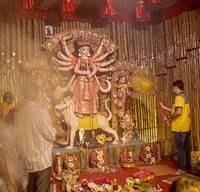
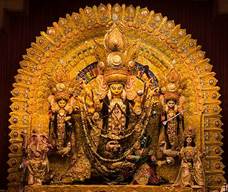
Durga Puja in Kolkata
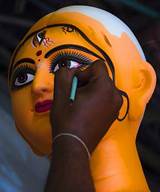
      

Year                            : 2021


Main Concept            : Handicrafts, Sculpture

Durga Puja is an annual festival celebrated primarily in Kolkata and other parts of India, dedicated to the worship of goddess Durga over ten days in September or October. Artisans sculpt clay images of Durga and her family months before the festival using river clay, which are then brought to life with painted eyes on the inaugural day of Mahalaya. The festival culminates with the immersion of these images in the Ganga River, symbolizing a return to one’s roots. Durga Puja is renowned for its blend of religion and art, featuring elaborate installations, traditional drumming, and widespread community participation that bridges social divides of class, religion, and ethnicity.


Kumbh Mela
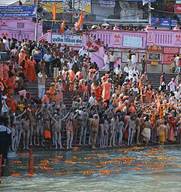
    

Year                            : 2017


Main Concept            : Pilgrimages. Religious Practice, Sacred Sites

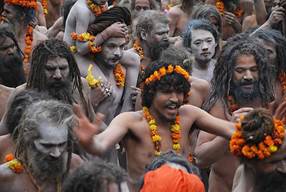
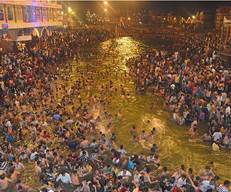
Kumbh Mela, the largest peaceful gathering of pilgrims globally, sees millions bathing in sacred rivers like the Ganges to cleanse themselves of sins and attain spiritual liberation. Held every four years in Allahabad, Haridwar, Ujjain, and Nasik, the festival attracts people from all walks of life, including ascetics, saints, and visitors, regardless of caste or creed. It combines astronomy, astrology, spirituality, and rich cultural traditions, imparted through ancient manuscripts, oral traditions, and the mentorship of sadhus in ashrams and akhadas. Kumbh Mela serves as a profound spiritual and cultural event, deeply influencing Indian society and showcasing its diversity.

Nowruz

      

Year                            : 2016


Main Concept            : Festivals, New Year, Prosperity Ritual

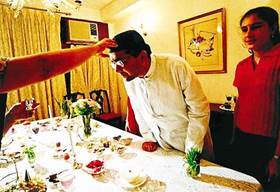
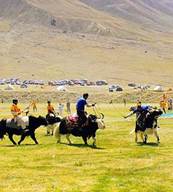
March 21 marks the start of the year in Afghanistan, Azerbaijan, India, Iran (Islamic Republic of), Iraq, Kazakhstan, Kyrgyzstan, Pakistan, Tajikistan, Turkey, Turkmenistan and Uzbekistan. It is referred to as Nowruz or Navroz in India, meaning ‘new day’ when a variety of rituals, ceremonies and other cultural events take place for a period of about two weeks. Families gather around a decorated table symbolizing purity and prosperity to share special meals. People wear new clothes, visit relatives, especially elders, and exchange gifts, often handmade by artisans. The festivities include music and dance performances, traditional sports, and the making of handicrafts, fostering cultural diversity and community solidarity. These traditions are passed down through generations, promoting tolerance and peace through active participation and observation.

Yoga
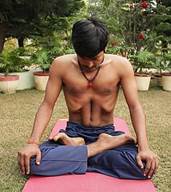
   Yoga Portal   ayurveda

Year                            : 2016


Main Concept            : Mind, Physical Education, Spiritual Knowldge

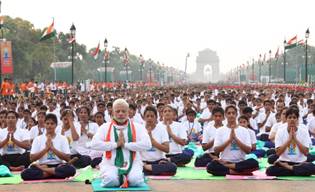
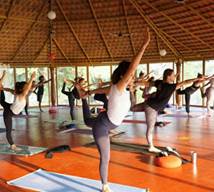
The philosophy of yoga, rooted in ancient Indian traditions, profoundly influences various aspects of society including health, education, and the arts. Yoga integrates mind, body, and soul through poses, meditation, controlled breathing, and chanting, promoting mental, spiritual, and physical wellbeing. Practiced by people of all ages and backgrounds, yoga transcends gender, class, and religion, gaining popularity worldwide. Traditional transmission through the Guru-Shishya model continues in ashrams, schools, universities, and online platforms, supported by ancient manuscripts and modern literature, enriching its practice and teaching.

Sankirtana, ritual singing, drumming and dancing of Manipur
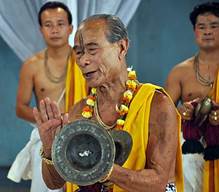
      

Year                            : 2013


Main Concept            : Dance, Rituals, Vocal Music

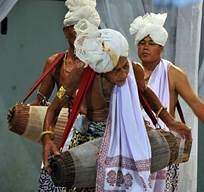
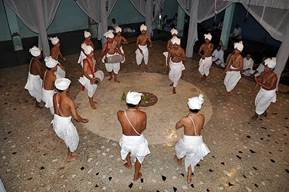
Sankirtana is a vibrant tradition among the Vaishnava community in the Manipur plains, involving song and dance performances that narrate the life of Krishna. Typically held in temples or courtyards with two drummers and about ten singer-dancers, these performances evoke deep religious and aesthetic sentiments, often moving spectators to tears or reverence. Sankirtana serves dual roles: it unites the community during festive occasions and strengthens social bonds through life-cycle ceremonies. This practice is integral to Manipuri culture, emphasizing community participation and the transmission of knowledge from mentors to disciples, while maintaining harmony with the natural world through its rituals.

Buddhist chanting of Ladakh: Recitation of Sacred Buddhist texts in the trans-Himalayan Ladakh Region
      

Year                            : 2012


Main Concept            : Buddhism, Religious Practice, Vocal Music

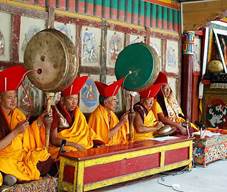
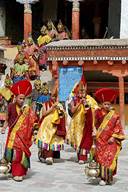
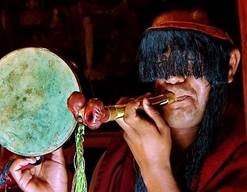
In Ladakh, Buddhist lamas perform sacred chanting rooted in Mahayana and Vajrayana traditions, practiced across four major sects: Nyngma, Kagyud, Shakya, and Geluk. Chanting serves spiritual and moral purposes, performed during life-cycle rituals and important Buddhist and agrarian events. Chants are conducted in groups, accompanied by symbolic gestures (mudras) and traditional instruments like bells and drums. Acolytes undergo rigorous training under senior monks, memorizing texts through frequent recitation. These daily chants in monastery halls are prayers for world peace and personal spiritual growth.

Chhau Dance
    

Year                            : 2010


Main Concept            : Acrobats, Dance, Hinduism, Representative Literary Works

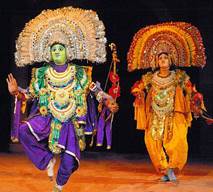
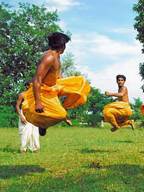
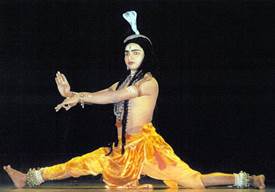
Chhau dance, originating from eastern India, encompasses narratives from epics, folklore, and abstract themes, distinguished by styles from Seraikella, Purulia, and Mayurbhanj. It incorporates mock combat, bird and animal movements, and village household gestures, taught primarily to male dancers from traditional artist families or local communities. Performed at night with traditional music including reed pipes and drums, Chhau plays a vital role in local festivals and cultural identity, yet faces challenges from modernization and economic pressures that threaten community participation and heritage preservation.

Kalbelia Folk Songs and Dances of Rajasthan
      

Year                            : 2010


Main Concept            : Dance, Intrumental Music, Vocal Music

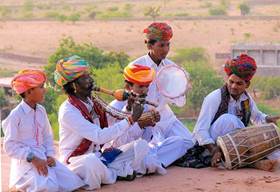
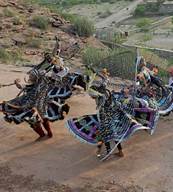
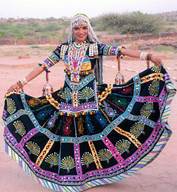
Kalbelia songs and dances, once practiced by snake handlers, now celebrate their cultural heritage through music and movement. Women adorned in black skirts emulate serpentine motions while men play traditional instruments like the khanjari and poongi. These performances, rich with mythological narratives and improvisational poetry, are integral to Kalbelia identity, conveying stories and traditions orally across generations amidst societal changes and challenges to their traditional lifestyle.

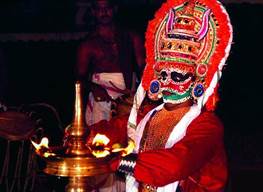
Mudiyettu, Ritual Theatre and Dance Drama of Kerala
      

Year                            : 2010


Main Concept            : Dance, Religious Practice, Theatre

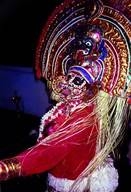
Mudiyettu is a ritual dance drama from Kerala depicting the battle between goddess Kali and the demon Darika, involving the entire village community. Performers purify themselves through fasting and prayer before invoking the goddess within a large, ritualistic drawing called kalam. Held annually at Bhagavati Kavus temples across different villages, Mudiyettu fosters mutual cooperation and community bonding while transmitting cultural values and traditions from elders to younger generations.

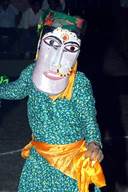
Ramman, Religious Festival and Ritual Theatre of the Garhwal Himalayas
      

Year                            : 2009


Main Concept            : Festivals, Hinduism, Theatre

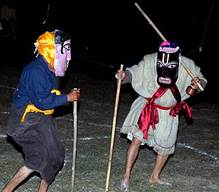
Ramman is an annual religious festival held in late April in Saloor-Dungra, Uttarakhand, dedicated to Bhumiyal Devta, a local deity. The festival features complex rituals including recitations of the epic of Rama, legends, songs, and masked dances. Organized by villagers, each caste and occupational group plays a distinct role, with Brahmans leading prayers and rituals, and Bhandaris wearing sacred masks like that of Narasimha. Ramman combines theatre, music, and historical narratives, reflecting the community’s environmental, spiritual, and cultural ethos, and reinforcing its identity through mythological tales. Efforts are underway to preserve and promote Ramman beyond its local context to ensure its cultural continuity and broader recognition.

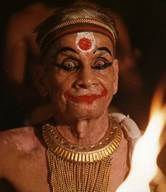
Kutiyattam, Sanskrit Theatre
      

Year                            : 2008


Main Concept            : Dance, Religious Art, Theatre

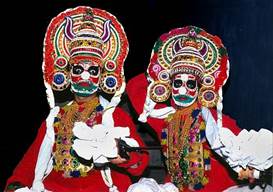
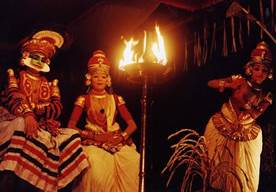
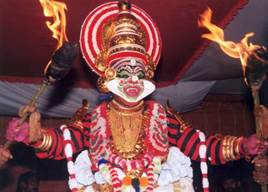
Kutiyattam, Sanskrit theatre, which is practised in the province of Kerala, is one of India’s oldest living theatrical traditions, originating more than 2,000 years ago. It emphasizes meticulous eye expressions and gestures to convey characters’ thoughts and emotions. Actors undergo rigorous training lasting up to fifteen years, mastering intricate breathing techniques and muscle control. Traditionally staged in temple theatres with sacred rituals, Kutiyattam has faced challenges due to historical shifts in patronage, leading to recent funding crises. Efforts are underway among various stakeholders to preserve and sustain this cultural treasure amidst modern challenges.

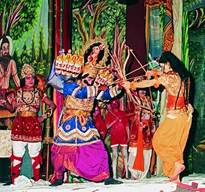
Ramlila, The Traditional Performance of the Ramayana
 s     

Year                            : 2008


Main Concept            : Epic Poetry, Theatre

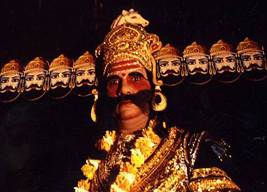
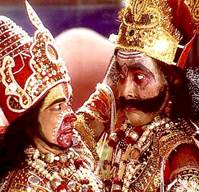
Ramlila, a traditional performance of the Ramayana epic, takes place across northern India during the Dussehra festival. Based on the Ramacharitmanas, composed by Tulsidas in the 16th century, Ramlilas span ten to twelve days in most places but can extend to a month in places like Ramnagar. These performances narrate episodes from the Ramayana, celebrating Rama’s return from exile and depicting his battle with Ravana. Despite its cultural significance in uniting communities regardless of caste or religion, Ramlila faces declining attendance due to the popularity of television dramas. Efforts are needed to preserve and promote this cultural tradition amidst modern challenges.

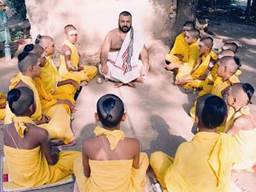
Tradition of Vedic Chanting
      

Year                            : 2008


Main Concept            : Oral Tradition, Religious Belief, Vocal Music,
  Representative Literary Works,

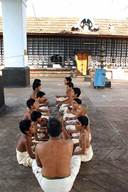
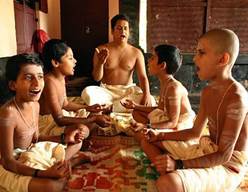
The Vedas, composed by Aryans over 3,500 years ago, are foundational texts in Hinduism, revered for their philosophical depth, rituals, and hymns. Comprising four main texts—the Rig Veda, Sama Veda, Yajur Veda, and Atharva Veda—they were traditionally chanted during rituals and daily life in Vedic communities. These texts provide insights into early Hindu history, artistic and scientific concepts, and the development of classical Sanskrit. Despite their enduring cultural significance, only thirteen of the original over one thousand Vedic recitation branches survive today, with several schools facing the risk of extinction. Efforts are ongoing to preserve this ancient oral tradition amidst contemporary challenges.

In conclusion, these living expressions, passed down through generations, play a vital role in fostering intercultural dialogue and mutual respect among communities worldwide. Recognizing and safeguarding intangible cultural heritage not only preserves cultural identity but also promotes social cohesion and sustainable development. Through initiatives like UNESCO’s Intangible Cultural Heritage Lists, nations collaborate to protect and celebrate these invaluable aspects of human heritage, ensuring their continuation for future generations.

Read More

Uncategorized

धरा गांव के पूर्व प्रधान हुकम सिंह बिष्ट का आक्समिक निधन

-हरेंद्र बिष्ट की रिपोर्ट-
थराली, 1 नवंबर। विकास खंड देवाल के अंतर्गत धरा गांव के पूर्व प्रधान हुकम सिंह बिष्ट का आक्समिक निधन होने पर गांव में शोक छा गया हैं। उनका पिंडर नदी में उनके पैतृक घाट पर गमगीन माहौल के बीच अंतिम संस्कार कर दिया गया हैं।

धरा गांव के पूर्व प्रधान हुकम सिंह बिष्ट के आक्समिक निधन होने से धरा गांव में शोक छा गया। उनके निधन के बाद पिंडर नदी स्थित घाट पर उनके पुत्र दर्शन सिंह बिष्ट, भतीजे दलबीर सिंह बिष्ट, हीरा सिंह बिष्ट, रघुवीर सिंह बिष्ट, गोविंद सिंह बिष्ट, मदन सिंह बिष्ट ने मुखाग्नि दी इस मौके पर क्षेत्र के गणमान्य व्यक्ति आंनद सिंह रावत, यशवंत सिंह, गोपाल सिंह,लखन रावत, प्रेम सिंह रावत,पान सिंह रावत,शेर सिंह रावत,पान सिंह रावत आदि मौजूद रहे।

Read More
Uncategorized

Novel experiment to explore the limits of quantum theory for arbitrarily massive objects

-A PIB Feature-

Scientists have devised an experiment for testing the domain of validity of quantum theory for objects much more massive than the usual microphysical objects (atoms, molecules etc), beyond which the classical theory has to be necessarily used. This study can also help in developing high precision quantum sensors which are important tools in the cutting- edge quantum technologies.

The principles of Quantum Mechanics replacing that of Newtonian classical mechanics were developed nearly 100 years back. Yet, a number of quantum foundational issues remain problematic. For example, the boundary between the quantum mechanical microworld and the large scale macroscopic classical world of everyday objects obeying Newtonian Laws remains unspecified. The question–up to what level the quantum mechanical principles be valid for macroscopic objects– continues to be one of the most fundamental open questions in contemporary physics.

This question is also intimately related to another hotly pursued fundamental issue– testing whether gravity is quantum mechanical or not.

All the proposed laboratory-based schemes seeking to demonstrate the quantum mechanical nature of gravity crucially rest on assuming applicability of fundamental quantum principles for sufficiently massive objects.

However, the state –of- the- art demonstrations of quantum features have so far reached only up to macromolecules of masses ten thousand times the hydrogen atom. Hence, breakthrough ideas, feasible to be implemented experimentally in the near future, are the need of the hour in order to scale up the tests of macroscopic quantumness to ever more massive objects.

Prof. Dipankar Home from Bose Institute, Kolkata, an autonomous institute of the Department of Science and Technology (DST), in collaboration with D. Das, S. Bose (University College London) and H. Ulbricht (University of Southampton, UK) have addressed this challenge by formulating a novel procedure for demonstrating an observable signature of quantum behaviour for an oscillating object like pendulum having any large mass.

These scientists have found a novel way for detecting measurement induced disturbance for an arbitrarily massive quantum mechanical pendulum. They have formulated an implementable scheme based on using lasers to suspend a single nanocrystal of silica (a microscopic glass bead) as it oscillates around the focal point of a small parabolic mirror carved out of a block of aluminum housed in a vacuum chamber.

In a typical classical pendulum, the bead would move regularly from point A to point B and back again, unaffected by any observation. However, a quantum pendulum should behave very differently. Its position will change depending on whether or not someone is watching. If we were to detect at any instant where the pendulum bob was, there would be an immediate change of its future behavior. Such a disturbance is an unavoidable consequence of any measurement process involving quantum mechanical system. The scheme proposed by these scientists would enable detecting such measurement induced quantum disturbance for objects much more massive than usual microphysical objects.

Given the present state- of- the -art technology, this envisaged experiment could be realizable in the coming years for systems ranging from oscillating nano-objects (like that of a grain of dust, about trillion times heavier than hydrogen atom) to oscillating mirrors having effective mass of about 10 kg used for gravitational wave detection.

An experimental study has already been launched by one of the co-authors of this paper, Prof. H.Ulbricht and his group at University of Southampton, UK using optically levitated nano-diamonds about billion times heavier than hydrogen atom.

Thus, this work would pave the way for experiments providing the most emphatic demonstration of large scale quantumness and would open up the possibility for leveraging such macroscopic quantumness for practical applications, such as by developing high precision quantum sensors which are key ingredients in the emerging quantum technologies.

Read More
Uncategorized

उत्तरकाशी में भी होगा 4 नवंबर को गंगा उत्सव का आयोजन


उत्तरकाशी, 01 नवम्बर । आगामी 4 नवम्बर को जिला गंगा समिति के तत्वावधान में जिला मुख्यालय उत्तरकाशी में गंगा उत्सव का आयोजन किया जाएगा। जिलाधिकारी  डॉ. मेहरबान सिंह बिष्ट ने  इस उत्सव के लिए संबंधित विभागों के नोडल अधिकारियों  को  जिम्मेदारी सौंपते हुए तय कार्यक्रमों का सफलतापूर्वक आयोजन करने के निर्देश देने के साथ ही आम जनमानस से इस उत्सव के कार्यक्रमों में अधिकाधिक संख्या में प्रतिभाग करने का आह्वान किया है।

राष्ट्रीय स्वच्छ गंगा मिशन के आह्वान  पर देश के गंगा तट पर स्थित जिलों में आगामी 4 नवम्बर को आयोजित होने वाले आठवें गंगा उत्सव का मुख्य उद्देश्य गंगा नदी के संरक्षण को बढ़ावा देना, इसकी सांस्कृतिक और आध्यात्मिक महत्ता को उजागर करना और स्वच्छता के प्रति जन जागरूकता बढ़ाना है।

गंगा के उद्गम क्षेत्र उत्तरकाशी जिले  में भी जिला प्रशासन एवं जिला गंगा समिति द्वारा गंगा उत्सव का आयोजन किये जाने की रूपरेखा तय कर ली गई है। तय कार्यक्रम के अनुसार जिला मुख्यालय उत्तरकाशी मैं आगामी 4 नवंबर को आयोजित होने वाले गंगा उत्सव के तहत पूर्वाह्न 11 से दोपहर 12 बजे तक जोशियाड़ा झील में जल क्रीड़ा का आयोजन किया जाएगा। दोपहर 12 बजे से अपराह्न 2 बजे तक राजकीय कीर्ति इंटर कॉलेज में क्विज, निबंध, पेंटिंग एवं रंगोली प्रतियोगिता का आयोजन होगा। अपराह्न 4 से 5 बजे तक मणिकर्णिका घाट पर नुक्कड़ नाटक की प्रस्तुति होगी। गंगा उत्सव के उपलक्ष्य में सांय 5 से 6 बजे तक गंगा आरती स्थल मणिकर्णिका घाट में दीपोत्सव, गंगा आरती, गंगा भजन एवं गंगा स्वच्छता शपथ कार्यक्रम का आयोजन किया जाएगा।

Read More
Uncategorized

देहरादून-

देहरादून रिखणीखाल विकास समिति का वार्षिकोत्सव दिनांक 22 दिसम्बर, 2024 को “कृष्णा गार्डन वैडिग प्वाइंट, कारगी चौक में।

देहरादून रिखणीखाल विकास समिति अपना नवां वार्षिकोत्सव दिनांक 22 दिसम्बर, 2024 रविवार को प्रातः 10 बजे से “कृष्णा गार्डन वैडिग प्वाइंट “कारगी चौक देहरादून मेें मनाने जा रही है।विदित हो कि पहले यह कार्यक्रम जे पी प्लाजा, कारगी चौक में प्रस्तावित था, लेकिन किसी अपरिहार्य कारणों से अब इसे नये स्थान कृष्णा गार्डन वैडिग प्वाइंट, कारगी चौक देहरादून मेें आयोजित किया जा रहा है।

यह स्थान मुख्य कारगी चौक से बंजारावाला रोड़ की तरफ 200 मीटर आगे दाहिने तरफ स्थित है।

इस आयोजित कार्यक्रम में मुख्य अतिथि श्री अनिल गोयल, पूर्व महामंत्री भाजपा को आमंत्रित किया गया है।विशिष्ट अतिथियों में श्री रघुवीर सिंह बिष्ट, अध्यक्ष हिल डेवलपमेंट मिशन,श्री शैलेन्द्र सिंह बिष्ट ‘गढ़वाली ‘,प्रदेश उपाध्यक्ष भाजपा,श्री नीरज पंत, प्रदेश कोषाध्यक्ष भाजपा युवा मोर्चा आमंत्रित हैं।

वार्षिकोत्सव में निम्न सांस्कृतिक कार्यक्रमों का समावेश रहेगा। सर्व प्रथम दीप प्रज्वलन मुख्य अतिथि द्वारा किया जायेगा, सरस्वती वंदना में अनन्या देवरानी ,गढ़वाली गाना आराध्या रावत, थडिया गीत श्रीमती उर्मिला रावत व टीम, गढ़वाली गाना सीमा शाह,गढ़वाली फांग नृत्य प्रिया ध्यानी, गढ़वाली रिमेक्स नृत्य ऋषिका राणा,गढ़वाली नृत्य श्रीमती अमृता रावत, सामूहिक नृत्य उर्मिला रावत व रूचि रावत, गढ़वाली रिमेक्स नृत्य देवांश राणा, गढ़वाली नृत्य लोकगायिका पुष्पा रावत, भजन आचार्य अमित जखमोला आदि होंगे।

इसके अतिरिक्त कयी चिकित्सा स्वास्थ्य शिविर भी लगाये जा रहे हैं। जिसमें वैलमेड अस्पताल क्लेमेन्टाउन, आयुर्वेद चिकित्सा शिविर आदि शामिल हैं। इस बार खास बात यह भी होगा कि इसमें रिखणीखाल क्षेत्र के वरिष्ठ वृद्ध सम्मान भी दिया जायेगा। जिसमें 4-5 नाम तय किये गए हैं। अन्य गढ़वाली खाद्य पदार्थ आदि के भी स्टाल लगाये जा रहे हैं। बच्चों के खेल कार्यक्रम भी हैं। वरिष्ठ नागरिकों का रस्सा कस्सी का भी आयोजन किया गया है।

सभी आगन्तुकों के लिए समुचित जलपान, अल्पाहार व भोजन व्यवस्था का भी विशेष प्रबंधन किया है।कार्यक्रम निरन्तर चलते रहेगें, उदासीनता का माहौल नहीं होगा।क्षेत्र के लोगों का मेल मिलाप भी होता रहेगा।

देहरादून रिखणीखाल विकास समिति के सभी सदस्यों, परिवारजनों का इस वार्षिकोत्सव व सांस्कृतिक कार्यक्रम में हार्दिक स्वागत है।चाहे व किसी भी कोने में निवासरत हो,आपकी उपस्थिति से समारोह में भव्यता ,मनोरंजन व सुन्दरता बढ़ेगी।

Read More
error: Content is protected !!