
Iran War Live Updates: Europe Presses for Broader Cease-Fire as Israel Strikes Lebanon
Tensions between the U.S. and Europe grew as diplomats called for Lebanon to be part of the cease-fire. Israel plans to start talks with the Lebanese government on disarming Hezbollah.

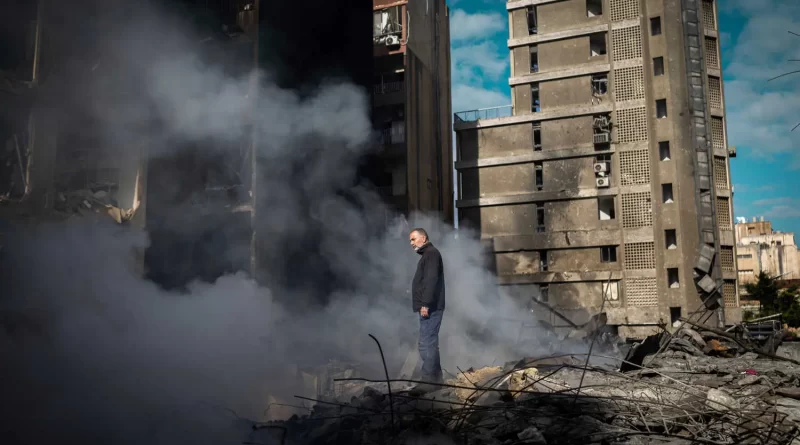
Britain, France and the European Union said Lebanon should be included in the two-day-old cease-fire in the Iran war, even as Israel’s prime minister, Benjamin Netanyahu, vowed to continue its strikes on Iran’s ally Hezbollah there.
In what appeared to be a concession amid the escalating attacks, Mr. Netanyahu said on Thursday he had ordered direct negotiations with the Lebanese government to begin as soon as possible, where he would push them to disarm Hezbollah. Lebanon has been pushing for talks since Hezbollah joined the war a month ago.
Iran’s leaders have made it clear they consider Lebanon to be covered under the terms of the cease-fire, and Israel’s continued attacks, which killed over 200 people on Wednesday, have undermined the shaky truce.
The airstrikes on Lebanon have also further strained longstanding alliances, especially NATO, as President Trump lashed out at its members again on Thursday for refusing to join the U.S.-Israeli war in Iran or to force Iran to open up the key shipping lanes of the Strait of Hormuz.
European leaders remained sharply at odds with the United States and Israel over Lebanon. Germany’s chancellor, Friedrich Merz told reporters on Thursday that “the severity with which Israel is waging war there could cause the peace process as a whole to fail.” And Yvette Cooper, Britain’s foreign secretary, said not including Lebanon in the cease-fire would “destabilize the whole region.”
It remained to be seen whether the Lebanon dispute would derail the cease-fire or affect talks between American and Iranian officials, which the Trump administration said were scheduled for the weekend in Pakistan.
Mohammad Bagher Ghalibaf, the speaker of Iran’s Parliament, accused Israel of violating the cease-fire and said there would be “explicit costs and strong responses.”
On Thursday afternoon, hundreds of people packed onto the roads leading to northern areas of Beirut, Lebanon’s capital, after Israel issued an evacuation warning for much of the city’s southern parts.
But in the Persian Gulf, the United Arab Emirates said its skies were clear of aerial threats, and there were no reports from several other countries in the region of incoming fire, after weeks of fending off Iranian missile and drone attacks.
Marine traffic through the Strait of Hormuz, a vital waterway through which a fifth of the world’s oil and gas must pass, remained a trickle. On Wednesday, the traffic through the strait was the lowest since late March, according to data from Kpler, a global tracking firm.
Iran’s deputy foreign minister told ITV News on Thursday that ships needed to coordinate with the Iranian military because of “technical restrictions,” including mines.
“Let’s be clear: the Strait of Hormuz is not open,” the chief executive of Abu Dhabi’s state oil company, Sultan Ahmed Al Jaber, said on Thursday. “Access is being restricted, conditioned and controlled.”
Here’s what else we’re covering:
-
Lebanon: Israel attacked more than 100 targets in Lebanon on Wednesday and said it had killed the personal secretary to Hezbollah’s leader, Naim Qassem, in those strikes. Hezbollah said on Thursday that it had targeted Israel with rockets in retaliation and that it planned to continue until Israel’s aggression stopped.
-
Oil prices: Uncertainty about the durability of the cease-fire caused oil prices to rise on Thursday, with Brent crude, the international benchmark, rising about 3 percent to $98 a barrel in early trading. It had gone above $110 for a period, after the war began Feb. 28 and Iran moved to block the Strait of Hormuz.
-
Diplomatic talks: Pakistan is scheduled to host Iranian and U.S. officials for talks in Islamabad on Saturday, according to the White House. Vice President JD Vance is expected to travel there with a group that includes Steve Witkoff, the president’s special envoy, and Jared Kushner, President Trump’s son-in-law. Reza Amiri Moghadam, Iran’s ambassador to Pakistan, said on social media that an Iranian delegation was expected to arrive in Islamabad on Thursday night, though the post was later deleted.
-
Global economic outlook: The International Monetary Fund will be downgrading its global growth outlook because of the war in Iran, its managing director, Kristalina Georgieva, said on Thursday. Even the most optimistic outcome, she said, where the temporary truce holds, will lead to slower than previously expected growth because of “infrastructure damage, supply disruptions, losses of confidence, and other scarring effects.”
-
Death tolls: The Human Rights Activists News Agency said at least 1,665 civilians, including 244 children, had been killed in Iran as of Monday. Lebanon’s health ministry on Monday said that more than 1,500 people had been killed in the latest fighting between Israel and Hezbollah. In attacks blamed on Iran, at least 32 people have been killed in Gulf nations. In Israel, at least 20 people had been killed as of Monday. The American death toll stands at 13 service members.