Iran War Live Updates: Iranian Official Raises New Doubts as Vance Heads to Peace Talks
The speaker of Iran’s Parliament wrote that two conditions, a cease-fire in Lebanon and the release of Iran’s blocked assets, “must be fulfilled” before negotiations with the United States begin.

As Vice President JD Vance was heading to Pakistan on Friday for peace talks with Iran, a senior Iranian official laid out new conditions for the negotiations, adding even more uncertainty about the durability of the cease-fire and whether the two sides could reach a long-term deal.
Mohammad Bagher Ghalibaf, the speaker of the Iranian Parliament, wrote in a post on X that two requirements — a cease-fire in Lebanon and the release of Iran’s blocked assets — “must be fulfilled before negotiations begin.” Mr. Ghalibaf, one of the key Iranian figures overseeing the war, did not say what he meant by blocked assets, but Iranian funds overseas are often frozen as a result of sanctions imposed by the United States and other Western nations.
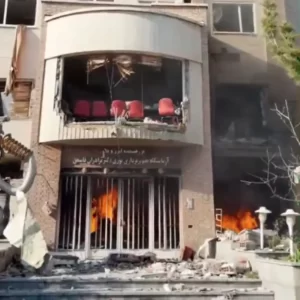
Israel on Friday kept up its fight against Hezbollah, the Iran-backed militant group in Lebanon, intensifying airstrikes in southern Lebanon. The attacks came despite President Trump’s urging Prime Minister Benjamin Netanyahu to scale back Israel’s operations in the country. The strikes have exposed significant differences between Mr. Netanyahu, who has said Israel’s goals still haven’t been met, and Mr. Trump, who appears eager to make a deal with Iran to end the war.
Under pressure from Mr. Trump and European leaders, Mr. Netanyahu said on Thursday his country would start talks with the Lebanese government to disarm Hezbollah. But, hours later, he vowed to keep up strikes on the group, saying, “There is no cease-fire in Lebanon.”
A senior Hezbollah official dismissed the idea of talks between Israel and Lebanon, saying that the Lebanese government did not speak for the group.
Mr. Vance struck an optimistic but cautious tone about the talks in Islamabad. “I think it’s going to be positive,” he told reporters, but warned that if the Iranians are “going to try to play us, then they’re going to find that the negotiating team is not that receptive.”
One priority for Mr. Vance will be the full reopening of the Strait of Hormuz, a vital shipping passage for oil and gas that Iran has in effect blockaded since the war started. Even after the cease-fire was announced, marine traffic in the strait was at a trickle.
Iran’s military signaled on Friday that it would maintain control of the passageway, saying in a statement carried by Iranian state media that it would “not give up our legitimate rights in any way” over the strait.
Here’s what else we’re covering:
-
Inflation surges: The Consumer Price Index jumped 3.3 percent in the year through March, reflecting the rising costs for energy and other goods affected by disruptions in the Middle East. Read more ›
-
Death tolls: The Human Rights Activists News Agency said at least 1,701 civilians, including 254 children, had been killed in Iran as of Wednesday. Lebanon’s health ministry on Thursday said that more than 1,800 people had been killed in the latest fighting between Israel and Hezbollah, including 303 in a wave of Israeli strikes on Wednesday. In attacks blamed on Iran, at least 32 people have been killed in Gulf nations. In Israel, at least 20 people had been killed as of Monday. The American death toll stands at 13 service members.
-
Criticism of Trump: Prime Minister Keir Starmer of Britain directed criticism at Mr. Trump, saying in an interview with the ITN news agency that he was “fed up” with Trump and President Vladimir Putin of Russia for causing the price of energy to jump. The prime minister rarely criticizes Trump by name in public.
-
Pakistan talks: Pakistani authorities have disclosed almost no details about the talks scheduled for this weekend, including where they will be held, citing security concerns and the need to let Iranian and U.S. officials drive the negotiations. In preparation, they have locked down the capital, blocking roads and deploying security forces across the city.
Islamabad, Pakistan’s quiet capital, steps into the diplomatic spotlight.
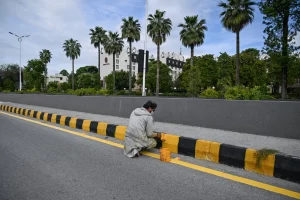
Less than 24 hours before U.S. and Iranian officials are expected to meet here for high-level peace talks, Islamabad, Pakistan’s capital, is locked down.
The authorities have blocked roads with shipping containers and barbed wire, deployed security forces across the city, and sealed off a two-mile radius around the Serena Hotel, where parts of the delegations are scheduled to stay. Even the hiking trails on the lush hills overlooking the city have been closed to the public.