
Iran War Live Updates: Israel Says It Has Killed Iran’s De Facto Leader

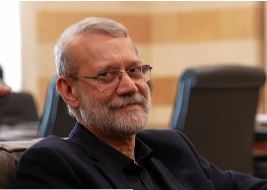
Ali Larijani, Iran’s top security official, was killed in an overnight strike, the Israeli military said. His death would deal another severe blow to Iran’s power structure.
 Aaron BoxermanRonen BergmanFarnaz Fassihi and David E. Sanger
The Israeli military said on Tuesday it had killed a high-ranking Iranian leader, Ali Larijani, in an overnight airstrike near Tehran, dealing another severe blow to a power structure already decimated by nearly three weeks of U.S.-Israeli strikes.
Mr. Larijani was the head of Iran’s Supreme National Security Council and became Iran’s de facto leader after airstrikes killed the upper echelons of Iran’s government and military. The Israeli military said that it also had killed Gholamreza Soleimani, the head of the Basij, Iran’s powerful plainclothes militia.
The Iranian authorities and state media did not comment on the Israeli announcements. But two Iranian officials, who spoke on condition of anonymity to discuss sensitive matters, said they believed Mr. Larijani and Mr. Soleimani had been killed.
The killing of Mr. Larijani would remove one of Iran’s most prominent voices of defiance. He was an influential pragmatist who was seen as having the clout to negotiate with the United States. His death could also embolden even more hard-line Iranian leaders who believe that the Islamic republic can survive only by doubling down.
Mr. Larijani was a close confidant of Ayatollah Ali Khamenei, the supreme leader who was killed in an Israeli airstrike at the start of the war on Feb. 28. Mr. Larijani in effect ran Iran behind the scenes even before Ayatollah Khamenei’s death, leading the brutal crackdown this year on protests against Islamic rule.
The death of Mr. Larijani renewed serious questions about President Trump’s endgame. When asked on Tuesday in the Oval Office about his plans for Iran after the war stopped, Mr. Trump responded by praising the damage the attacks have wrought. “Look, if we left right now it would take 10 years for them to rebuild,” he told reporters. “We’re not ready to leave yet, but we’ll be leaving in the near future.”
Here’s what else we are covering:
-
Trump’s complaint: Speaking to reporters at the White House during a meeting with the Irish prime minister, Mr. Trump again complained about the reluctance of NATO allies to help secure the Strait of Hormuz. “We don’t need too much help — we don’t need any help actually,” he told reporters. The request was a “great test” for NATO, he said, and he warned that the United States would remember its inaction. Later he added, “I’m disappointed in NATO.”
-
Resignation: Joe Kent, the director of the National Counter Terrorism Center, announced his resignation on Tuesday because of his opposition to the war, writing in a letter that Iran had “posed no imminent threat to our nation.” Mr. Kent is the first Trump administration official to quit over the Iran war, and one of the first to explicitly resign citing a significant policy difference. Mr. Trump later told reporters in the Oval Office that Mr. Kent was “weak” on security. Read more ›
-
Powerful militia: Mr. Soleimani had led the Basij since 2019 and was under U.S. and European sanctions for his role in the violent suppression of Iranian protests. The Basij, estimated to number at about one million, are affiliated with the country’s most powerful military force, the Islamic Revolutionary Guards Corps, and have played a central role in repressing dissent.
-
Tanker attack: A tanker anchored near a port in the United Arab Emirates was hit by a projectile early Tuesday, sustaining minor damage, in the first strike on a ship in and around the Strait of Hormuz in five days, according to United Kingdom Maritime Trade Operations. At least 17 vessels have been attacked in the region since the U.S.-Israeli war on Iran began. Read more ›
-
Death toll: At least 1,348 civilians in Iran have been killed since the start of the war, Iran’s U.N. representative has told the Security Council. In Lebanon, 912 people have been killed and more than 2,220 others wounded, the health ministry said on Tuesday. In Israel, at least 12 people have been killed, the authorities said. The Pentagon says that 13 American service members have died since the start of the war.