
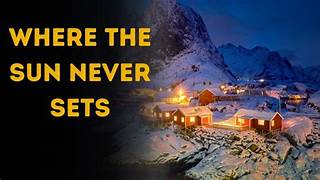
PLACES ON EARTH WHERE THE SUN NEVER SETS AND RISES

BY- Usha Rawat
The Earth’s 23.5-degree axial tilt creates extraordinary natural phenomena in certain regions, where the sun either remains above the horizon for months (the Midnight Sun) or stays hidden below it (the Polar Night). These conditions, found primarily near or beyond the Arctic and Antarctic Circles, transform the concepts of day and night into surreal experiences. From Arctic towns bathed in perpetual daylight to Antarctic stations locked in endless darkness, these locations offer unique glimpses into Earth’s extremes. Below are nine remarkable places where the sun never sets or rises for extended periods, each with its own distinct character and allure.
- Tromsø, Norway
Nestled above the Arctic Circle, Tromsø enjoys the Midnight Sun from mid-May to mid-July, when the sun never sets, casting a golden glow over its fjords and mountains. This lively city hosts festivals, midnight hikes, and the unique Midnight Sun Marathon under 24-hour daylight. From late November to mid-January, the Polar Night takes over, with no sunrise, creating a twilight ambiance ideal for spotting the aurora borealis. Tromsø’s blend of urban vibrancy and Arctic beauty makes it a prime destination for experiencing these phenomena.
- Longyearbyen, Svalbard, Norway
Svalbard’s largest settlement, Longyearbyen, is one of the world’s northernmost communities. From mid-April to late August, the sun shines continuously, offering four months of daylight for activities like dog sledding or midnight boat tours among icebergs. During the Polar Night, from mid-November to late January, the sun remains below the horizon, plunging the town into a starry darkness illuminated only by the northern lights. This remote outpost’s extreme light cycles make it a bucket-list destination.
- Utqiaġvik (Barrow), Alaska, USA
Utqiaġvik, the northernmost incorporated town in the United States, experiences about 2.5 months of continuous daylight from mid-May to late July. The Midnight Sun enables unique cultural events for the local Iñupiat community and visitors, such as polar bear plunges. From mid-November to late January, the Polar Night brings 24-hour darkness, a time for aurora viewing and reflection under the Arctic sky. Utqiaġvik’s stark beauty and extreme conditions are unforgettable.
- Hammerfest, Norway
Billing itself as the world’s northernmost town, Hammerfest basks in the Midnight Sun from mid-May to late July. Its coastal setting along the Arctic Ocean is perfect for midnight fishing trips or hikes under the sun’s unyielding light. During the Polar Night, from late November to mid-January, the sun doesn’t rise, cloaking the town in a bluish twilight. Hammerfest’s rich maritime history and Arctic resilience make it a fascinating place to witness these light extremes.
- Reykjavik, Iceland
Just south of the Arctic Circle, Reykjavik experiences near-continuous daylight in June and July, with the sun dipping only briefly below the horizon, creating a prolonged twilight known as “white nights.” This allows for late-night activities like golf or exploring volcanic landscapes. In winter, from December to January, daylight shrinks to about four hours, with the sun barely rising. Reykjavik’s vibrant culture and geothermal attractions shine in both seasons.
- Nuuk, Greenland
Nuuk, Greenland’s capital, lies just below the Arctic Circle but enjoys nearly 24-hour daylight in June and July, with the sun skimming the horizon at night. This extended light enhances opportunities for whale watching and fjord exploration. In winter, from December to January, daylight is minimal, though not a full Polar Night, creating a cozy setting for cultural events and northern lights viewing. Nuuk’s blend of Inuit heritage and modern life is captivating year-round.
- Kiruna, Sweden
In Swedish Lapland, Kiruna experiences the Midnight Sun from late May to mid-July, illuminating its vast forests and the famous Icehotel, which operates even in summer. This period is ideal for hiking or exploring the region’s mining heritage. From mid-December to early January, the Polar Night brings continuous darkness, perfect for aurora hunting and winter adventures. Kiruna’s remote charm and extreme light cycles draw adventurers from around the globe.
- Ilulissat, Greenland
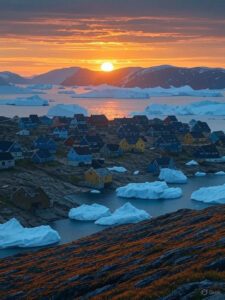
Ilulissat, home to the UNESCO-listed Ilulissat Icefjord, basks in the Midnight Sun from late May to late July. The constant daylight highlights the dazzling icebergs floating in Disko Bay, making it a photographer’s dream. During the Polar Night, from early December to mid-January, the sun stays below the horizon, casting a mystical twilight over the icy landscape. Ilulissat’s raw Arctic beauty is amplified by these light extremes.
- Antarctica (Various Research Stations)
Antarctica, the southernmost continent, experiences six months of continuous daylight from September to March at stations like McMurdo or Amundsen-Scott South Pole Station. This endless summer supports intensive scientific research, with scientists studying everything from ice cores to penguins. From March to September, the Polar Night brings unbroken darkness, challenging researchers with extreme isolation. Antarctica’s otherworldly environment makes it a unique stage for these phenomena.
The Science Behind It
The Midnight Sun and Polar Night result from Earth’s axial tilt. In summer, the North Pole tilts toward the sun, keeping Arctic regions in constant daylight, while the South Pole tilts away, causing darkness in Antarctica. In winter, the pattern reverses, with the Arctic in darkness and Antarctica in light. This tilt creates dramatic light variations at high latitudes, shaping the unique lifestyles and ecosystems of these regions.
Cultural and Environmental Significance
In Arctic communities, the Midnight Sun fuels a flurry of activity, from festivals to outdoor adventures, while the Polar Night encourages introspection, storytelling, and aurora watching. In Antarctica, scientists adapt to endless daylight for research, while the Polar Night tests their endurance. These cycles also draw tourists eager to experience nature’s extremes, from midnight sunsets to polar darkness, fostering a deeper appreciation for Earth’s rhythms.
The nine places highlighted—Tromsø, Longyearbyen, Utqiaġvik, Hammerfest, Reykjavik, Nuuk, Kiruna, Ilulissat, and Antarctica—showcase the planet’s most extreme light phenomena. Whether it’s the endless daylight of the Midnight Sun or the perpetual twilight of the Polar Night, these destinations redefine our understanding of time and light. Visiting them offers not just adventure but a profound connection to Earth’s natural cycles, making them must-see wonders for any explorer.