
The Legality, or Illegality, of Killing a Foreign Leader, Explained
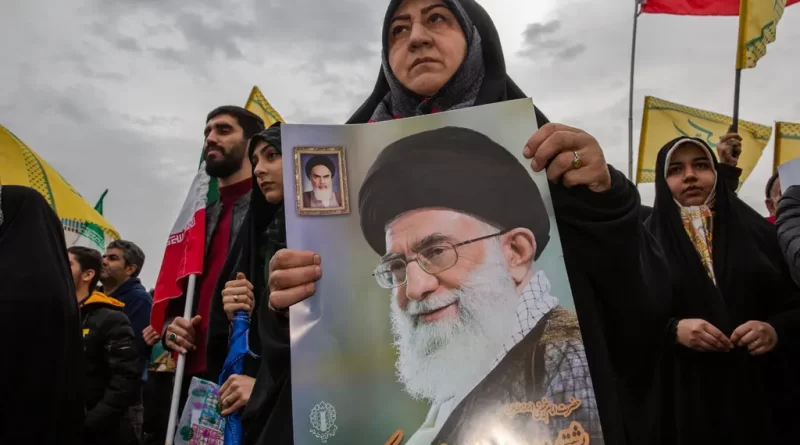
The United States and Israel started a war with Iran by killing its supreme leader, Ayatollah Ali Khamenei.

Charlie Savage writes about national security and legal policy. He reported from Washington.
The United States and Israel opened their war on Iran this weekend with a sudden strike on its longtime supreme leader, Ayatollah Ali Khamenei. While the war as a whole has been broadly denounced as illegal by critics who point to its lack of authorization from Congress or the United Nations Security Council, the ayatollah’s killing raises particular legal questions.
It is extraordinarily rare for a country to deliberately and openly kill the leader of another sovereign nation — even during legally uncontested wars. As a result, the question has seldom come up. A scarce precedent of sorts came in March 2003, when the Bush administration tried to kill Saddam Hussein on the cusp of the Iraq war, a conflict Congress had authorized — but that airstrike missed its target.
Asked for a detailed description of its legal views on the issue, the White House said in a statement that President Trump had “exercised his authority as commander in chief to defend U.S. personnel and bases in the region.” It described decades of misdeeds by Iran but did not specifically address the killing of its leader.
Here is a closer look.
What happened?
The United States under Mr. Trump and Israel under Prime Minister Benjamin Netanyahu jointly launched a war against Iran on Feb. 28 with a surprise strike on Iranian leadership, killing Ayatollah Khamenei, a hard-line Shiite cleric and Iran’s ruler for nearly four decades.
The C.I.A. had been tracking his movements and passed his whereabouts to Israel, which carried out the strike that killed him, according to officials. The two countries are said to have moved up their plans for the war to take advantage of the window of opportunity.
What was Khamenei’s status?
The ayatollah was a civilian — not a uniformed member of the Iranian military — but he was also the supreme leader of Iran’s armed forces, just as Mr. Trump is a civilian who is also the commander in chief of the American military. This hybrid status creates a complication.
It is generally agreed that in wartime, a country’s military commanders are lawful targets. It is also generally agreed that civilian officials with no military functions — like a health minister — are not lawful targets unless they are directly participating in hostilities.

A civilian leader who commands a military force is a messier situation. Still, under the laws of armed conflict, a civilian leader who controls the military is likely to be a legitimate military target in an active war whether he is interpreted as being part of his country’s armed forces or as a civilian directly participating in hostilities, legal experts said.
What about targeting former leaders?
Reports from Iran say an airstrike has also killed Mahmoud Ahmadinejad, who served as Iran’s president from 2005 until 2013. Based on the presently available facts, he would seem unambiguously to have been a civilian who was not directly participating in hostilities. It is not clear what legal theory would support any deliberate targeting of him as lawful.
When did the armed conflict begin?
It began with the very strike that killed Ayatollah Khamenei, which complicates the question of whether he was a lawful military target at the time of the strike. In peacetime, it would be murder to kill a member of a foreign military or any government official who is not engaged in an imminent armed attack.
The United Nations Charter, a treaty the United States has ratified, provides that a nation may not use force on the sovereign territory of another country without its consent, a self-defense rationale or the authorization of the U.N. Security Council.

“Whether or not an individual would be a lawful military target as a matter of the law of armed conflict, if the strike itself violates the U.N. Charter, that strike is illegal,” said Rebecca Ingber, a professor at the Cardozo School of Law and a former senior State Department lawyer. “A state can’t backfill a justification for killing a head of state by unlawfully starting an armed conflict.”
Was there an ‘imminent’ threat?
To invoke self-defense, the U.N. Charter requires there to be an armed attack. Customary international law broadly accepts that this includes a right to use force against an imminent threat of an armed attack, which in turn raises the question of what counts as imminent.
Since the attack, the Trump administration has gestured toward two versions of this argument. One appears to rely on a very elastic definition, and one arguably appeared to rely on circular reasoning.
In a video on Saturday, Mr. Trump declared that the objective was “to defend the American people by eliminating imminent threats from the Iranian regime.” But he did not suggest that Iran was on the cusp of launching an armed attack before the strikes, instead saying it would be intolerable to allow it to build a nuclear weapon and long-range missiles.
On Monday, Marco Rubio, the secretary of state and national security adviser, told reporters that “there absolutely was an imminent threat.” He said the United States believed Israel was going to attack Iran, and if it did so, Iran would attack American bases, so the country joined Israel’s attack “proactively, in a defensive way, to prevent them from inflicting higher damage.”

Does the administration care about international law?
There is reason to believe it does not care about this part of it.
The American military’s invasion of Venezuela in January to arrest President Nicolás Maduro also appears to have violated the U.N. Charter. But a memo by the Justice Department’s Office of Legal Counsel said the charter did not matter for the purposes of that operation. It cited past opinions by executive branch lawyers who claimed that as a matter of domestic law, the president has constitutional power to act in ways that conflict with the Charter.
Does it matter which country killed Khamenei?
Not under the doctrine of state responsibility, if reporting about the behind-the-scenes decision-making is accurate. According to the doctrine, if a country knowingly helps another nation commit a violation of international law, both are considered culpable for the wrongful act. By that logic, if killing the ayatollah was unlawful, and if the United States knew or intended for Israel to target him when it passed along his location, the United States shares legal responsibility.
Was starting the war legal, domestically?
The Constitution vests the power to declare war with Congress. But especially since World War II, presidents of both parties have unilaterally committed U.S. troops into limited combat situations on their own. Executive branch lawyers claim that this is lawful if the anticipated nature, scope and duration of an operation fall short of a “war” in the constitutional sense.
Despite those accumulating precedents, since the War Powers Resolution of 1973, presidents have sought prior authorization for major wars: the Persian Gulf war, Iraq and the war against Al Qaeda that began in Afghanistan. Mr. Trump’s war with Iran appears likely to be the most significant unilateral presidential military action since the law’s enactment.
What about the assassination ban?
After an inquiry in the 1970s that brought to light C.I.A. links to Cold War plots to kill foreign leaders, known as the Church Committee investigation, President Gerald Ford issued an executive order that banned “assassinations.” The ban is now part of Executive Order 12333, which states: “No person employed by or acting on behalf of the United States government shall engage in, or conspire to engage in, assassination.” The order does not define what types of killings count.
Both before and after Congress authorized the war against Al Qaeda in 2001, the executive branch took the position that this ban would not bar the targeted killings of high-level terrorist leaders as self-defense or part of the armed conflict. Still, Qaeda operatives are not leaders of sovereign states.
In 2020, Mr. Trump ordered an airstrike in Iraq that killed Maj. Gen. Qassim Suleimani, a top Iranian military commander. The visible portions of a heavily redacted Justice Department memo that blessed that strike do not address the assassination ban, but the memo accused him of orchestrating years of operations that killed American troops deployed in Iraq.
==================================================================
Charlie Savage writes about national security and legal policy for The Times.