

SONIA GANDHI’S BELONGING: PRIVATE GRIEF, POLITICAL MEMORY AND A NATION DIVIDED

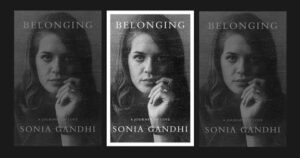
Sonia Gandhi’s memoir, Belonging, recounts her personal losses, the assassinations of Indira and Rajiv Gandhi, the isolation of power and her decision to lead the Congress. It reflects on the Emergency, political polarisation, her limited interaction with Prime Minister Narendra Modi, and concerns about press freedom. Disputes over publisher Penguin’s withdrawal—described differently by Gandhi and the publisher—have fuelled debate about freedom of expression. The BJP has criticised the memoir as an attempt to gloss over Congress’s past, citing the 1984 anti-Sikh violence, the 26/11 Mumbai attacks and the Batla House encounter. The book has renewed debate over India’s political history.

By Jay Singh Rawat
Few personal histories are as closely intertwined with the political life of modern India as Sonia Gandhi’s. Born in a small Italian town, she came to India in 1968 and entered a family whose fortunes were inseparable from the country’s public life. Her memoir, Belonging, traces that journey through love, loss, political upheaval and the burden of inheritance. It also revisits some of the most contested episodes in India’s recent history—from the Emergency and the assassinations of Indira and Rajiv Gandhi to the political polarisation of the present.
The book is both a personal account and a political intervention. It reveals private experiences that Sonia Gandhi has rarely discussed publicly, while offering her interpretation of the changing relationship between power, opposition, the media and democratic institutions. Its publication has itself become part of the political story: the memoir has drawn sharp criticism from the Bharatiya Janata Party (BJP), and the circumstances surrounding its publication have sparked a debate about editorial independence and freedom of expression.
A life shaped by loss
Sonia Gandhi’s memoir begins with the intimate dimensions of a life lived under public scrutiny. She writes about the grief of losing her first child shortly after birth, a personal tragedy she had kept largely out of public view. The account also recalls a frightening episode after Operation Blue Star in 1984, when a grenade was reportedly found in a room of the family home. Such memories illuminate the vulnerability and anxiety that existed alongside the privileges and responsibilities of political life.
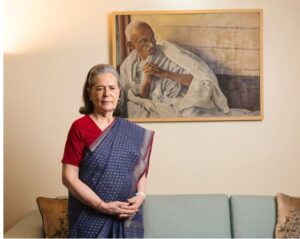
The defining tragedies, however, were the assassinations of her mother-in-law, Prime Minister Indira Gandhi, in 1984 and her husband, former Prime Minister Rajiv Gandhi, in 1991. Sonia Gandhi witnessed both events at close quarters. In Belonging, she describes their enduring emotional impact and the loneliness that followed. Her eventual decision to lead the Congress party, the memoir suggests, grew in part from a sense of duty to her family’s political legacy. It was a decision made amid personal grief, public expectation and the weight of an inherited political role.
The loneliness of power and the Emergency
One of the memoir’s most revealing themes is the isolation that can accompany authority. Recalling a conversation with Hillary Clinton in 2012 about the challenges faced by women leaders, Sonia Gandhi reflects on Indira Gandhi’s state of mind before the Emergency. She says that, despite her immense power, Indira Gandhi felt increasingly alone and besieged in the months leading up to its imposition in 1975.
The Emergency remains one of the most consequential and controversial episodes in India’s democratic history. For 21 months, civil liberties were suspended, political opponents were imprisoned and the press faced severe restrictions. The memoir acknowledges the climate of fear and despair created by these measures. It also suggests that the period produced strains within the Gandhi family itself.
This portrayal has become a point of political contention. The BJP argues that by emphasising Indira Gandhi’s loneliness and psychological pressure, Sonia Gandhi is attempting to soften or normalise the Emergency. The criticism raises a broader question about political biography: can the personal circumstances of a leader help explain a decision without diminishing accountability for its consequences? The memoir offers a human context; its critics insist that this context must not obscure the constitutional violations of the period.
A divided political culture
Sonia Gandhi’s account of contemporary politics is sharply critical. She describes an increasingly polarised climate in which political opponents are humiliated and targeted. She cites the use of the term “Pappu” to mock her son, Rahul Gandhi, as an example of how personal ridicule has become part of political contestation.
Her reflections on Prime Minister Narendra Modi are both political and personal. Sonia Gandhi writes that she has had virtually no meaningful contact with him over the past 12 years. She also claims that when they are in the same room, he often avoids eye contact. This is her personal account, presented as part of the memoir’s portrait of a political relationship marked by distance.
The contrast she draws with the era of former Prime Minister Atal Bihari Vajpayee is significant. Sonia Gandhi recalls calling Vajpayee after the 2001 terrorist attack on Parliament to ask how he was. She says he appreciated the gesture. The episode serves as a reminder that political disagreement need not eliminate personal courtesy or communication. In her telling, the conventions of public life have changed: the space for civility and cross-party engagement has narrowed.
The press, accountability and public scrutiny
The memoir also questions the state of press freedom and the media’s relationship with political power. Sonia Gandhi contrasts earlier traditions—when journalists could question prime ministers directly—with what she describes as the absence of open press conferences by Prime Minister Modi during his tenure.
She argues that the format of political communication matters. One-on-one interviews and carefully managed appearances, she suggests, cannot replace unscripted exchanges in which journalists can pursue difficult questions. The book refers to interviews conducted with media personalities and public figures, including a widely discussed conversation with a Bollywood actor in which the Prime Minister was asked how he liked eating mangoes. The reference is used to underline her criticism of what she sees as a limited and controlled form of engagement with the press.
These claims form part of a wider debate about executive accountability, journalistic independence and the changing nature of political communication. They are Sonia Gandhi’s assessment of the present political climate, and readers will judge them against their own understanding of the media landscape.
The publishing dispute
The memoir’s publication became controversial before it reached readers. Sonia Gandhi has said that Penguin Random House India was uncomfortable with criticism of the government and suggested editorial changes to the book. According to her account, she declined to make those changes, and the publisher withdrew from the project in August.
Penguin Random House disputed this version, saying that the suggestion that the book was not published because Gandhi refused editorial changes did not accurately represent the circumstances. The two accounts remain at odds. After Penguin’s withdrawal, Belonging was published in India by HarperCollins and in the United States by Alfred A. Knopf.
The dispute has fuelled discussion about editorial independence and the pressures facing publishers when books criticise those in power. It has also been compared with Penguin’s earlier withdrawal from distributing Joe Sacco’s graphic work on the 2013 Muzaffarnagar riots. In that case, Penguin cited an inaccurate map, while Sacco attributed the decision to India’s political climate. The circumstances of the two cases differ, but together they have intensified questions about how publishers assess political risk and where editorial judgment ends and external pressure begins.
The BJP’s counterattack
The BJP has condemned the memoir as an attempt to protect the historical record of the Congress and the Nehru-Gandhi family. Party spokesperson C. R. Kesavan argued that the book should be called “Whitewashing” rather than Belonging, claiming that it glosses over what the party describes as the Congress’s historic failures.
The BJP has raised questions about the 1984 anti-Sikh violence, the 2008 Mumbai terrorist attacks and the Batla House encounter. It has accused Sonia Gandhi of expressing grief over some events while remaining silent on others. In discussing the Batla House encounter, the party has also invoked the security personnel who lost their lives in counterterrorism operations. On the 26/11 attacks, it has criticised the response of the Congress-led United Progressive Alliance government.
These are political charges, and they form part of the contest over how India’s past should be remembered and judged. The memoir and the BJP’s response represent sharply different readings of that past. The debate is not only about which events are mentioned, but also about what responsibility, sympathy and historical balance should look like in a political account.
The Bachchan connection—and the silences
Sonia Gandhi recalls her early closeness to the Bachchan family with warmth. She writes that when she first arrived in India, she stayed at the home of Amitabh Bachchan’s parents. The passage evokes an earlier period of personal friendship between the two families.
The memoir does not, however, discuss the distance and estrangement that later developed between them. Nor does it name a politician whom Sonia Gandhi describes as “completely dishonest” in connection with the Congress’s unsuccessful effort to form a coalition government in 1999. Such omissions reflect the memoir’s restraint, but they also remind readers that every autobiography is selective. What an author chooses to include—and what remains unspoken—shapes the story as much as the events that are narrated.
Personal memory as political history
Belonging spans a period of profound change in India, from Sonia Gandhi’s arrival in the country in 1968 to the political era shaped by Narendra Modi. Its central strength lies in the perspective of someone who lived through many of the events that transformed the country. The book brings together private grief, political responsibility and reflections on the institutions that sustain democracy.
It is not, however, a neutral chronicle. It is a memoir: a record shaped by personal experience, political conviction and selective memory. Its account of the Emergency, its criticism of the present government and its treatment of the Congress’s own record will invite debate. The BJP’s response makes clear that these episodes remain deeply contested.
The controversy surrounding Belonging ultimately reflects a larger struggle over India’s political memory. How should the country weigh personal suffering against public responsibility? Can political opponents preserve civility amid fierce disagreement? And can a society debate its history openly when every interpretation is viewed through the lens of present-day partisan conflict? Sonia Gandhi’s memoir does not settle these questions. It brings them back into public view—and makes clear why India’s past continues to shape its politics.
========================
About the Author: Jay Singh Rawat is a senior journalist, author and editorial consultant who writes on environment, politics, history, culture and public affairs.
Disclaimer: This article is based on the supplied account of Sonia Gandhi’s memoir and the political responses to it. Claims and opinions are attributed to their respective sources; they should not be read as independently verified facts or the author’s endorsement.