
Iran War Live Updates: Trump Drops Plan to Tax Ships but Will Restore Blockade in Strait

The two countries exchanged attacks, reigniting their war over the waterway. The U.S. prepared to restart a blockade of Iran’s ports on Tuesday.
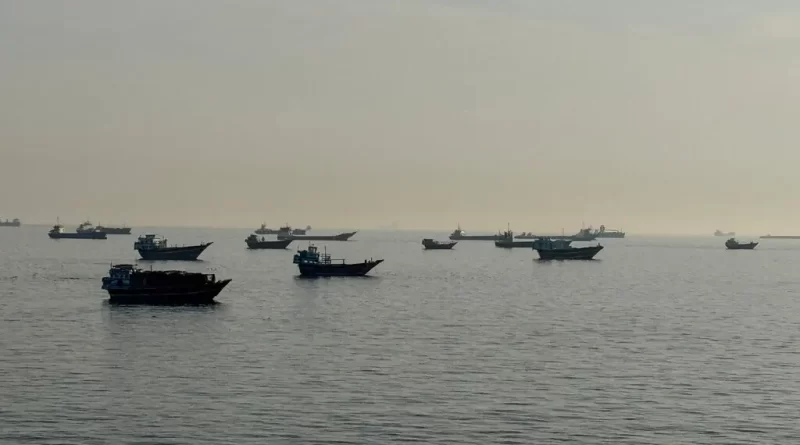
Both sides are seeking to assert control over the Strait of Hormuz, a crucial transit route for oil and gas shipments. On Tuesday, Mr. Trump walked back a plan he announced a day earlier to charge security fees on ships passing through the strait. The renewed hostilities have severely curtailed both sea and air traffic to the region with consequences for the global economy.
Iranian state media reported several explosions in the southwest of the country on Tuesday. The deputy governor of Bushehr province, Ehsan Jahanian, said four locations in the port city of Bushehr, home to Iran’s only civilian nuclear power plant, had been attacked, according to the state news agency, IRNA.
Asked about the reports of new strikes, a U.S. official, speaking on the condition of anonymity to discuss operational matters, confirmed that American forces had conducted “a few additional strikes to eliminate emerging threats.”
U.S. Central Command, which oversees American forces in the Middle East, said that the naval blockade of Iranian ports, which was in effect from April to June, would resume at 11:30 p.m. Tuesday local time — 4 p.m. in the eastern United States. It added that its strikes on Iran over recent days were intended to degrade the Iranian military’s ability to target commercial ships in the strait.
Iran’s Islamic Revolutionary Guards Corps said overnight that it had fired on two tankers after they attempted to transit near the coast of Oman rather than through Iranian-controlled waters.
The Iranian military also said it had launched strikes at U.S. military facilities in Bahrain and Jordan. Officials from those countries said the attacks were intercepted and have not said whether they had caused any damage.
Oil prices soared on Tuesday following the overnight strikes in one of the biggest daily jumps since the start of the war. The number of vessels transiting the waterway has also plummeted as the fighting intensifies. Only 10 ships were reported to have passed through on Monday — the lowest level in more than a month and far lower than the roughly 130 vessels that transited daily before the war.
Here’s what else to know:
-
War powers: Mr. Trump notified Congress that fighting with Iran had resumed, and dismissed the importance of the cease-fire deal that he had long trumpeted.
- Oil prices: The price of Brent crude, the international benchmark for oil prices, fell back after Mr. Trump dropped his plan to tax ships passing through the Strait of Hormuz. Earlier on Tuesday, the price had risen above $86 a barrel for the first time in a month.
-
European airlines: The European Union’s aviation safety regulator on Tuesday warned airlines to stop operating in the region, saying the increased military attacks posed a “high risk to civil flights.” The agency said that airlines should avoid the airspace of Bahrain, Kuwait, Qatar, the United Arab Emirates, and part of the Gulf of Oman.