
Trump’s Claims on Iran Talks Meet Repeated Pushback from Tehran

—


Negotiations between the United States and Iran have entered a delicate phase, marked not only by difficult diplomatic discussions but also by conflicting public statements from both sides. President Donald Trump and senior members of his administration have repeatedly announced what they describe as significant breakthroughs in the talks, only to see Iranian officials publicly reject or qualify those claims.
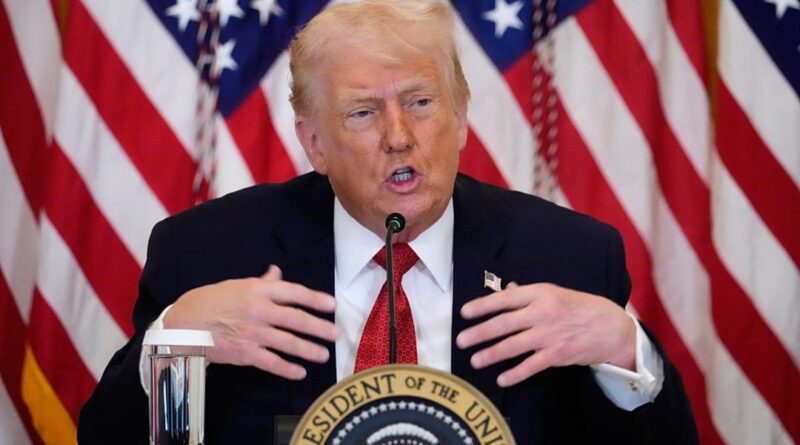
The latest disagreement emerged when President Trump stated that Iran had accepted long-term, high-level international inspections of its nuclear activities. According to the president, the arrangement would ensure extensive oversight of Iran’s nuclear program far into the future.
Iranian officials, however, quickly disputed the characterization. They emphasized that no immediate agreement had been reached regarding access to key nuclear facilities, including sites that were targeted by U.S. military strikes the previous year. Tehran argued that many details remain unresolved and that inspections cannot be considered separately from broader negotiations.
A similar dispute surfaced over Iran’s frozen overseas assets. U.S. Vice President JD Vance suggested that funds released under a future agreement would be monitored by American and Qatari officials and directed toward the purchase of American agricultural products. Iranian authorities rejected that interpretation, insisting that any released assets would remain under Iranian control and that Tehran would decide independently how the money is spent.
These public disagreements highlight a broader challenge facing the negotiations. Traditionally, major diplomatic talks operate under the principle that no single issue is finalized until all issues are settled. Such an approach allows negotiators to trade concessions and resolve disagreements behind closed doors.
In the current talks, however, public messaging has become part of the negotiating process. The Trump administration has often presented preferred outcomes as if they were already agreed upon, apparently seeking to create momentum and make it harder for Iran to retreat from potential commitments. Tehran, meanwhile, has responded by quickly denying or downplaying American claims, seeking to avoid domestic criticism and preserve its negotiating flexibility.
Experts say both governments are attempting to shape public perceptions while simultaneously bargaining at the negotiating table. According to analysts, the conflicting narratives reveal that significant gaps still separate the two sides despite reports of progress.
One of the most important issues under discussion concerns the role of the International Atomic Energy Agency (IAEA). Diplomats familiar with the talks say that broad inspection powers for the agency remain under consideration. Such measures would allow inspectors to verify that nuclear materials are not being diverted to weapons programs.
While Iranian representatives appear open to discussing enhanced inspections, they reportedly want those commitments linked to other parts of a broader agreement, including sanctions relief and access to billions of dollars in frozen assets.
The disagreements have drawn reactions from senior American officials. President Trump has suggested that inspections are essential to any future accord, while Secretary of State Marco Rubio has indicated that Washington expects Iran to honor commitments made during the negotiations.
Former negotiators and policy experts caution that the talks are moving quickly and under considerable pressure. One reason is the desire to stabilize commercial shipping through the Strait of Hormuz, a strategically vital waterway. Another is the political urgency within both governments to demonstrate progress.
Observers note that domestic politics complicate the situation on both sides. Iranian negotiators must contend with influential hard-line factions that oppose closer engagement with the United States. Consequently, Tehran has strong incentives to avoid appearing overly accommodating in public.
At the same time, the Trump administration faces its own political pressures and is eager to showcase diplomatic achievements. This combination has contributed to a cycle in which American officials announce progress and Iranian officials publicly challenge those announcements.
Whether these competing narratives will ultimately damage the negotiations remains uncertain. Diplomacy often involves public posturing, but repeated contradictions can erode trust and make compromise more difficult.
For now, the talks continue, with both sides expressing interest in reaching an agreement while remaining far apart on several critical issues. The outcome may depend not only on the substance of the negotiations but also on whether Washington and Tehran can manage their differences without allowing public disputes to overwhelm the diplomatic process.
———————————————————
David E. Sanger has covered five American presidents and covered efforts to keep Iran from obtaining nuclear weapons. He reported from Washington Yeganeh Torbati covers Iran and reported from Istanbul.