
Trump Brought Venezuelan Gold to the U.S., but Refiners Won’t Touch It
The administration is brokering deals in a notoriously corrupt industry, including one with a company that the United States deems a security threat.


Anatoly KurmanaevTyler Pager and Rebecca R. Ruiz
Anatoly Kurmanaev reported from Caracas and the mining town of El Callao; Tyler Pager from Washington; and Rebecca R. Ruiz from London and Geneva.
In early March, as President Trump basked in the success of a military intervention in Venezuela, he joined Interior Secretary Doug Burgum in the West Wing for a private celebration. A businessman also attended, and brought along a pile of gold.
The president looked approvingly at the 10 Venezuelan gold bars stacked in the Roosevelt Room, across from the Oval Office, White House officials recalled. Aides took photos and joked about keeping the gold.
Mr. Trump himself had once blacklisted Venezuelan gold, declaring that it destroyed the environment, poisoned people and financed gangsters and corrupt military officials. But after Mr. Trump toppled the Venezuelan president Nicolás Maduro, his view changed.
On the same day that the bars arrived at the White House, the Trump administration issued a new policy allowing traders to import Venezuelan gold from one of the world’s most violent and corrupt mining regions. The first supplies would come from a state-owned mining company that remained a designated U.S. national security threat.
“Usually, you have to be in the Olympics to bring back the gold,” Mr. Burgum later said at an energy conference, regaling listeners with the tale of how he had opened Venezuela’s gold pipeline.
The gold trading deal exemplified how Mr. Trump used the capture of Mr. Maduro to gain control of Venezuela’s resources. First, he took charge of Venezuela’s oil exports. Next, his administration turned to Venezuela’s mineral wealth.

That included one of the world’s largest untapped gold reserves at a time when the prices were near record highs and buyers were hungry for it.
The Trump administration and its business allies said that gold sales would benefit the U.S. economy; help develop Venezuela’s mining region; and deprive criminals and corrupt officials of income.
But a New York Times investigation, from the mines of southern Venezuela to the White House to the trading houses of Europe, found that Mr. Trump aligned America with an industry that is still plagued by the very criminality that he said he was fighting by arresting Mr. Maduro.
Planes carried gold out of Venezuela before companies had even visited the mines. Some of that gold, The Times found, is linked to miners who pay gang protection money. That allows criminals to profit from the administration’s signature deal.
And American financiers are investing in a mine tied to gangsters as part of a deal brokered by the Trump administration.
Venezuelan gold had once benefited American adversaries like Iran. Mr. Trump sought to redirect it to the United States to be refined.
But partly as a consequence of the administration’s hasty approach, all that gold — hundreds of millions of dollars’ worth — sits untouched in warehouses, according to three people with knowledge of the shipments. Refiners would need to guarantee, under international rules, that the gold has not funded gangs, environmental destruction or corruption.
“Do we want to be the first refiner to publicly announce that we are receiving Venezuelan gold?” Simon Houghton-Dodd of Asahi Refining mused at a recent industry gathering in London.
This account of Mr. Trump’s gold rush is based on interviews with miners and refiners in El Callao, the heart of Venezuelan mining, as well as on interviews with White House and Venezuelan government officials, industry leaders and global commodities brokers.

Some spoke on the condition of anonymity, either because they were not authorized to speak publicly or because doing so would jeopardize their livelihoods or safety.
The gold arrangement is a crystallization of Mr. Trump’s long-held views on Venezuela, natural resources and U.S. power. Mr. Maduro was a dictator who oversaw a corrupt and violent system, but Mr. Trump has repeatedly cut deals with such leaders.
What set Mr. Maduro apart, besides his refusal to yield to Mr. Trump’s demand that he leave office, was that he controlled a nation rich with resources and traded them with America’s adversaries. Mr. Trump, particularly in his second term, has declared that the U.S. must have access to key minerals worldwide and expand its influence in the Western Hemisphere.
In January, Mr. Trump sent U.S. commandos to remove Mr. Maduro from power. He then moved to bring Venezuela’s riches under American control. It was a gamble that investment would bring reform, and not the other way around.

The White House said that progress takes time. “For years, Venezuela’s mining and gold industry has been stolen from the Venezuelan people and has been used to prop up dangerous gangs and support bad actors around the globe,” Taylor Rogers, a White House spokeswoman, wrote in a statement. “The United States is helping solve this longstanding problem. We are cleaning up Venezuela’s mining industry. Western companies are improving and legitimizing it.”
To carry out that vision, the Trump administration turned to business leaders eager to profit from the president’s mercantilist worldview.
Among them was Richard Holtum, the chief executive of Trafigura, one of the world’s largest trading houses. Mr. Holtum joined Mr. Trump at the White House to commemorate that first shipment of Venezuelan gold.
He had good reason to celebrate.
It was his company that had persuaded the White House to move on Venezuelan gold in the first place.
Striking Gold
Within days of Mr. Maduro’s arrest, Trafigura executives contacted the White House with a bold idea.
The Trump administration had just granted Trafigura the right to sell Venezuelan oil, giving it, according to the company, a broad confidential permit to bypass sanctions. But with skyrocketing gold prices, executives had ambitions beyond oil.
Trafigura executives told the White House that Venezuelan gold was a national security issue, according to people familiar with the proposal. They argued that the White House had an opportunity to wrest control of a lawless industry and put Venezuela’s minerals in the hands of the U.S. government and its partners — namely Trafigura.
At least some Trafigura employees were wary, according to people involved in discussions at the time. Venezuela had lots of gold, but how much could be traced and documented to industry standards? Getting involved in a country where gold is associated with human rights abuse, terrorism financing and corruption was risky.

White House officials knew these risks and the difficulty of cleaning up the industry. But officials said they felt pressure from Mr. Trump to make deals, and fast. Some argued that immediate investment was likelier to bring change than continued isolation.
Mr. Trump had been eyeing Venezuelan gold since returning to office in January 2025. He made the country a foreign policy priority and assigned a trusted emissary, Richard Grenell, to negotiate for U.S. access to resources, including gold. Mr. Grenell reached a tentative deal, but it collapsed over disagreements about Mr. Maduro’s leaving office.
Mr. Trump chose the military option instead.
Against that backdrop, officials said, Trafigura’s pitch was exactly what the White House wanted to hear. “Trafigura had a viable and quick plan to legitimately market gold following years of corrupt Venezuelan practices,” the White House said in a separate statement.
The new Venezuelan government was less enthusiastic.
Concerns in Venezuela
In early March, Mr. Burgum, the interior secretary, flew to the Venezuelan capital, Caracas. Mr. Trump appeared giddy with the success of his intervention, and Mr. Burgum, who oversees American mining, wanted to leave his mark on the project, according to two people familiar with the negotiations.
Mr. Burgum made it clear to Venezuelan officials that he wanted to broker big deals, the people said. The Trafigura proposal, which had taken a back seat to oil deals, was now a priority.
Delcy Rodríguez, the country’s interim president, was skeptical, according to people close to her. Under the proposal, Venezuela’s gold revenue would flow into an account controlled by the U.S. Treasury, which would then dole it out.
Despite her title, she had only nominal command over the military generals who exercised control in the mining region. If something went wrong, Ms. Rodríguez did not want to be held responsible.
But she was in no position to negotiate. Ever since Mr. Trump installed her as Mr. Maduro’s replacement, Ms. Rodríguez depended on Washington’s good will to stay in office.

Days before Mr. Burgum’s arrival, she agreed to let Trafigura partner with Venezuela’s state-owned gold producer, Minerven. The deal gave Trafigura a yearlong right to buy and export gold from the handful of underground, industrial mines in Venezuela.
The Venezuelan mining ministry, which signed the gold deals, and the government’s media office did not respond to requests for comment.
On March 5, Mr. Burgum officiated the contract signing. Within hours, Trafigura whisked the first gold to the United States on a chartered plane.
“At the end of the two days, we were able to bring home $100 million of gold — physically, the gold,” Mr. Burgum later recounted to energy investors.
Trafigura was first into the market, which was reason to celebrate in the West Wing.
Trafigura’s partnership with Minerven, though, was hardly straightforward. Minerven’s facilities are surrounded by gang territory, where workers and suppliers pay protection money. Criminal ties to the region’s gold industry are well documented.

Trump administration officials made clear that the president wanted things to move quickly. “What the president likes is action,” Jarrod Agen, the top White House energy adviser, said in Caracas in April. “He also likes deals, and he likes progress.”
Trafigura and Minerven came up with a solution that seemingly carved out their operation from the criminality. Trafigura would buy gold only from two industrial mines that are fenced off and guarded by the military. The gold would be mined and processed on site, keeping gangsters and corrupt officials at bay.
Trafigura would then ship the semi-pure gold to the United States to be refined and sold onward.
It has not worked out so cleanly.
Protection Payments to Gangsters
The export pipeline was up and running within weeks. It has since developed into regular purchases that can be as large as 400 kilograms a month (about 880 pounds, or roughly the weight of a concert grand piano), according to a Venezuelan official and another person familiar with the arrangement.
The Trump administration left it to others to certify that the gold met industry standards, which included being free from illegal activity. But the gold started flowing before Trafigura or independent auditors had even visited the mines.
The company hired an auditor last spring and a risk consultant over the summer, after it had already bought millions of dollars worth of gold that had not been certified. “Due diligence of our supply chain is ongoing, and we are continuing to implement our joint responsible sourcing program with Minerven,” Trafigura said.
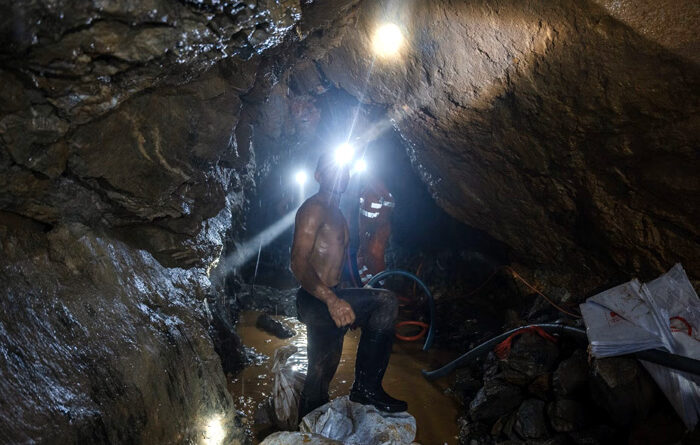
A Times reporter visited Venezuela’s gold production hub, the town of El Callao, this summer. Along with Minerven’s underground mines, it is home to hundreds of crude, privately run mining operations, including cooperatives known as brigades. The operators of those mines dig for gold and give a portion of it to the local gang, Tren de Guayana, as protection money, according to interviews with about a dozen mine owners, brigade leaders and Minerven employees.

Some brigades operate inside the fence, on Minerven property. The leader of one brigade told The Times that, each month, 20 percent of the team’s gold goes to the gang, a practice that is so ingrained in the local economy that it is known as “el sistema” — the system.
Another portion of what they collect, the brigade leader said, goes to Minerven, which melts it down along with the gold being sold to Trafigura. That account is supported by interviews with other brigade members in the area as well as Minerven employees.
That means that, in the Trump administration’s signature Venezuelan gold venture, the United States is importing bars that contain at least some amount of gold linked to Tren de Guayana.
David Soud, an investigator specializing in tracing illicit gold, whom Trafigura hired as a consultant this summer, acknowledged that operating in Venezuela remains risky.
“What I can say is that exploitation is deeply entrenched in the Venezuelan gold ecosystem,” he said. “And it is extremely challenging to work to build a supply chain that is free of it.”
Dozens of Venezuelan military officers still hold managerial posts at Minerven, despite Mr. Trump’s earlier concerns that Venezuela’s armed forces oversaw gold-related corruption.

Multiple Minerven workers said in interviews that they have been frequently threatened by the military and intelligence officers working for the company with dismissal or terrorism-related charges for demanding the benefits stated in their contracts.
Payrolls seen by The Times show that Minerven declares only a fraction of the gold that it sells to Trafigura. Workers say the underreporting reduces their wages, which are based primarily on production.
Trafigura pointed to the auditor’s visit to the mines. “To date, no human rights violations, conflict-financing, illegal taxation, extortion, or involvement of illegal actors have been identified at the sites,” Trafigura said.
Once Mr. Trump opened the door for Trafigura, other firms sought to cash in.
Even Riskier Territory
In late April, the White House organized a business delegation to Caracas, one of a growing number of opportunities for U.S. executives to negotiate deals.
One of those executives was Sean Pi, a private equity fund partner whose company, Heeney Capital, invests in mines. He had testified before Congress in support of legislation to fast-track mining projects in line with Mr. Trump’s broader goals on minerals.
Mr. Pi joined business leaders in Caracas to mingle with Ms. Rodríguez. He soon solidified a gold deal for his company.
Heeney Capital partnered with a rival of Trafigura, Mercuria, to produce and export Venezuelan gold. The pair estimated that their agreements would one day generate about $2.2 billion in annual mineral exports.

Because Trafigura had already locked in supplies from Venezuela’s established, below-ground mines, Heeney would need to look to more informal sites — which carry greater risks of corruption and environmental damage.
Heeney set its sights on El Chocó, a large open-pit mine run by the Venezuelan state.
The mine’s contractors, which provide machinery, catering and other services, paid protection money to Tren de Guayana, two workers employed by the mine’s contractors said in July.
In some ways, though, El Chocó represents a victory for the Trump administration. The Venezuelan government had been working with an Iranian company, Espadana, to build a processing plant at the mine. After Mr. Maduro’s downfall, the United States prohibited Venezuela from working with Iran. Most Espadana workers packed up and left.
On a recent visit, mining in El Chocó continued, but construction on the plant had stopped. The Iranian company’s machinery sat idle. Military counterintelligence squads and armored personnel carriers guarded the perimeter.
Despite those changes, anyone getting gold from El Chocó would risk buying into a system tied to organized crime.

“Around 90 percent of the gold produced in Venezuela is criminally produced,” said Julia Yansura, program director at the FACT Coalition, a Washington-based anticorruption organization. “If international companies want to go in and try to find the 10 percent that’s supposedly OK, that’s like searching for a needle in a haystack.”
Heeney and its founders did not respond to multiple requests for comment. A spokesman for Mercuria declined to comment.
This month, Heeney announced it had signed a deal to take over mining operations and export rights at El Chocó. The company said it would modernize operations to international standards. It is unclear what steps Heeney might take to disentangle the mine from organized crime.
At the White House, Unshaken Confidence
Half a year after Trafigura began bringing Venezuelan gold into the United States, the company has been unable to resell it, according to people familiar with the deal.
That means that gold, meant to be a boon to U.S. business, instead sits in storage. Whoever buys and refines it would need to vouch that the gold has no ties to criminality.

The Trump administration is undeterred. It has continued loosening economic sanctions on Venezuelan mining. Democratic lawmakers, though, have questioned the legality of the Trafigura deal and promise greater oversight if they win control of Congress in November.
Some in the industry argue that the risks of dealing with Venezuela’s gold are no excuse to give up.
“The point is to engage and try to find a way to create a supply chain with integrity,” said Mr. Soud, the consultant to Trafigura. “The main risk of getting involved in any way with Venezuelan gold is: How on earth do you keep the gold you are bringing out of Venezuela from being tainted?” (NYT)
===============================================================
Mariana Martínez contributed reporting from Caracas, and Justin Scheck contributed from London.