
Vance Issues Blunt Warning to Israel as He Defends Trump’s Deal

The vice president delivered a rebuke to Israeli critics of the agreement, warning them not to alienate their most important ally, as the administration sought to rebut mounting criticism of the deal.

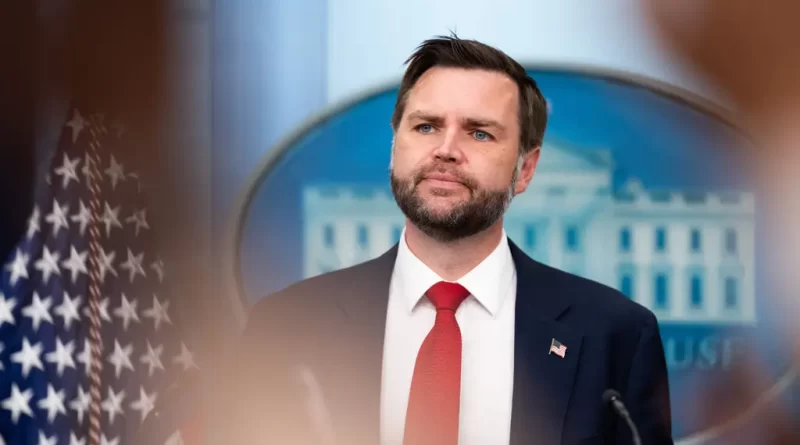
Vice President JD Vance on Thursday delivered an extraordinarily direct rebuke to Israeli critics of the U.S.-Iran peace agreement, as he sought to defend the preliminary deal with repeated misrepresentations of its terms.
“Donald J. Trump is the only head of state in the entire world who is sympathetic to the nation of Israel at this moment in time,” Mr. Vance said. He added, “If I was in the cabinet of the Israeli government, I might not be attacking the only powerful ally that I have anywhere left in the entire world.”
Israel is not a party to the deal, and its fighting with Hezbollah, the Iran-backed militia in Lebanon, had threatened to derail the U.S.-Iran talks to the increasing frustration of American officials. Mr. Vance’s barbed remarks from the White House came a day after President Trump himself admonished Israel over its military campaign.
Mr. Vance also reminded Israeli critics of the deal that, according to him, two-thirds of the weapons “that have protected your homeland” were American-made and paid for by Americans’ tax dollars.
The agreement has faced mounting criticism from Israeli lawmakers, as well as some Republicans in Washington, who argue that it gives Iran economic relief while punting negotiations on its weapons programs down the road. A 60-day clock for the United States and Iran to negotiate the future of Iran’s nuclear program and other critical issues has begun, Mr. Vance said.
Responding to criticism about the sanctions relief that Iran is set to receive, Mr. Vance said Iran would have to “change their behavior” first — even though the deal lays out several benefits that begin immediately “upon the implementation of this M.O.U.”
Those terms include the United States unfreezing assets, releasing restricted funds and commits both sides to reopen the Strait of Hormuz, a critical waterway whose closure roiled global supply chains and prices.
Mr. Vance claimed that lifting oil sanctions on Iran was “not a new benefit” for the country, even though before the war severe economic restrictions meant that Iran had to sell its oil at a steep discount to market prices. Lifting sanctions mean it will be now able to sell its oil for more, to a wider array of buyers and receive payment in more currencies.
Although President Trump and Mr. Vance have threatened repercussions for Iran if it does not satisfy U.S. demands, Iran retains significant leverage in its negotiations. Mr. Trump stressed on Wednesday that he was deeply concerned about avoiding “economic catastrophe” as a result of a prolonged conflict, and he faces difficult midterm elections with voters who broadly disapprove of the war.
Asked about Iran’s ballistic missiles, Mr. Vance told reporters that it was impossible to tell any country that they’re not allowed to maintain a self-defense capacity. He said the administration’s priority was to stop Iran from sowing regional chaos.
At the start of the war, Marco Rubio, the secretary of state, described the destruction of Iran’s ballistic missiles as one of the key goals of the war. That objective has not been achieved. according to U.S. intelligence estimates.
Here’s what else we’re covering:
-
Signing ceremony: A formal signing ceremony scheduled for Friday was in doubt after Iran’s foreign ministry suggested that it would no longer take place because the cease-fire was already signed. A ministry spokesman added that the negotiating teams would still be in Geneva.
-
Lebanon: Israel is not a party to the agreement, and Prime Minister Benjamin Netanyahu has said that he does not feel bound by its terms, saying that Israel would maintain a troop presence in areas of southern Lebanon. Iran has said it would hold the United States responsible for ensuring that Israel complies with the deal.
-
Rebuilding Iran: Mr. Trump has denied that the United States would invest in a rebuilding fund, but the prospect has still attracted criticism from some Republican lawmakers.
-
NATO: Defense Secretary Pete Hegseth berated NATO allies for refusing to join the U.S. war against Iran. In a 12-minute lecture to its defense ministers, he said that their “shameful” refusal had put U.S. forces’ lives at risk.
Defense Secretary Pete Hegseth berated NATO allies as “shameful” for their reluctance to assist in American strikes against Iran, suggesting on Thursday that the Pentagon would reduce the number of troops it keeps in Europe as a result.
He repeated President Trump’s previous description of the military alliance as a “paper tiger” and warned that U.S. support to NATO would not be “a one-way street.” Mr. Hegseth’s 12-minute lecture cast a chill over a meeting that had been designed to set a collaborative agenda for a summit of NATO leaders next month.