
‘War Is Hell:’ A Foreign Soldier Writes Home From Ukraine

Dozens of Brazilians have joined the Russian army, some say lured by a pair of recruiters promising money and adventure. Here is one soldier’s story.

Ana Ionova, a correspondent in Brazil, spent months interviewing Brazilians who were recruited into the Russian military and their family members. She reported this story from São Paulo.
On the ragged outskirts of São Paulo, Chairon Vitor Sepulvida de Souza spent his days delivering packages and his nights working as a security guard. Still, money was tight.
Then Mr. Souza, 22, stumbled on an opportunity that he saw as life-changing, his mother said. Russia was paying generous salaries and bonuses, an Instagram video claimed, to foreigners who joined its military for a year. The two Brazilians who posted the video claimed to live in Moscow and offered to help any Brazilian willing to enlist in the Russian Army.
Mr. Souza started saving for a plane ticket to Moscow in early 2025.
“We were against him going,” recalled his mother, Charlaenne Sepulvida dos Santos. “But he’s so stubborn,” she said. “His mind was made up.”
On March 25, 2025, Mr. Souza, dressed in Brazil’s yellow soccer jersey, said goodbye to his family at the airport, according to his mother and photographs taken that day. He promised he would be back in a year, with enough savings to start his own business.
Months later, Mr. Souza vanished in eastern Ukraine, his mother said.
“My biggest hope is that he was captured,” she said. “My worst fear is that he was killed.”
Ms. Santos said her son had been lured by the two Brazilian recruiters with promises that he could stay far from the front lines. Instead, she said, the men skimmed money from Mr. Souza’s bank account and he was sent to fight in Ukraine. Dozens of other Brazilians have fallen for the same scam.

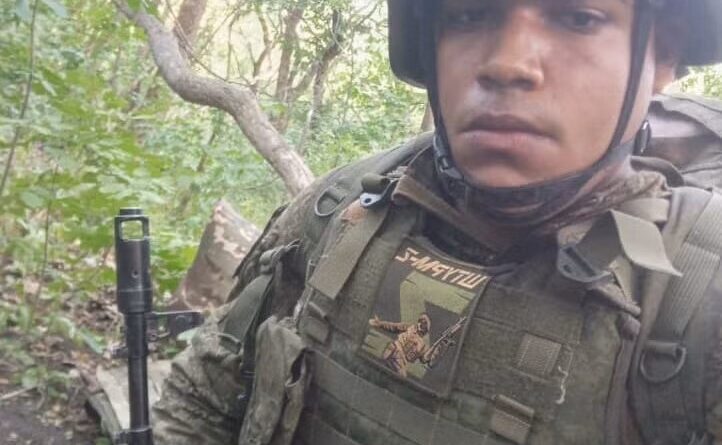
Until his disappearance, Mr. Souza spoke to his mother often, sending her photos, videos, voice notes and texts detailing his experiences as a foreign soldier. This material, which was shared with The New York Times, offers a glimpse into what recruits experienced once they joined the Russian Army and were sent to fight in Ukraine after just weeks of training.
Some 24 hours after her son left home that day in March, Ms. Santos still had not heard from him. Then, a message came from an unknown WhatsApp number belonging to one of the two men who had recruited him online, she said.
“Chairon already arrived here,” the sender, later identified in legal documents as Artur Michel Kreff Avalone, apparently wrote to Ms. Santos. Her son would be in touch soon, he said.
When Mr. Souza did get in touch, his mother demanded frequent video and audio messages as proof he was safe. “Don’t write,” she texted. “I want to see you.”
Mr. Souza replied with a teasing voice note. “There are no Russians here who speak Portuguese,” he said. “I’m OK, Mom.”

When Ms. Santos fretted about the risk, her son assured her that he would not be in harm’s way. “He said he was going to be far from the front lines,” she said.
Just over a week after arriving in Moscow, Mr. Souza told his mother that he had been sent to a training camp. He shared mundane details about daily life, complaining about bad food and bone-chilling cold. Ms. Santos scolded him for looking gaunt. He told her he had passed his physical exams.
After his head was shaved in early April, he sent a selfie. “I look like Buzz Buzzard,” he wrote, referring to the vulture from the Woody Woodpecker cartoons. When he was transferred to what he identified as an army base in Crimea, he sent a video of himself playing the guitar, stretched out on a bed in a room filled with other soldiers.

In early June, Mr. Souza told his mother he had been sent to the Donetsk region of eastern Ukraine. Their exchanges grew more somber.
“I’m alive,” he wrote in response to panicked texts from Ms. Santos, following days of silence. “I can’t talk much, or a drone will pick it up.”
After returning from the front lines one night, Mr. Souza, still clad in fatigues and a helmet, sent a 19-second video to his mother. “I love you,” he said, his face streaked with sweat and dirt. “It’s already night here. I’m all dirty, I’m going to take a shower.”

After a particularly grueling mission in early July, Mr. Souza sent his mother a string of texts saying he was considering deliberately breaking a leg, so he could be discharged.
“War is hell,” he wrote.
Then, on July 11, Mr. Souza told his mother he was preparing for an assault on an enemy target. “Mom, I’m going to the front lines again,” he said in a voice note, over the sound of Brazilian funk music.
Three days later, Mr. Souza sent another audio message. He was silent, but the crackling sound of gunfire echoed loudly. Shortly after, his mother said, he stopped responding to her texts.
“Something bad happened to him,” Ms. Santos said in her home in São Paulo. “Otherwise, he would find a way to text me.”
More than a year after her son vanished, Ms. Santos traveled to Russia in a desperate attempt to find him, but had no luck. “I still came back without answers,” she said.

===========================================================================
Lis Moriconi and Leonardo Coelho contributed reporting.
Ana Ionova is a correspondent for The Times, covering Brazil and neighboring countries.