
Celebrating 25 years of the Himalayan Chandra Telescope in Hanle

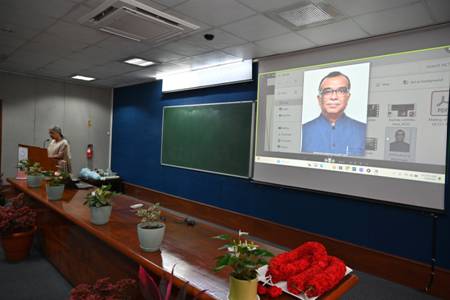
NEW DELHI, 29 JULY. 25 years of the successful operations of the 2-m Himalayan Chandra Telescope (HCT) atop Hanle in Ladakh was celebrated with a conference highlighting its history, engineering challenges, scientific research, and the road ahead.
Prof. Umesh Waghmare, Secretary, Department of Science and Technology (DST) underlined the need to bolster the capacity of the site of telescope with the upgraded HCT announced in the budget, while speaking online at the inauguration of the 3- day conference.
Highlighting that Hanle is India’s primary high-altitude facility which has trained generations of astronomers, he congratulated the fraternity at the Indian Institute of Astrophysics (IIA) for maintaining the world class facility in such a challenging location, through collective efforts.
“A unique feature of the telescope is that it has been operated remotely in real time from IIA’s campus in Hosakote in Bengaluru, since June 2001, through a dedicated INSAT-3B satellite link from ISRO. The site has more than 250 usable nights a year, and with a precipitable water vapour of less than 2.5 mm with highly transparent skies, is ideal for near-infrared observations as well. The telescope yielded its very first scientific result in 2001, with a paper studying the optical afterglow of a gamma ray burst”, said Prof Annapurni Subramaniam, Director IIA.
Dr. S, Somanath, Chairperson of the IIA’s Governing Council and former Chair of ISRO, spoke about the scientific research done with HCT on supernovae, stellar spectroscopy, and exoplanets.
The conference has brought together astronomers from across India, including 70 users of the HCT to present their research using the HCT and discuss the plans for future telescopes, at a 3 day science meeting.
A special session was organised by the IIA on July 28 to summarise the telescope’s achievements, reflect on its history, and felicitate the people who were involved in the development of the Observatory.
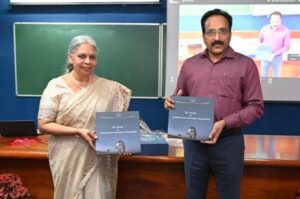
A coffee table book about the HCT, and a dynamic model of the telescope were also unveiled.
Establishing an optical telescope in the trans-Himalayan region had been the dream of the Indian astronomical community for many decades. Following suggestions made by a panel set up by the Planning Commission, the IIA an autonomous institution of the DST, was identified in 1989 as the nodal agency to identify a suitable location for optical and infrared facilities. Starting in 1993, teams of astronomers explored six different locations in the Himalayas, and zeroed in on Digpa Ratsa Ri, a mountain top in Hanle at 4517 metres above sea level, in the cold high-altitude desert in Ladakh.
With a large number of clear nights due to the Himalayas obstructing the monsoons, a very low atmospheric water vapour, and minimal light pollution from manmade sources, Hanle was selected as one of the ideal locations for optical and near-infrared astronomy in India.
A telescope of 2-m diameter was decided on, with a proposal to develop the site in the future to house much larger telescopes. The foundation stone for the Indian Astronomical Observatory was laid in 1997. The telescope saw its ‘First Light’ on 26 September 2000, and was dedicated to the nation in August 2001. It was named the ‘Himalayan Chandra Telescope’, or HCT, after the Nobel Laureate Subramanyan Chandrasekhar.
Currently, the HCT hosts HFOSC (a spectrograph and camera in the optical), uTIRSPEC (a near-infrared spectrometer and imager), and HESP (a high-resolution Echelle spectrograph).
HCT is used by astronomers from across India, to study objects as varied as planets and asteroids, to stars and galaxies.
Some research highlights have been spectroscopy of comets, study of atmospheres of exo-planets, and participation in the discovery of the famous Trappist 1b exoplanet in the field of planetary science. Stellar astrophysics has been a key area of study, with research on nebulae, infrared imaging of star forming regions, long term monitoring of young stellar objects and variable stars, spectroscopic surveys of binary systems and emission line stars, extended surveys of stars with peculiar chemical compositions. Novae and supernovae, and their expanding shells, are also an important area of research using HCT. Extragalactic research involves study of mixed stellar populations, low surface brightness galaxies, lensed quasars, interacting galaxies, and reverberation mapping of active galactic nuclei.
Since the installation of the HCT, Hanle has attracted astronomers from many institutions to set up their telescopes at this pristine site as well. The Observatory currently hosts the GROWTH-India Telescope (with IITB) along with the two gamma ray telescopes MACE and HAGAR (with BARC and TIFR) along with many atmospheric research instruments, and will be hosting new telescopes from ISRO, RRI and other institutions as well.
The recently setup Hanle Dark Sky Reserve aims to preserve the dark skies for future facilities as well.
In a major fillip to the site as well as to Indian astronomy, the recent budget announcement mentioned the setting up of the 3.7-m Upgraded HCT and the 13.7-m National Large Optical-infrared Telescope at Hanle, to be led by IIA. Driven by the experience gained from HCT, these will help leapfrog Indian astronomy to the next level while taking advantage of the site of Hanle, which remains a globally competitive location for astronomy.