
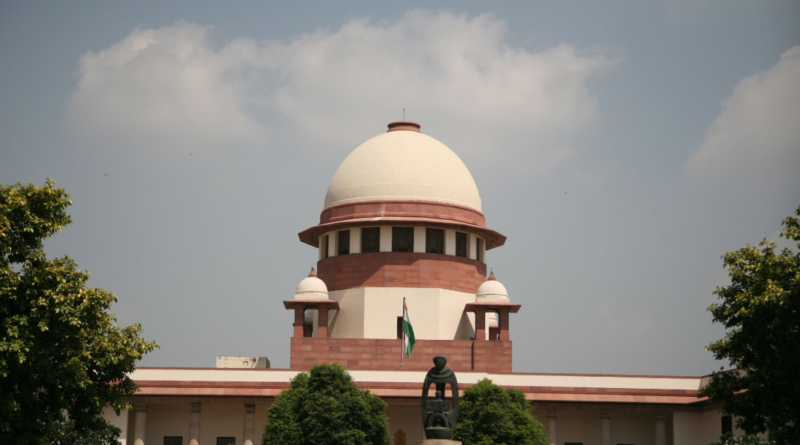
How the 1973 Kesavananda Bharati Verdict Saved Indian Democracy


By- Jay Singh Rawat
On April 24, 1973, inside the packed courtroom of the Chief Justice of India in New Delhi, thirteen judges assembled to deliver a verdict that would forever define the destiny of the world’s largest democracy. The judgment in Kesavananda Bharati Sripadagalvaru vs. State of Kerala, spanning over seven hundred pages and decided by a razor-thin majority of seven to six, answered the most fundamental question of Indian constitutionalism: who is supreme in India, Parliament or the Constitution? More than five decades later, that landmark ruling remains the unshakeable bedrock of Indian democracy, ensuring that even a government armed with an overwhelming parliamentary majority can amend the Constitution, yet never destroy or overturn its soul.
To appreciate the magnitude of that April morning in 1973, one must trace the fierce institutional tug-of-war between Parliament and the Supreme Court that began almost immediately after the Constitution came into force in 1950. Independent India’s early governments were eager to dismantle the feudal zamindari system and enact sweeping agrarian land reforms. However, these progressive laws repeatedly collided with the fundamental right to property enshrined in the original Constitution. When the courts struck down certain land acquisition measures as violative of fundamental rights, Parliament responded by passing the First Amendment, placing land reform laws beyond judicial scrutiny. In early constitutional challenges, notably the Shankari Prasad case of 1951 and the Sajjan Singh case of 1965, the Supreme Court deferred to legislative wisdom, ruling that Parliament possessed unlimited power under Article 368 to amend any part of the Constitution, including fundamental rights.
That judicial deference came to an abrupt halt in 1967 with the historic Golaknath judgment. An eleven-judge bench reversed the Court’s earlier stance, holding by a narrow six-to-five majority that fundamental rights occupied a transcendental position and could not be abridged or taken away by Parliament through a constitutional amendment. The ruling triggered an unprecedented political storm. Determined to reassert parliamentary supremacy, the government of the day enacted the Twenty-fourth, Twenty-fifth, and Twenty-ninth Constitutional Amendments between 1971 and 1972. Collectively, these amendments sought to nullify the Golaknath verdict, grant Parliament unfettered authority to alter or repeal any constitutional provision, subordinate fundamental rights to Directive Principles of State Policy, and shield specific state land reform laws from any judicial challenge whatsoever.
It was against this charged backdrop that Swami Kesavananda Bharati, the head of the Edneer Mutt, a centuries-old Hindu monastery in Kerala’s Kasaragod district, approached the Supreme Court. Challenging the Kerala government’s attempts to restrict the management of his monastery’s property under state land reform legislation, his petition rapidly evolved from a local property dispute into an existential battle over the survival of India’s constitutional framework. Represented by the legendary jurist Nani Palkhivala, the case witnessed an extraordinary sixty-eight days of marathon arguments—the longest hearing in the history of the Supreme Court—as the finest legal minds of the era debated the limits of democratic power.
The thirteen-judge bench presided over by Chief Justice S.M. Sikri ultimately forged a middle path that was nothing short of constitutional genius. While the Court overruled Golaknath and upheld Parliament’s broad authority to amend every part of the Constitution, including fundamental rights, it simultaneously drew an inviolable boundary. The majority ruled that the word “amend” in Article 368 implies improvement or modification within the existing framework, not destruction or rewriting. Parliament, the Court famously observed, is a creature of the Constitution, not its creator, and therefore cannot use its amending power to damage or destroy the Constitution’s “Basic Structure.” Unlike the British Parliament, which operates under the doctrine of absolute parliamentary sovereignty without a written constitution, the Indian Parliament derives its authority from a written supreme law and remains bound by its core philosophy.
Crucially, the Supreme Court refrained from locking the Basic Structure into a rigid, exhaustive list, allowing the doctrine to evolve organically through subsequent constitutional jurisprudence. Over the decades, the Court has identified several indispensable pillars as part of this unamendable core, including the supremacy of the Constitution, the sovereign, democratic, and republican character of the nation, secularism, the separation of powers between the legislature, executive, and judiciary, judicial review, federalism, and the guarantee of free and fair elections. Any constitutional amendment that strikes at the heart of these foundational values is liable to be struck down as unconstitutional by the courts.
The true resilience of the Basic Structure doctrine was tested almost immediately during the dark days of the National Emergency in 1975. Armed with a brute majority, the executive attempted to place the election of the Prime Minister beyond judicial scrutiny through the Thirty-ninth Amendment and sought to strip courts of their power to review constitutional amendments altogether through the sweeping Forty-second Amendment. In landmark rulings such as Indira Nehru Gandhi vs. Raj Narain in 1975 and Minerva Mills in 1980, the Supreme Court invoked the Kesavananda Bharati precedent to invalidate these authoritarian overreaches, preserving judicial review and the democratic balance of power. Later, in the 1994 S.R. Bommai case, the Court once again relied on the doctrine to affirm secularism and federalism as inviolable features of the Republic, curbing the arbitrary dismissal of elected state governments.
Today, more than half a century after it was pronounced, the Kesavananda Bharati judgment stands as the ultimate safety valve of Indian democracy. It strikes a delicate yet enduring equilibrium between stability and change. By permitting wide-ranging amendments, it ensures that the Constitution remains a living, breathing document capable of adapting to the evolving social, economic, and technological needs of a dynamic nation. At the same time, by safeguarding the Basic Structure, it protects citizens against the tyranny of transient majorities, reminding every government that electoral mandates confer the authority to govern within constitutional boundaries, never the license to dismantle the Republic itself.