
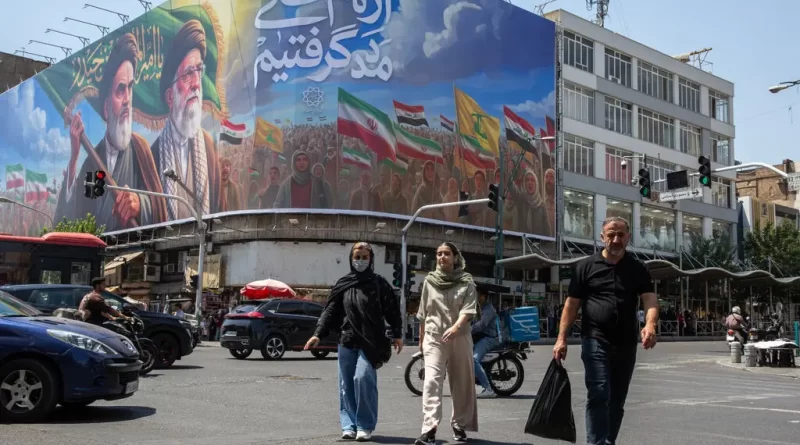
U.S. and Iran Reach Cease-Fire Agreement

The deal was expected to halt fighting for 60 days, open the Strait of Hormuz and lift the U.S. naval blockade on Iranian ports. But it would leave the thorniest nuclear issues for another day.

The United States and Iran reached a cease-fire agreement on Sunday, paving the way for further talks that could ultimately end a monthslong war that has killed thousands and rattled the global economy.
“The Deal with the Islamic Republic of Iran is now complete,” President Trump said in a post on social media. Iran’s Supreme National Security Council said in a statement that the country had finalized a memorandum of understanding with the United States after “months of long and difficult negotiations.”
Mr. Trump said that the deal would reopen the Strait of Hormuz, an economically vital waterway, and that he had authorized “the immediate removal of the United States Naval blockade” on Iranian ports.
“Ships of the World, start your engines,” he wrote. “Let the oil flow!”
The agreement will be signed on Friday. Iran and Pakistan, a mediator, said it would take place in Geneva .
The text of the agreement was not immediately released. But Mr. Trump’s post aligned with what American and Iranian officials had previously said an initial agreement might contain. The deal would include a 60-day cease-fire, the officials said.
Each side sought to portray the agreement as a diplomatic victory after nearly four months of war. But some of the thorniest issues — including the fate of Iran’s nuclear program, and sanctions relief for Tehran — remain unresolved and have been pushed to a further round of negotiations.
In a statement, Supreme National Security Council’s said the agreement called for an immediate end to military operations on all fronts, including Lebanon, where Israel and the Iranian-backed militant group Hezbollah are fighting. Israel, which was not a party to the U.S.-Iran negotiations, has not yet commented on the agreement.
An agreement appeared at risk earlier in the day after Israel bombed the southern suburbs of Beirut in retaliation for rocket fire from Hezbollah. An angry Mr. Trump said Prime Minister Benjamin Netanyahu of Israel had shown “no judgment” in ordering those strikes and called on all sides to “stand down.”
A last-minute flurry of negotiations, led by Qatar, eased the tensions, and the final agreement appeared to come together late in the night in Tehran. Iran held off agreeing until the early hours of Monday there, allowing it to claim it had not signed on Mr. Trump’s birthday, on Sunday, as he had wanted, according to two Iranian officials who spoke on condition of anonymity.
Major questions remain unanswered.
One concerns the fate of Iran’s nuclear program, over which neither country has shown much willingness to compromise. Officials previously said both sides would hold detailed negotiations over the program, as well as over the lifting of U.S. sanctions on Iran, during the 60-day cease-fire.
Lebanon may prove to be another stumbling block. Any deal that includes the conflict there would depend on both the United States being able to compel Israel to wind down its military campaign and Iran’s cooperation in restraining Hezbollah.
Here’s what else we’re covering:
-
Trump calls The Times: In a 28-minute phone conversation that he initiated from the White House residence, and a brief follow-up call, the president asserted that his decision to attack Iran in late February, and his subsequent naval blockade of its ports, had remade the Middle East in America’s favor and saved Israel from nuclear obliteration.
President Trump said in an interview on Sunday afternoon that the agreement he had reached with Iran would ultimately assure that the Strait of Hormuz was “permanently toll-free,” and asserted that, despite the objections of Prime Minister Benjamin Netanyahu of Israel, he had saved Israel from nuclear obliteration.
Mr. Trump also insisted that if Iran failed to reach a final nuclear accord with the United States — a process that his aides say they expect will begin on Friday in Switzerland — he would restart military attacks on Tehran or make the United States “the guardian of the Middle East” in return for 20 percent of the region’s revenues.
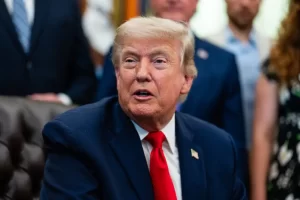
President Trump insisted on Sunday that if Iran failed to reach a final nuclear accord with the United States, he would restart military attacks on Tehran.Credit…Eric Lee for The New York Times -
Markets react: Oil prices fell on Sunday after Mr. Trump said the United States had reached a deal with Iran that would allow the “toll free” passage of ships through the Strait of Hormuz. Futures on the S&P 500 pointed to a modest rise in stocks when U.S. trading resumes on Monday.
Oil prices fell and stocks rose on Sunday after President Trump said the United States had reached a deal with Iran that would allow the “toll free” passage of ships through the Strait of Hormuz.
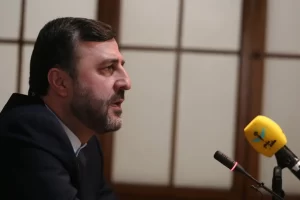
His social media post capped weeks of fraught negotiations between the countries that seemed at times to be making little progress. A key mediator in the peace talks, the prime minister of Pakistan, said the agreement covered Lebanon and that a signing ceremony was scheduled for Friday in Switzerland.
-
Opposition in Israel: Details about the agreement before it was announced surfaced in news media reports, prompting a flood of criticism and discontent from Israelis spanning the country’s political spectrum.
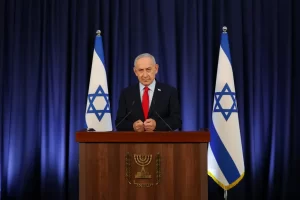
Prime Minister Benjamin Netanyahu in March. At the start of the recent war, he had said that its objective was “to remove the existential threats” to Israel. Credit…Pool photo by Ronen Zvulun The main headline of Sunday’s Yediot Aharonot, a popular Hebrew daily, summed up in two words the prevailing sentiment in Israel over President Trump’s emerging cease-fire agreement with Iran: “Bad Deal.”
Israel waged two wars against Iran in the past year, the most recent one the campaign launched in late February with U.S. forces. Now Israel, which had not been a party to the Trump administration’s negotiations with Iran, is being left out of the potential peace.
-
Lebanon: The Israeli strike in Beirut’s southern suburbs earlier Sunday created concern that the peace negotiations could collapse if Iran and Israel resumed trading fire. Instead, it accelerated the completion of the final text, according to two Israeli officials. But the conflict between Israel and Hezbollah could still complicate a more lasting peace deal.
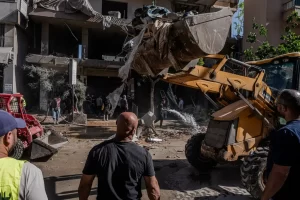
The Israeli military said Sunday that it had struck a Hezbollah target on the outskirts of the Lebanese capital, Beirut, an escalation that threatened to imperil U.S. peace talks with Iran and drew the ire of President Trump.
Hours after the attack, President Trump wrote on Truth Social that the strikes “should not have happened” and urged Israel and Hezbollah, the Iran-backed Lebanese militia, to exercise restraint.