
Iran War Live Updates: Trump Berates Allies While Offering Conflicting Signals About the War

President Trump said that he was considering leaving NATO over allies’ failure to support his Iran offensive. After suggesting that the U.S. war would end in weeks, he threatened Iran with more attacks. He was scheduled to deliver an address on the war at 9 p.m. Eastern.

President Trump said that he was considering pulling the United States out of NATO over the war with Iran, as he heaps pressure on allies to manage the fallout of a conflict he signaled he would wind down in two or three weeks.
In an interview with Britain’s Telegraph newspaper published on Wednesday, Mr. Trump said he thought that U.S. membership in the military alliance was “beyond reconsideration.”
The president continued to give conflicting signals about the war, writing on Truth Social that he would not consider a cease-fire until the Strait of Hormuz was open, a day after he said that the U.S. military campaign would be over “very soon” and that Iran’s closure of the strait was for other countries to resolve.
He claimed in the post that “Iran’s New Regime President” had asked for a cease-fire, without saying who he was referring to, and despite Iran’s repeated denials that it is negotiating with the United States.
Mr. Trump was scheduled to deliver “an important update” on the war in a national address at 9 p.m. Eastern on Wednesday, said Karoline Leavitt, the White House press secretary. On Tuesday afternoon, Mr. Trump told reporters that he had achieved his primary goal of preventing Iran from developing a nuclear weapon, though there is no evidence that the United States or Israel has destroyed the country’s stockpile of near-bomb-grade fuel.
Earlier Tuesday, Defense Secretary Pete Hegseth said that the U.S. had achieved such control of Iran’s skies that it was flying B-52 bombers directly over Iranian territory. But Mr. Hegseth acknowledged that Iran retained the ability to retaliate with missiles and drones targeting U.S. allies in the region. On Wednesday morning, the authorities in Bahrain, Kuwait and Qatar all reported missile or drone attacks from Iran.
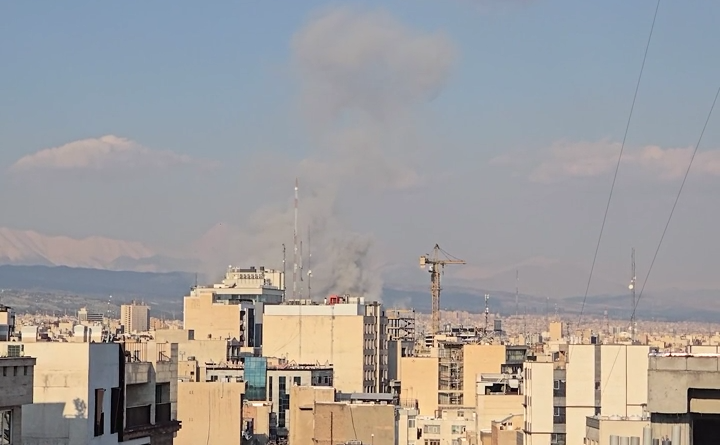
The Israeli military said on Wednesday that it had carried out strikes against Iranian government infrastructure in Tehran, the capital. Iranian state television reported that three locations were hit, including an area northeast of Tehran with military buildings and housing. On Tuesday, Israel’s prime minister, Benjamin Netanyahu, said that the U.S.-Israeli attacks on Iran had crushed its capacity to produce weapons.
Here’s what else we’re covering:
-
Strait of Hormuz: An Iranian official emphasized on Wednesday that the United States would not regain access to the waterway, a crucial conduit for the world’s oil and gas supply, saying in a social media post: “The Strait of Hormuz will certainly reopen, but not for you.”
-
NATO: Mr. Trump’s comments about the trans-Atlantic military alliance plunged leaders in Europe — which has relied for decades on American military power — into another cycle of anxious deliberations, similar to when he mused last year about invading Greenland before ultimately backing off. Read more ›
-
American kidnapped: A journalist, Shelly Kittleson, was kidnapped in Baghdad, the Iraqi capital, on Tuesday evening, the country’s Interior Ministry said. The ministry said that security forces had pursued the kidnappers, arrested one suspect and seized a vehicle used in the abduction. The suspect is a member of the Iranian-allied paramilitary group Kataib Hezbollah, two senior Iraqi security officials said.
-
Houthis: In Yemen, the Iran-backed Houthi militia said it had launched ballistic missiles at Israel on Wednesday. Israel said it had detected a missile launch from Yemen toward its territory. The Houthis entered the war on Saturday by launching a missile attack on what they said were Israeli military targets.
-
Lebanon: Israeli strikes in Beirut killed at least seven people and wounded 24 others early Wednesday, Lebanon’s national news agency reported. And there were more Israeli strikes across southern Lebanon, a day after Israel said it planned to occupy and control a large swath of the region and demolish entire towns.
-
Death tolls: The Human Rights Activists News Agency said at least 1,598 civilians had been killed, including 244 children, in Iran since the war began. Lebanon’s health ministry said that more than 1,260 Lebanese had been killed as of Tuesday, with more than 3,750 others wounded, since the latest fighting between Israel and Hezbollah began. In Iran’s attacks across the Middle East, at least 50 people have been killed in Gulf nations. In Israel, at least 17 had been killed as of Friday. The American death toll stands at 13 service members, with hundreds of others wounded.