
Here’s What to Know About the Standoff in the Strait of Hormuz
The United States and Iran have engaged in rounds of attacks and counterattacks in recent days, eroding hopes for a quick return to normalcy in the Middle East.

The United States and Iran have traded attacks over the last several days, eroding hopes for a durable peace in the Middle East — or even a quick return to normalcy — despite an agreement to end the war earlier this month.
U.S. forces bombarded Iranian sites overnight between Saturday and Sunday in retaliation for Iran’s firing on passing commercial ships in the Strait of Hormuz, the military said.
Hours later, the governments of Bahrain and Kuwait reported shooting down a wave of incoming Iranian ballistic missiles and drones. There were no immediate reports of major damage or casualties.
The repeated attacks have underscored how the understandings underpinning the cease-fire between the United States and Iran remain vague and fragile.
Why are the U.S. and Iran clashing again?

President Trump hailed the truce he signed with Iran two weeks ago, saying it would bring peace and security to the whole region. The deal was supposed to end the U.S.-Israel war with Iran by postponing the toughest sticking points, like Iran’s nuclear program, which would be negotiated in two months of future talks.
The deal’s main achievement was the cease-fire itself, which Mr. Trump hoped would also end Iran’s chokehold of the Strait of Hormuz, one of the world’s most important conduits for oil and gas.
Iran blockaded the strait after the U.S. and Israel attacked it in late February.
On Thursday, Iran bombarded the Ever Lovely, a passing container ship on the side of the Strait of Hormuz closer to neighboring Oman. The attack came hours after Iran had warned ships that they could only travel through its waters; many had been using the alternate Omani route.
American forces responded with a wave of attacks on Friday, prompting drone strikes on Saturday on another ship, the Panamanian flagged Kiku, and on Bahrain, a U.S. ally. Both attacks were widely blamed on Iran.
Iranian officials did not confirm or deny attacking either ship. Iran frequently attacked Gulf Arab countries during the war, saying it was targeting the U.S. military installations or other American assets on their soil.
Sunday then saw a new round of attacks.
U.S. forces bombarded Iranian military targets to retaliate for the attack on the Kiku. Hours later, Iran said it had fired on U.S. bases in Kuwait and Bahrain; there were no reports of casualties or serious damage.
What’s happening in the Strait of Hormuz?
The Trump administration hoped the deal with Iran would reopen the waterway and bring down surging energy prices caused by the war. In the days before the most recent attacks, the strait saw a notable increase in the movement of ships, many of them carrying Iranian oil.
But the deal that the Trump administration signed with Iran left the strait’s future up for grabs.
According to the memorandum of understanding, Iran ought to provide “safe passage of commercial vessels with no charge for 60 days only.” After that, Iran would “conduct dialogue” with Oman on “future administration and maritime services” in the strait.
Mr. Trump has asserted that the strait will be “permanently toll-free.” But Iran says it is discussing imposing transit fees on ships, emphasizing its “sovereign rights over their territorial waters in the Strait of Hormuz.”
That would be a potential moneymaker for the cash-strapped Iranian government and a far cry from the status quo before the war, when ships enjoyed free passage through the strait.
For Iran, the strait has also served as an powerful source of leverage in the negotiations with the United States
Ali Bahreini, Iran’s ambassador to the United Nations in Geneva, said his country was prepared to close the Strait of Hormuz to reach an agreement on the future of its nuclear program.
“We have all realized the world economy can’t tolerate the impact of the closure of the Straits of Hormuz,” he said.
Can the cease-fire hold?

The United States and Iran have ramped up their rhetoric in recent days, accusing each other of violating the cease-fire. But while both seem to be testing each other’s red lines and making threats, analysts say neither seems eager for a return to full-blown war.
For Mr. Trump, there are obvious downsides in returning to a war that was broadly unpopular domestically, split his Republican voting base, and pushed up fuel prices in an election year.
Iran, too, may see little benefit in returning to war.
Experts say its leaders view themselves as the war’s victors, having forced the United States to give up on Mr. Trump’s initial calls for the collapse of the Iranian regime and their “unconditional surrender.”
But an aversion to full-blown war does not mean the two countries will be able to reach the final deal on Iran’s nuclear program that is stipulated in this month’s cease-fire agreement.
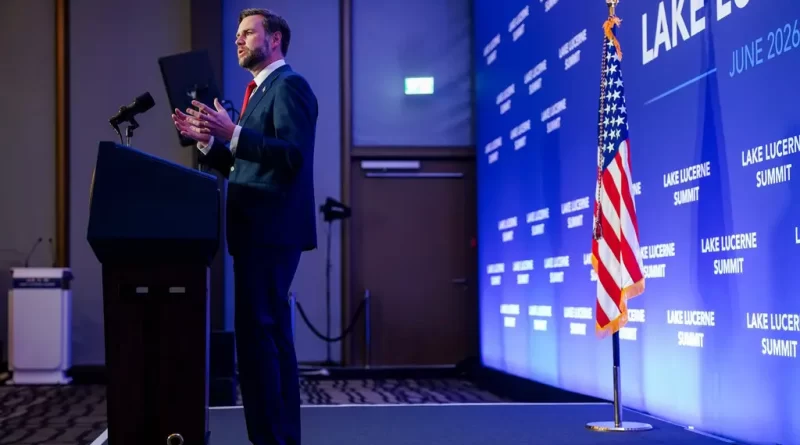
Mr. Vance met Iran’s chief negotiator, Mohammad Bagher Ghalibaf, in Switzerland earlier this month for talks. But since then, there has been little word on what progress, if any, has been made between the two sides.
How did we get here?
Here are some of the key events since the war between the United States, Israel and Iran began:
Feb. 28: The United States and Israel jointly launch airstrikes on Iran, which Mr. Trump said would transform the Middle East and terminate the threat from what he called a “wicked, radical dictatorship.”
March 1: The Iran-backed Lebanese militant group Hezbollah drags Lebanon into the conflict, firing rockets toward Israel in retaliation for the killing of Iran’s supreme leader.
Early March: Iran’s missile and drone strikes on oil facilities and tankers effectively close the Strait of Hormuz.
April 7: The United States and Iran announce a two-week cease-fire.
April 12: U.S.-Iran talks end with no agreement as the two sides fail to compromise on major points, including Iran’s stockpile of enriched uranium and reopening the Strait of Hormuz.
April 13: The United States initiates a blockade of Iranian ports.
April 16: Israel agrees to a 10-day cease-fire with Hezbollah in Lebanon, which is later extended.
June 7: Israel strikes a neighborhood on the outskirts of Beirut where Hezbollah has long held sway. Iran retaliates with its first ballistic missile attacks on Israel since the cease-fire.
June 15: The United States and Iran sign a memorandum of understanding that was supposed to halt fighting for 60 days.
June 21: The first round of talks begin in Switzerland.
Reporting was contributed by Jenny Gross, Erika Solomon, Neil MacFarquhar, Jim Tankersley, Lara Jakes, David M. Halbfinger and Natan Odenheimer.
============================================================
Aaron Boxerman is a Times reporter covering Israel and Gaza. He is based in Jerusalem.