
Norway Moves to Temporarily Ban AI Smart Glasses in Public Spaces Amid Privacy Fears

It’s the latest sign of growing concern in many countries about new technologies that are fundamentally changing the way people live. Some governments have banned the use of social media by children and young teens.One effort to rein in the use of AI glasses has run aground – in the home of Silicon Valley. Torgeir Micaelsen, the Norwegian minister of digitalization and public governance, expressed concerns about the emergence of new technology that could photograph, film or record the audio of people without their knowledge.
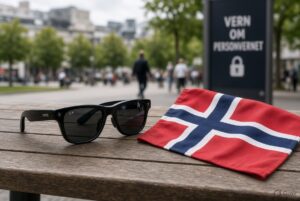
In a pioneering step that could influence global regulation of wearable technology, Norway’s government announced on 5 October 2026 plans for a temporary ban on the use of AI-powered smart glasses — often called KI-briller in Norwegian — in selected public places. The move aims to protect citizens from being photographed, filmed or audio-recorded without their knowledge while authorities develop longer-term rules.
Digitalisation and Public Governance Minister Torgeir Micaelsen (Labour Party) stated in the official government press release: “I am worried that new, powerful technology is being introduced where people risk being photographed, filmed or audio-recorded without knowing it. We will therefore propose a temporary ban on AI glasses in selected places. This will give us time to conduct a thorough investigation and have an enlightened debate that can lay a good basis for lasting regulation.”
He added that Norway does not want a society in which people feel anxious about hidden recordings in everyday situations where they expect privacy. “Such a society can feel unsafe and make us withdraw,” Micaelsen said.
What Are AI Smart Glasses?
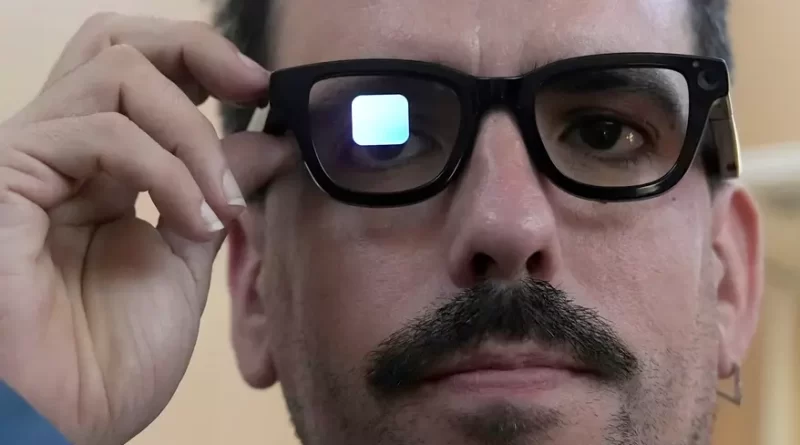
AI smart glasses, popularised by products such as Meta’s Ray-Ban models, look like ordinary eyewear but incorporate cameras, microphones, speakers and artificial intelligence. Users can take photos and videos, make calls, listen to music, receive real-time information overlays, or interact with AI assistants through voice or subtle gestures. The devices have become more common in recent years, raising concerns about discreet surveillance because recording indicators can sometimes be covered or overlooked.
Scope of the Proposed Temporary Ban
The ban would not be absolute. Private use would remain permitted in situations where others are not at risk of being recorded without consent. The government is also examining possible exemptions for vulnerable groups and socially beneficial applications — for example, aids for visually impaired people.
According to the official announcement and subsequent reporting, the temporary restrictions could apply to:
- Places where the public regularly gathers, such as parks, beaches, museums, shopping centres, amusement parks and public events.
- Locations and activities involving children, including schools, kindergartens, playgrounds and youth clubs.
- Privacy-sensitive environments such as healthcare facilities, doctors’ offices, swimming pools and gyms with changing rooms or showers.
Universities and higher-education institutions are also under consideration. The precise definition of covered technology — whether limited to glasses with cameras and microphones, those with AI features, or broader body-worn devices capable of recording — will be clarified as the legislation is prepared.
The minority Labour-led government plans to present a bill to the Storting (parliament) “as soon as possible.” Work on establishing an expert group is already under way. That group will advise on permanent national regulation of body-worn technology that can capture video, audio or perform AI-assisted monitoring.
Background and Growing Concerns
The announcement builds on earlier discussions. In August 2026, then-Digitalisation Minister Karianne Tung signalled plans for stricter rules on smart glasses and similar devices, highlighting risks to privacy and the possibility of banning facial-recognition functions that identify other people in public spaces. She also encouraged public and private organisations to develop their own guidelines.
By September, after Micaelsen took office, the tone sharpened. He described the technology personally as “creepy” in interviews and confirmed that a ban was under active consideration, while noting potential exceptions for people with disabilities. Several municipalities and schools had already begun restricting the devices following guidance from the Education Minister.
Consumer and data-protection bodies in Norway have previously called for caution, including temporary pauses on sales while legal questions are resolved. Similar privacy worries have prompted local restrictions elsewhere — in some courts, workplaces, cinemas and restaurants internationally — but Norway’s proposal stands out as one of the first coordinated national responses of its kind.
Balancing Innovation and Privacy
Supporters of the technology point to practical benefits: hands-free assistance for people with visual impairments, real-time translation, navigation, or productivity tools. Critics emphasise the difficulty of obtaining meaningful consent in public and the potential for misuse, especially when combined with powerful AI that can analyse faces, conversations or behaviour.
Norway’s approach reflects a deliberate “precautionary” stance. Officials note that society has sometimes reacted too slowly to transformative technologies such as social media. By imposing a temporary pause in high-risk settings, the government hopes to create space for informed public debate and evidence-based permanent rules rather than rushing into either unrestricted adoption or an outright nationwide prohibition.
As the bill moves toward parliament and the expert group begins its work, the outcome will be closely watched beyond Norway’s borders. The decision could set an early European benchmark for how democracies regulate the next generation of always-on, body-worn AI devices. (– The Washington Times-Associated Press )