
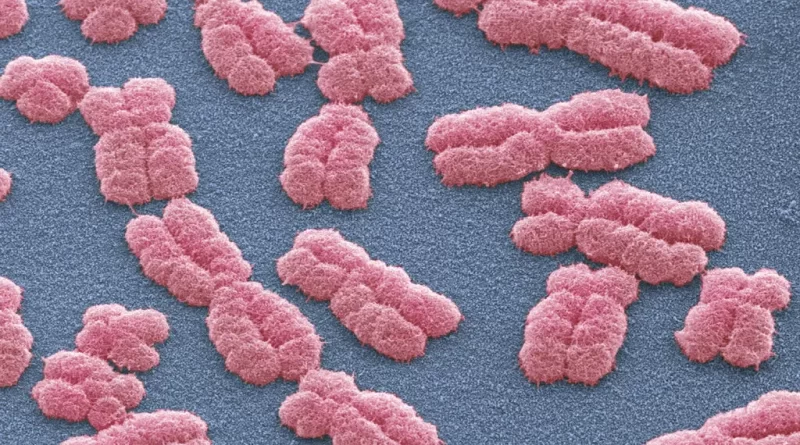
Scientists Find More Than 1,000 Genetic Variants Linked to Personality

More than one million genomes helped identify DNA variants linked to extroversion, agreeableness, neuroticism and more. Researchers measured how those traits influenced how people lived.

Are you naturally anxious? Highly adventurous? More argumentative than you’d like to admit?
Those tendencies are often measured through what psychologists call the “Big Five” dimensions of personality: extroversion, agreeableness, conscientiousness, neuroticism and openness to experience. Each trait exists on a continuum and tends to remain fairly stable throughout adult life.
But what determines where you land on those spectra? Scientists have long known that personality is influenced by a host of factors — including DNA. The challenge has been deciphering the specific pathways through which a genetic blueprint nudges the direction of a person’s life.
To map this sprawling architecture, a group of experts formed a research consortium and analyzed more than one million genomes, searching for variants associated with personality. The researchers also compared the genes of thousands of siblings and parent-child pairs to rule out other factors that could be at play. With data from 46 different study cohorts, they found a symphony of 1,260 genetic markers tied to personality, nearly two-thirds of them identified for the first time.
The findings, published on Wednesday in the journal Nature, reaffirmed scientists’ understanding that temperament and disposition are shaped not by a few particular genes, but by thousands of tiny variants that can be expressed in different circumstances. The sheer scale of the project also brought new statistical power to the study of personality genetics, giving researchers a tool kit to investigate the biological mechanisms behind how we think, feel and behave.
“I view the 1,260 variants as kind of a testament to the fact that we’ve now got the power to answer all of these other questions that we couldn’t answer before,” said Elliot Tucker-Drob, a professor of psychology at the University of Texas at Austin and a leader of the study.
Common genetic differences identified in this study still account for only about 5 to 10 percent of personality variation among people. But experts caution against thinking about personality drivers as a pie chart, divided into neat percentages of genes versus environment. In reality, a person’s DNA and context are constantly interacting; experiences are the very tool that genetic predispositions use to mold who a person becomes.
In studies of genetic influence on educational attainment, much of what appears driven by DNA often turns out to be parental privilege or home environment in disguise. With personality, however, family comparison studies that looked for such confounding variables revealed that about 96 percent of the genetic influence indeed came directly from the DNA itself. That makes intuitive sense: Growing up in the same household might give siblings similar launching pads, but it almost never gives them similar temperaments.
Wednesday’s publication is, in some ways, a revitalization. In the late 20th century — the era of classical twin studies — personality was a central focus of behavioral genetics. But over the last decade, personality genetics has not been studied with nearly the intensity that other traits have, such as the risk of developing schizophrenia, in part because most personality traits were not considered medically relevant.
“It was kind of a conspicuous absence,” said Dr. Tucker-Drob, whose academic work focuses on “individual differences,” a realm of psychology that examines the ways people diverge in their thoughts, feelings and behaviors. To him, personality is not just an abstract concept: The way people engage with themselves and the world can help determine how much money they make, the types of medical care they seek, and how strong their friendships are.
Personality is “meaningfully related to all sorts of outcomes that I think everyone in society values,” he said.
The research team scanned roughly 10 million genetic variants across the genome in order to map the “Big Five.” By aggregating disparate studies on various traits, researchers were able to uncover the ways personality predispositions rippled out into health, habits and lifestyle choices.
Researchers found 258 different genetic variants linked to extroversion, for example, a 15-fold increase in the number of variants previously known. A genetic profile with high extroversion seemed to reduce a person’s risk of anxiety, depression and post-traumatic stress disorder, all of which involve internalizing distress. But the trait was also linked to neurodevelopmental conditions such as A.D.H.D.
People who were predisposed to conscientiousness — or a capacity for productivity and organization — appeared more likely to exercise, choose low-calorie foods and sleep well. Genetic scores for conscientiousness helped predict who would move out of urban centers and into affluent suburbs by age 50.
Neuroticism, which is defined as a tendency toward emotional instability, was predictably correlated with 10 different psychiatric disorders, plus a higher body mass index and increased rates of smoking. Study participants with genetic profiles high in neuroticism seemed to second-guess themselves in real time, frequently selecting options such as “I don’t know” on research survey questions.
Since neuroticism can be a strong predictor of mental illness, some researchers are particularly interested in how the new findings illuminate possible triggers and avenues of disease. Dalton Conley, a sociologist at Princeton University who was not involved in the research, was particularly intrigued by the way the consortium’s results challenged a long-held theory among psychologists that neuroticism is primarily driven by differences in serotonin levels. Depression and anxiety are often successfully treated with medications that boost the chemical.
The new analysis showed that neuroticism variants were indeed especially active in brain cells — but revealed nothing pronounced about the serotonin system in particular. “I wouldn’t say it’s slaying that theory forever,” Dr. Conley said, “but it’s definitely casting doubt.”
Another unexpected finding came in the context of relationships. Behavioral geneticists know that people tend to select life partners with similar DNA profiles in areas such as educational attainment. But in the new study, personality traits did not show much so-called “assortative mating” at all: In fact, personality variants among partners were matched mostly at random.
In contrast, spouses’ actual personalities — specifically their openness to experience — were sometimes correlated, perhaps because sharing daily life makes people more similar over time. Dr. Conley, who studies the interplay between genes and the environment, said that such hidden phenomena, scattered throughout the data set, are helpful for researchers like himself who are interested in understanding cause and effect.
“The next study that has double the sample size will find 3,000 variants, no surprise,” he said. “But the fact that we can now look into the dynamics between personality and marital stability, or personality and the labor market, or personality and the education system — that’s what makes this a really useful tool.”
Emily Baumgaertner Nunn is a national health reporter for The Times, focusing on public health issues that primarily affect vulnerable communities.