
U.S. Launches New Strikes on Iran, Military Says

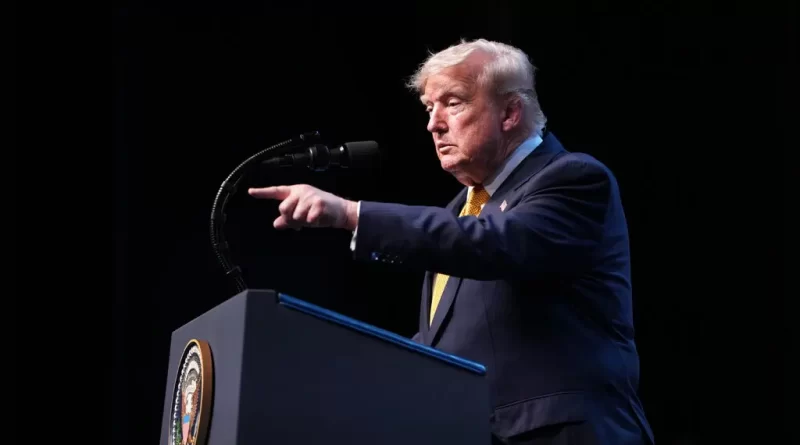
U.S. Central Command said on social media that it was protecting shipping in the Strait of Hormuz. President Trump said earlier that he thought a three-week-old cease-fire was “over.”
By- Max BearakTyler Pager and Shirin Hakim-
The U.S. military struck Iran in a new round of attacks on Wednesday night, military officials said, hours after President Trump said he thought a three-week-old cease-fire between the two countries was “over.”
Iranian state media reported that explosions had been heard in at least three port cities along the country’s southeastern coast. Shortly after the U.S. strikes, early Thursday local time, Kuwait’s army said it was intercepting drones and missiles and Bahrain’s interior ministry said warning sirens had been activated, without saying what triggered them.
Both countries were in the line of fire early Wednesday too, when Iran said it had targeted American bases there in retaliation.
The U.S. military said its latest strikes were intended to undercut Iran’s ability to threaten ships in the Strait of Hormuz, a critical waterway for global energy supplies that has become a key issue in the conflict. Mr. Trump called the new American strikes “retribution” for attacks on commercial vessels by Iran. “If it happens again, it will get much worse!” he wrote on social media.
Earlier on Wednesday, during a NATO summit in Turkey, Mr. Trump was asked about the cease-fire with Iran. “I think it’s over,” he said, but added that he was still open to negotiations and that he did not expect a return to all-out war.
Mohsen Rezaei, a senior military adviser to Iran’s supreme leader, issued a warning early Thursday morning in Iran in response to the U.S. strikes. “The aggressor enemy and its accomplices will be severely punished,” he wrote on social media.
Shortly after, as he flew back to the United States, Mr. Trump claimed that Iran had reached out. “They called a little while ago,” he said. “They want to make a deal so badly.” Iran has said nothing about new negotiations.
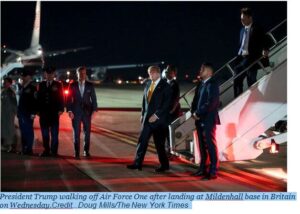
Mr. Trump used one of the old presidential aircraft instead of the new Qatari-donated plane as a security precaution related to the resumption of hostilities with Iran, according to people briefed on the plans, who said the change came at the urging of the Secret Service.
The temporary cease-fire appeared tenuous almost from the moment it was signed last month, and the latest exchange of strikes seemed to have it on the verge of collapse. Each side has repeatedly accused the other of violating the terms of the cease-fire.
The latest violence has centered on the Strait of Hormuz. Iran has asserted that the terms of the deal give it oversight of the waterway, and has demanded that ships use Iran’s preferred routes. The United States has accused Iran of repeatedly targeting ships in the strait, although Tehran has not claimed responsibility for a series of strikes in recent weeks.
The strikes that began just before midnight in Tehran on Wednesday were the second in two days by the United States in response to attacks on three commercial vessels in the strait this week. On Tuesday, the United States also revoked a sanctions waiver on Iran’s oil industry — a provision of the cease-fire.
Shipping traffic in the Strait of Hormuz has once more come to a halt. The temporary truce was intended to reopen the strait and stop the fighting, but left some of the thorniest issues, particularly Iran’s nuclear program, to be negotiated during a 60-day period.
On Wednesday, however, Iranian media outlets close to its military published editorials calling for “the official end” of the deal. A social media account belonging to Iran’s supreme leader, Mojtaba Khamenei, posted a doctored image depicting a snake emanating from Mr. Trump’s signature on the cease-fire deal.
Here’s what else to know:
- Energy prices:Oil prices, which had fallen back near prewar levels following the cease-fire deal, rose 5 percent to about $78 a barrel. That is down from its peak during the worst of the fighting but above its prewar price of around $72 a barrel. Oil prices spiked on Wednesday to the highest level in weeks and stocks dropped after President Trump said that he thought the Iran cease-fire was “over” amid a volatile 24 hours in the Persian Gulf region.The Trump administration launched a series of strikes on Iran and revoked a waiver that had allowed Iran to sell oil. The actions against Iran on Tuesday were in retaliation for attacks on tankers this week in the Strait of Hormuz, a crucial conduit for the world’s energy. U.S. Central Command said that it hit over 80 targets in Iran, including dozens of small boats used by the Iranian military, “to degrade Iran’s ability to continue attacking international commerce.” Iran’s military responded by targeting 85 U.S. military sites in Bahrain and Kuwait, prolonging a retaliatory cycle that could impede the nascent recovery in shipping traffic in
- Strait of Hormuz:The uptick in violence is threatening to derail the fragile recovery of oil and gas shipments through the crucial waterway. On Wednesday, the head of the International Maritime Organization urged operators to avoid sending ships through the strait.
- Khamenei’s funeral:Talks between the United States and Iran had been paused during funeral ceremonies for Ayatollah Ali Khamenei, the supreme leader who was killed on the first day of the war. Hundreds of thousands of mourners filled the streets of the Iraqi cities of Najaf and Karbala on Wednesday, chanting, praying and weeping for Iran’s supreme leader, Ayatollah Ali Khamenei, as they pushed their way to the convoy carrying his coffin. It was a frenzied outpouring of grief for another nation’s ruler — one who, as a pre-eminent Shiite Muslim cleric and political strategist, spent decades extending Iran’s influence deep into Iraq, and across the Middle East. “He was our guardian and protector, and we are here today to return the favor,” said Rabab Jassim, a 45-year old homemaker, who arrived in Najaf at 3 a.m. from Baghdad to join the ceremony. “My heart is on fire,” she said, bursting into tears. The procession followed five days of funeral services and mass mourning inside Iran for Ayatollah Khamenei, who was killed in the first U.S.-Israeli strikes that launched the war on Iran in February. His body was set to be flown back to Iran after the commemorations, and he was expected to be buried on Thursday in his hometown, the northeastern city of Mashhad. As supreme leader, Ayatollah Khamenei oversaw brutal crackdowns of opposition to his clerical rule at home, and he also leaves behind a divisive legacy in Iraq. The country is home to the Middle East’s second-largest Shiite Muslim population, after Iran. Some Iraqis praise Ayatollah Khamenei for providing Iranian support to Iraq’s Shiite militias, who fought against the eight-year U.S. occupation. Others blame Iran’s intervention for stoking two decades of sectarian bloodshed with Iraq’s Sunni minority that has only recently ebbed. People from all over Iraq have spent days awaiting the commemorations in Najaf and Karbala, home to two of Shiite Islam’s holiest sites.