
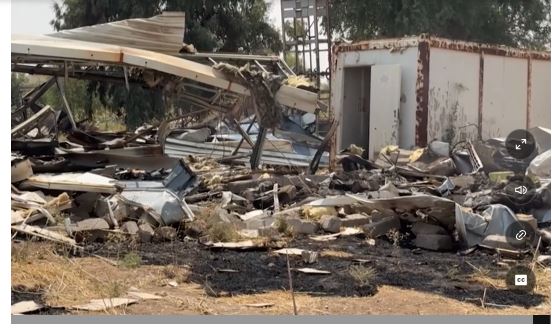
Iran War Live Updates: Drone Attack in Egypt Threatens to Expand Fighting
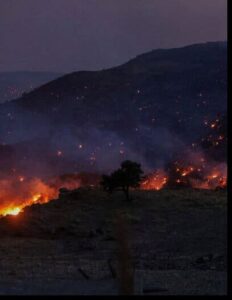
The United States and Iran exchanged strikes overnight, after Saudi Arabia acknowledged direct involvement in the war for the first time.


The Middle East teetered on the brink of an expanded war on Thursday, after Iran and the United States reignited their hostilities and inflamed conflicts on other fronts that threatened to draw in more countries.
For the first time since the war began in February, the authorities in Egypt said Thursday that an unidentified drone had caused an explosion at the Mediterranean port of Damietta the previous day. Earlier, Saudi Arabia also acknowledged direct involvement in the war for the first time, after conducting joint strikes with U.S. forces on Iranian-backed militias in Iraq on Wednesday.
As the scope of the fighting widened, U.S. Central Command said Thursday morning that it had completed another wave of strikes on sites in Iran, including military command centers and missile and drone facilities. The Jordanian military later said it had shot down five missiles launched from Iran, though Iranian officials did not publicly take responsibility for the attack.
Central Command said its latest strikes were a response to Iran’s launching ballistic missiles at American forces in the Middle East on Wednesday.
The fighting this week ended a pause in direct attacks between the United States and Iran and has affected an expanding list of U.S. allies, among them Jordan, Saudi Arabia, Iraq and, now, Egypt.
The attack in Egypt ignited a fire on two ships, including a U.S.-owned gas storage tanker, and threatened to draw Cairo into the conflict. On Thursday, the authorities there said they would take “necessary measures to protect Egypt’s interests and national security.”
At a news conference at the Oval Office on Wednesday, President Trump implied that Iran was responsible for the attack in Egypt, without offering details.
While the fighting between the United States and Iran expanded beyond efforts to control the Strait of Hormuz, ships trying to pass through the narrow waterway still faced significant risks.
Months of threats and attacks on shipping have throttled oil exports from Persian Gulf states. Saudi Arabia’s economy had shrunk in the last quarter by 4.8 percent, the worst quarterly contraction since the Covid pandemic, the kingdom said on Thursday. In the United States, growth slowed down to 1.5 percent in the second quarter as the war upended prices and supply chains.
Threats by the Iranian-backed Houthi militia against shipping in the Red Sea also have stoked fears of a second choke point, injecting more volatility to energy markets. After the Yemeni group claimed to target another Saudi oil tanker with missiles this week, insurers warned shipping companies navigating the Red Sea that they faced a heightened risk of attack.
Here’s what else we’re covering:
-
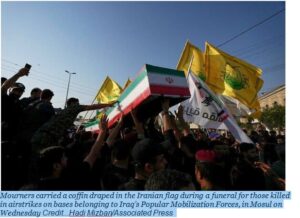
Iraqi militias: Iran-aligned militias in Iraq were under growing pressure to disarm, but the U.S.-Saudi strikes may embolden them to get more deeply involved in the war .For months, the government in Baghdad has sought to curb the Iran-backed militias that have long operated in Iraqi territory, struggling to meet the Trump administration’s demands that it bring them under state control, disarm them and cut off their funding.
A wave of U.S.-Saudi airstrikes that targeted the militias early Wednesday now risks upending those efforts. The attacks, which killed at least 20 people, have provided a new justification for Iran’s allies in Iraq to hold on to their arms and claim that they are the forces best positioned to protect the country’s sovereignty. And for Iran, the violence presents a chance to encourage these allied militias to join the regional war. “The era of shedding Iraqi blood with impunity is over,” Mohammad Tamimi, leader of the Iran-aligned militia al-Waad al-Sadeq, said. “Our response will not be mere statements. It will be actions on the ground to enforce the equation: a bombing for a bombing.”
-
Suez Canal: The attack on the Egyptian port on Wednesday did not appear to disrupt traffic to the Suez Canal. But analysts said it demonstrated the important waterway’s vulnerability and showed how the widening conflict in the Middle East could further disrupt global trade. The Middle East teetered on the brink of an expanded war on Thursday, after Iran and the United States reignited their hostilities and inflamed conflicts on other fronts that threatened to draw in more countries. For the first time since the war began in February, the authorities in Egypt said Thursday that an unidentified drone had caused an explosion at the Mediterranean port of Damietta the previous day. Earlier, Saudi Arabia also acknowledged direct involvement in the war for the first time, after conducting joint strikes with U.S. forces on Iranian-backed militias in Iraq on Wednesday. As the scope of the fighting widened, U.S. Central Command said Thursday morning that it had completed another wave of strikes on sites in Iran, including military command centers and missile and drone facilities. The Jordanian military later said it had shot down five missiles launched from Iran, though Iranian officials did not publicly take responsibility for the attack.