
Can This New Enzyme Turn Back the Clock in the Human Body?

In a recent study, scientists devised a way of reversing the buildup of compounds that lead to some age-related diseases.

The same chemical process that turns a baking cake golden brown is at work aging your body’s cells. Over decades, your tissues, baking steadily at 98.6 degrees, slowly accumulate compounds called advanced glycation end products, or AGEs, as sugars interact with protein and fat in the bloodstream. The buildup of AGEs is a hallmark of the aging process, making tissues like collagen sticky and rigid and causing inflammation that can lead to heart disease, eye damage, kidney disease and diabetes.
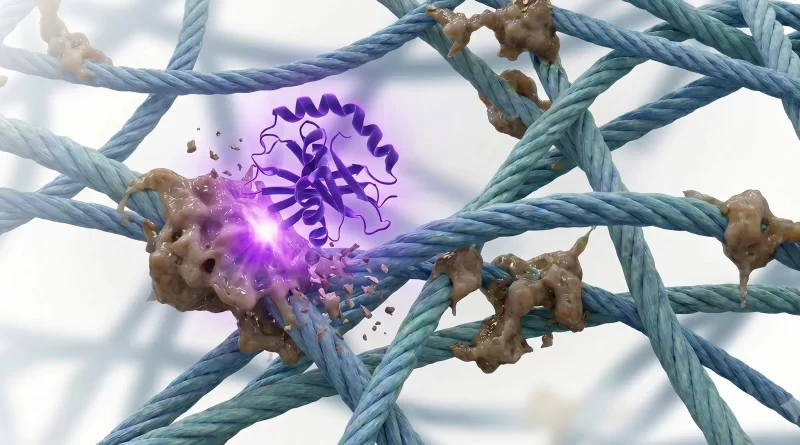
Researchers have tried unsuccessfully to develop medications that can stop AGEs from forming. But a new study, published on July 16 in the journal Nature Communications, describes a different tack: Scientists created an enzyme that cleans one of the most common AGEs from human tissue, helping to turn back the clock even after the aging compounds have settled in the body. This cleanse can help repair the tissue and has the potential to allow cells to act younger.
“It’s a small step in this bigger direction, because aging is very complicated,” said Aaron Cravens, a founder and the chief executive of Revel Pharmaceuticals, which developed the new enzyme, and the lead author of the study. “It’s the first time, I think, that anyone in the field has shown at the structural level that you can actually reverse some of these changes.”
Many efforts to develop treatments for aspects of aging have focused on cells, which gradually lose the ability to repair themselves and divide properly. Less attention has been given to the aging of longer-lived tissue structures such as collagen, which has a half-life of about 15 years.
Scientists have been aware of advanced glycation end products and their role in aging for decades. “It accumulates on tissue proteins like rust,” said John Baynes, a retired biochemist who was not involved in the study but who spent his career researching AGEs at the University of South Carolina Floyd School of Medicine.
But researchers have had “absolutely no success” trying to create drugs to inhibit the chemical reactions that produce AGEs, he said.
The new finding was “sort of a tour de force of modern biochemical and molecular biological techniques,” Dr. Baynes added. “To demonstrate that the darn thing worked on real proteins isolated from real tissue is really excellent work.”
The study by Dr. Craven and his colleagues began with a hypothesis: Since all human tissue can be recycled into the biosphere after death, there must be a natural way to dissolve these compounds, even though they are extremely durable. To identify that process, they looked to the enzymes inside microbes, the agents of decomposition.
The team used artificial intelligence software to analyze the DNA sequences of more than 50,000 microbes and to compute the enzyme structures that each genetic code would create. They then narrowed the results to several candidates that seemed capable of cleaving AGEs from human tissue.
They eventually found one, and then engineered it to be more efficient at its task. After several cycles of guided evolution, the novel enzyme, called CMLase, became very good at removing AGEs from human tissue samples.
“In the most extreme case, we took 70-year-old human skin and brought the levels back to that of a 30-year-old,” Dr. Cravens said.
The researchers plan to start testing their enzyme for the treatment of eye diseases, including several associated with diabetes, that develop when AGEs accumulate in retinal and lens tissues. In theory, Dr. Cravens said, CMLase could be applied periodically or even just once to clear out the inflammatory buildup underlying these conditions.
“I was pretty excited about this paper,” said Michael C. Jewett, a bioengineer at Stanford University who was not involved in the study. “It’s not a clinical solution yet, but this proof of concept opens the aperture to possible new therapeutic solutions for longevity.”
If the approach works in a clinical setting, it has the potential to be applied to many AGE-related conditions, for example by improving the elasticity of collagen in skin or by restoring kidney or cardiovascular function.
“This study was a master class in how to engineer an enzyme,” Dr. Jewett said. “I think there is tremendous, untapped potential in this protein class for addressing numerous human diseases.”
=========================================================
is a science reporter and a member of the 2026-27 Times Fellowship, a program for journalists early in their careers.