
How an ‘Impossible’ Idea Led to a Pancreatic Cancer Breakthrough

The new strategy also holds promise for lung and colon tumors. Here’s how scientists discovered it.


Gina Kolata and Rebecca Robbins
(Gina Kolata and Rebecca Robbins interviewed 27 scientists, doctors and clinical trial participants for this article.)
Pancreatic cancer is one of the most dire diagnoses in medicine. There are few available treatments, and they do little to help. For decades, experimental drugs flopped in trials. Many researchers believed the biological obstacles could not be surmounted.
In what seems the blink of an eye, all that has changed. A drug nearing regulatory approval, daraxonrasib, is the first to substantially extend the lives of patients with pancreatic cancer. It works by targeting a cellular protein that fuels not just nearly all pancreatic tumors, but also many lung and colon cancers. Those three are the leading causes of cancer deaths.
Now, some scientists predict that the approach could wind up being the most significant advance in cancer treatment in 15 years, since the arrival of immunotherapy.
The long scientific journey that led to the drug is a triumph of both public and private research funding, succeeding only after decades of false starts and dashed hopes — and the unraveling of conventional wisdom that turned out to be completely wrong.
“Every time there was an advance, it led to another dumping of dogma and finding out that what everybody assumed was true was actually not true,” said Adrienne Cox, a researcher at the University of North Carolina.
Scientists long ago identified their target: a smooth-surfaced protein inside cells, called KRAS, that is altered in certain cancers and drives their growth. Researchers often described it as a “greasy ball,” seemingly impervious to assault.
“Almost everybody thought that it was going to be impossible to make drugs against KRAS,” said Marina Pasca di Magliano, a researcher at the University of Michigan.
But it was possible. Over decades, academics laid the groundwork with support from the National Institutes of Health and the Howard Hughes Medical Institute, a nonprofit medical research organization. Then, industry refined the chemistry and turned the idea into a drug — using a novel approach that glues molecules together to grab and shut down KRAS.

And now that the protein-targeting strategy shows promise, multiple companies have jumped into the fray. Dozens of similar drugs are now being tested for cancers of the pancreas, lung and colon.
The drug that opened the floodgates, daraxonrasib, has been fast-tracked for review by the Food and Drug Administration and could win approval later this year. Until then, the agency has signed off on a plan by Revolution Medicines, the small Silicon Valley company developing the drug, to offer early access to some patients.
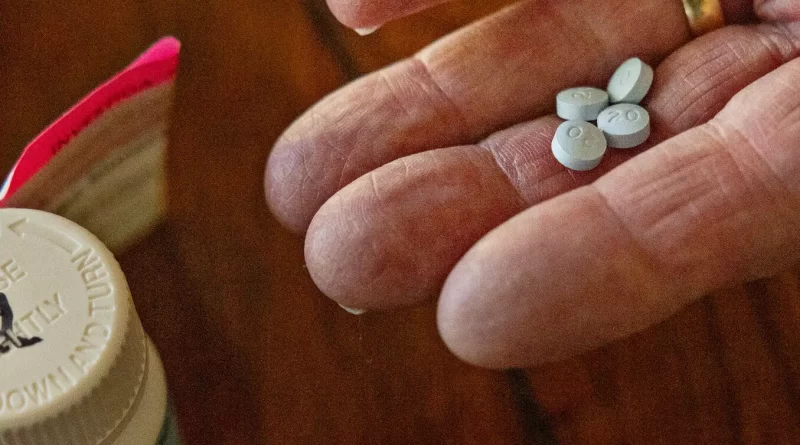
The pills, three taken daily, are not a cure — eventually, daraxonrasib stops working. Many patients do not respond. And it has side effects that can be harsh, including rash, diarrhea, fatigue, nausea and raw, split fingertips.
Until now, however, patients with pancreatic cancer have typically been offered grueling chemotherapy that does little to extend their lives.
A gland deep in the abdomen, the pancreas helps regulate blood sugar and digestion. Only 3 percent of these patients with cancer that has spread to distant parts of their body are still alive after five years. The disease kills more than 50,000 Americans a year.
Revolution tested daraxonrasib in a late-stage clinical trial in patients who had metastatic cancer and had already tried chemotherapy. For these patients, further treatment was viewed as a Hail Mary.
Patients who received the drug lived for a median of over 13 months, compared with less than seven months for patients who had chemotherapy, the company said in a news release.
Researchers will present the findings at a major cancer conference in Chicago later this month. The study has not yet been published in a peer-reviewed medical journal.
Scientists say the drug could turn out to be cancer’s equivalent of breaking the four-minute mile. “It’s the beginning, not the end,” said Dr. Elizabeth Jaffee, a pancreatic cancer researcher at Johns Hopkins University.
The Greasy Ball


The usual methods for finding a new treatment were not going to work for pancreatic cancer.
A typical way for a drug to work is by binding to a pocket on the surface of a crucial protein, like a rock climber finding a crack in a cliff face, in order to disable it. But KRAS, the greasy ball, had no obvious places where a drug could attach.
It was in the early 1980s that researchers at M.I.T. and Harvard discovered that human cancers could be caused by mutations in a family of genes called RAS genes. One of them was the KRAS gene.
The KRAS gene helps cells regulate growth. It directs cells to make proteins that share its name — KRAS proteins — that are switched on when a cell needs to replicate.
Most of the time the protein is in the “off” position. The cancer-causing gene mutations, however, leave KRAS proteins stuck in the “on” state. Once scientists identified the KRAS gene’s role in cancer, there was a surge of activity among drug companies hoping to develop drugs targeting RAS proteins.
They failed spectacularly.
“Everyone ran away from KRAS,” said Channing Der, a pioneering KRAS researcher who is now at the University of North Carolina. “Very prominent members of the field argued this is lunacy, that this is crazy.’”
Kevan Shokat, a scientist at the University of California, San Francisco, was not convinced. He had an idea: Maybe the greasy ball wasn’t as smooth and impenetrable as everyone thought.
He spent five years screening 500 molecules, until finally he found a crack in the KRAS protein into which one of his molecules wedged. It didn’t become a drug, but it was the first sign that maybe naysayers were wrong to think the KRAS protein was “undruggable.”
Dr. Shokat published his landmark finding in 2013. His work re-energized the field, and he later joined Revolution as an academic co-founder and adviser.
Around the same time, Greg Verdine, a scientist at Harvard, was starting a company that would look for creative ways to target proteins, including KRAS. He wondered if there were any molecules in nature that could get around the myriad challenges of binding to KRAS protein.


Nature, it turned out, had made what he called molecular glues, which can stick together two proteins that would normally never attach to each other. His thought was to custom-design a molecular glue to disable KRAS.
At the company he started called Warp Drive Bio, Dr. Verdine and his team developed a strategy to stick a drug onto another protein in the cell, cyclophilin, and then use the larger combined surface to wrap around KRAS and shut it down.
Then the drug would drift away, moving on to attack another KRAS protein.
Together, Dr. Shokat and Dr. Verdine’s research showed that the greasy ball could be conquered after all. In 2018, Revolution, a small company that had been focused on drugs to fight infections, acquired Warp Drive and expanded on its work.
Revolution’s chemists took a bold approach to designing a compound, surprising company leaders. Their drug hit KRAS proteins when they were in the “on” state both in healthy and cancerous cells, switching the “on” state to “off.” Similar approaches in animal experiments had killed mice.
“We were nervous about that from the beginning,” said Dr. Mark Goldsmith, Revolution’s chief executive. “But we started shrinking tumors in animals, and seeing that the animals seemed to be just fine.”
In 2022, Revolution was confident enough to start giving tiny doses of the drug to the first patients in a safety study. “We started seeing shrinking tumors, and side effects that were manageable,” Dr. Goldsmith said.
At a medical meeting a few years ago, Dr. Anirban Maitra, now the director of the Perlmutter Cancer Center at NYU Langone Health, listened to a presentation of data on patients who got daraxonrasib in an early clinical trial.
He was stunned that a drug that blocks KRAS in both cancerous and normal cells wasn’t harming patients by damaging their healthy tissue.
“How is this possible?” he recalled thinking. “How are these patients not dying?”
Revolution’s drug had managed to strike a delicate balance, devastating cancer cells while mostly sparing normal ones.
‘A Pretty Good Life’

In the fall of 2023, Rhea Caras, a retired lawyer in Palos Verdes Estates, Calif., got a tip from her oncologist: He would soon be flying to Europe to attend a medical conference. He was excited about early data that researchers would be presenting on a promising experimental drug.
Earlier that year, Ms. Caras had been diagnosed with metastatic pancreatic cancer and told she most likely had just months to live. By the time her doctor told her about the experimental drug, she had already tried a first line of grueling chemotherapy and was looking for her next treatment.
Ms. Caras soon joined a mid-stage daraxonrasib trial. Over two years later, she is still taking her pills every day.
Now 67, she routinely deals with side effects like fatigue, nausea and digestive problems. But her cancer has shrunk. Next month, she plans to travel to Hawaii with her family.
“I’m pretty sure I would not be alive still but for this drug,” she said. “I’m living a pretty good life, and I did not expect that.”
Ms. Caras said she did not know how long the drug would continue to work for her, but she was now thinking years ahead. “I think I could die of something else,” she said.
For the scientists who pioneered research into KRAS, the burst of excitement has been long in the making.
In 1982, Robert Weinberg, a scientist at M.I.T., made one of the seminal discoveries about how RAS genes fuel some cancers. In an interview this month, Dr. Weinberg, now 83, marveled that it had taken 44 years for patients to benefit from his work — and that he had lived long enough to see it.
“It would have been nice if the Good Lord had sent us down something easier to drug,” he said. “But that turned out not to be the case.”
=================================
Gina Kolata reports on diseases and treatments, how treatments are discovered and tested, and how they affect people.
Rebecca Robbins is a Times reporter covering the pharmaceutical industry. She has been reporting on health and medicine since 2015.