
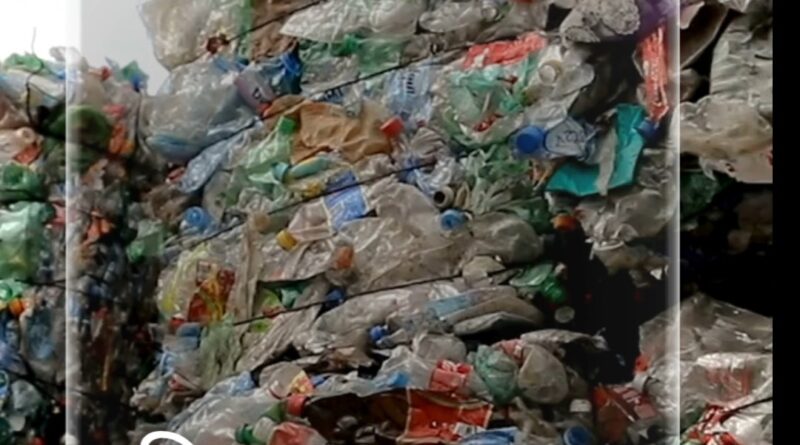
PLASTIC WASTE LITTERING THE SENSITIVE HIMALAYAS (Please watch video)


By Jay Singh Rawat
With the commencement of the pilgrimage to Kedarnath,one of the four sacred Dhams of the Central Himalayas, piles of plastic waste have already begun accumulating in this high-altitude Himalayan region. The Kedarnath Nagar Palika reported collecting 1 metric ton of plastic waste within just the first week of the pilgrimage. Alarmingly, this waste is from Kedarnath town alone, whereas the highest consumption of plastic for water and foodstuffs actually occurs along the 18 km trek that begins from Gaurikund. The pilgrimage season is scheduled to continue for another 23 weeks until November. One can only imagine the massive scale of the waste dumps that will accumulate by then.
Kedarnath is not alone in facing this crisis. With the number of pilgrims increasing every year, this pollution problem is escalating across all four Himalayan Dhams. Furthermore, the fragile ecosystems of highly sensitive tourism and trekking destinations, such as the Valley of Flowers and Dayara Bugyal, are also being heavily burdened by waste.
The Kedarnath Nagar Palika 7-day plastic collection figure is merely a linear estimate, while the reality is far more complex and worrying. During peak months like May and June, the influx of devotees multiplies manifold, leading to an abnormal surge in waste generation. According to available data, a total of 21.4 metric tons of solid waste was generated in the Kedarnath region during the 2025 pilgrimage season, of which nearly 60%—approximately 12.7 tons—was dumped out in the open without any processing. This statistic alone is sufficient to demonstrate that the current waste management system is inadequate to handle the growing pressure.
During the six-month pilgrimage season, tons of waste are generated daily in Dhams like Badrinath, Kedarnath, Gangotri, and Yamunotri. In Badrinath, this volume is estimated at 2.5 to 3 tons per day, while Gangotri generates up to 2 tons, and Yamunotri accounts for a relatively lower but still significant 1 ton daily. When all these Dhams are viewed together, it becomes evident that the entire Himalayan region is gripped by a widespread waste crisis.
The impact of this crisis is not limited to mere piles of garbage; it is degrading the core ecology of the Himalayas from within. According to scientists at the Wadia Institute of Himalayan Geology in Dehradun, the Kedarnath area is an extremely sensitive “proglacial” landscape where rocks and soil have not yet stabilized. In such a region, when plastic waste blocks natural drainage routes, water pressure builds up, multiplying the risk of landslides. Plastic layers obstruct the flow of water within the soil, accelerating sub-surface erosion and weakening the stability of slopes. Additionally, chemical elements released from decomposing plastic alter the soil structure. Although this process is slow, its long-term impact is extensive. This is why scientists do not view it simply as a “garbage problem,” but as a critical driver of geo-environmental instability.
Ecological and Biological Threats
Research by HNB Garhwal University highlights that this crisis is even more severe from a biological perspective. According to university studies, nearly 70% of the waste generated during the Char Dham Yatra consists of single-use plastics and multi-layered packaging. This plastic gradually breaks down into microplastics, which make their way into Himalayan water sources and degrade water quality. These microscopic particles are not only hazardous to aquatic life but can also have long-term impacts on human health, given that this water eventually reaches the plains via the Ganges.
Similarly, a study by the G.B. Pant National Institute of Himalayan Environment in Almora reveals that approximately 29 metric tons of waste is generated during the 4-month season along the 19 km trek to the Valley of Flowers and Hemkund Sahib. The most concerning fact is that 96.3% of this waste is non-biodegradable, with glass bottles and plastics being the primary contributors.
The world-renowned Valley of Flowers is famous for its rare flora and seasonal blossoms, but the growing pressure of plastic waste has become a severe threat to its ecology. The condition of the trekking route to Hemkund Sahib—the world’s highest Sikh shrine located right next to the valley—is even worse. According to scientists, plastic disrupts the soil’s aeration capacity, which hinders seed germination and stunts plant growth. Furthermore, plastic waste affects the local temperature, altering the micro-climate and disrupting the natural blooming cycles of flowers.
The direct impact of plastic waste on wildlife is equally alarming. Bears, musk deer, and other animals forage for food in the garbage and inadvertently ingest plastic. This severely impairs their health and alters their natural behavioral instincts.
Another grave dimension of this entire crisis is its impact on glaciers. Studies have revealed that microplastics are now widespread across Himalayan glaciers, lakes, and rivers. These particles reduce the reflectivity (albedo) of the snow surface, causing ice to melt at an accelerated rate. This has a direct consequence on water flow, river systems, and ultimately, the entire Ganga-Yamuna basin.
Implementation of Green Pilgrimage
Although government initiatives like “Green Pilgrimage” are being implemented, and steps are being taken toward scientific disposal by segregating waste, current data indicates that these efforts remain inadequate. The root of the problem lies not just in managerial deficiencies, but in the lack of a comprehensive vision that prioritizes environmental carrying capacities.
Recognizing the gravity of this situation, it is crucial that policy formulation places the recommendations of scientific institutions at the center. Capping the number of pilgrims based on carrying capacity, enforcing a total ban on single-use plastics, and establishing a mandatory buy-back or “bring-your-waste-back” system are no longer optional—they have become absolute necessities.
–———————————+
About Author: –A dedicated chronicler of the Himalayas, Jay Singh Rawat has brilliantly served journalism for 48 years as an insightful editor, reporter, and freelance voice. Author of nine seminal books, his profound research into regional ecology, tribal history, and socio-political evolution stands as an invaluable pillar of literary and journalistic excellence.-Admin.